15 November, 2012

Intolerance, the blame game & mob rule - we're all guilty!

Fellow blogger, Leann, has commented in recent days on the frustrations and concerns facing Americans in general, and herself in particular, following the Presidential election last week. (http://crazyworld-leann.blogspot.co.uk/2012/11/what-will-country-look-like-now.html). Leann is always worth reading -   pertinent, erudite and with a capacity to make her point in a matter of fact way. Although her blog is about America and Americans, with just a few minor alterations to the terminology virtually all of what she says would be equally valid in the UK.  But of all the points Leann makes one stood out for me above all others. It was a general observation:

“More and more I am realizing that the problems in this country have very little to do with who sits in the White House. The problems have to do with our "my way or the highway" attitudes. The lack of respect we have for our fellow human beings. Our lack of consideration for the people around us. It is evident from the way we drive, to the way we comment on someone’s Facebook page or the way we judge people we know nothing about based on "appearances."

I am sure that Leann’s analysis is true in this country too – the problems of the country (and their solutions) are, maybe, more to do with the country’s psyche and outlook than what politicians may do in terms of political policy. They may be more to do with the society that is being fostered than whether the Tory or Labour party  is in power. As I look around me at modern British society I find it very easy to become dispirited – in much the same way that Leann is a little frustrated  about her own society.

Leann's comments confirmed for me a nagging suspicion that I have had for some time - that there is something wrong with modern western society. Despite our wealth (and, yes, even allowing for the economic melt down we are still incredibly wealthy) and despite many, many  social, economic and moral improvements I feel that something is amiss. I can't help thinking about and agreeing with French political philosopher  Alexis de Tocqueville (1805-1859) who said “In democracy we get the government we deserve".  The comment has a resonance today - as politicians and leaders of all persuasions seek power and  popularity they are an increasing reflection of the society which they represent. Leaders of all kinds - be they politicians, bankers, church leaders, newspaper editors or whatever reflect the society and society, I believe, reflects its leaders.

Just this week we have had a number of everyday examples – things that we take for granted within society but which say much about the sort of society we live in.
A Chelsea "fan" makes monkey gestures
at a black Manchester United player.
Despite anti-discrimination laws this
is still part of the national psyche. Extremist
political parties feed on it.
We have, I believe, become a society that is only superficially tolerant. We notionally, for example, at least subscribe to the premise that all people are equal and yet  we have to have legislation in place to “ensure” some measure of equality and acceptance of each other – be we white, black, man, woman, gay, straight, rich, poor or any other criteria that one wishes to mention. Examples of inherent discrimination are legion. And not confined to obvious racist or religious bigots. As I picked up my newspaper this morning I noticed the headline of the Daily Express which was piled at the side of the Guardians. “EU wants immigrants to take our jobs” screamed the large black letters – whether this is true or not I don’t know but  I was uncomfortable with the wording and  its implications – “When”, I wondered, “does this sort of thing become incitement to racial hatred”? Just this week I have read of the struggles that the new Archbishop of Canterbury can expect when he tries to address issues such as gay clergy or women bishops – issues which almost brought the current Archbishop -  Rowan Williams - to his knees. Williams a man who everyone - even his enemies - acknowledges is hugely able and “saintly” and yet the hard held beliefs (unashamed prejudice wrapped up as Christian belief?) appertaining in the Church of England mean that otherwise “good”, well meaning people, "Christians" are unable to grasp the moral imperatives that the notion of equality involves. Another example is the continuing racism saga on the football field – monkey chants from supporters towards black players, the foul mouthed and expletive filled racist comments that came from England captain John Terry (and others over a period) bear witness to the fact that we are not so tolerant as we like to think we are.  Or,  a couple of mornings ago I read of the concern and angst  in the gentle world of golf. It has been suggested that the powerful Royal & Ancient Golf Club should give its lady members equal rights. The Royal and Ancient, golf’s governing body is aghast  at such a thought! They argue that they are a private members club and as such do not need to subscribe to such rules. Hmmmmm? I wonder if “private members clubs” therefore exonerates all golfers from simple human decency and moral obligation. It seems to me to be a dubious argument.  Last summer Pat and I went to a wedding reception that was held in a local golf club. We had a lovely time in beautiful surroundings but half way through I went for a walk around the clubhouse and the grounds. Even to me, an old fashioned unreconstructed dinosaur, the patronising notices and signs highlighting institutional and overt gender discrimination against women members was quite obvious.
Today's Daily Express front page

And, of course, in another area, we have had in the UK for several weeks the media overkill and existential crisis at the BBC where the repercussions of the Jimmy Savile/child abuse scandal has been the headline story of every news broadcast. The whole issue has revealed much about the nature of British society – revenge, blame, envy (and other human characteristics that might be loosely be called “deadly sins”) – all of which have been heaped upon the former Director General of the BBC George Entwistle - a man who even his most strident detractors agree is sincere decent, humane, full of integrity, honourable.  He was simply, it is universally agreed, in the wrong place at the wrong time and "overwhelmed" by events – most of which were not of his making.  Guardian cartoonist Martin Rowson got it just right when he portrayed Entwistle as the victim in a – “don’t shoot me, I’m only the messenger” cartoon! True, Entwistle made mistakes in trying to pick up the pieces of the debacle – an abuse situation that had allegedly been going on at the BBC and other revered national institutions such as hospitals for almost half a century.  And maybe, too, he should have done some things differently. Indeed, he admitted that.  But  still society’s mob shouts for blood. “He must be held to account” shouts the popular press (and indeed, to their shame do some organs of the broadsheet press). “He must not receive the inflated pay off he has received on his resignation” shout the mob. And  I sadly reflect, as I read of the mob hysteria directed at Entwistle, that I have been guilty throughout my life – as I suspect has everyone on the planet - of making mistakes and on many occasions doing the wrong thing. In thinking about this I'm reminded of a couple of quotes: Oscar Wilde famously said that "Experience is simply the name we give to our mistakes" and Einstein suggested that "Anyone who never made  a mistake, never tried anything new" I would go with both of those but think they might be a bit too cerebral for the howling mob to take on board! I would hope that when I lie in my box at the front of the crematorium whoever is leading the service will say of me what everyone says of George Entwistle – “Tony was good, decent, honourable, honest, sincere - and admitted his mistakes” – I’ll settle for that!

But, sadly, in our envious, culture of blame, society virtue and the ability to admit one's mistakes are not enough. Accountability, blame, envy, innate aggression, retribution, and yes, good old fashioned spite, rule much of our daily life. If we can’t get a job it’s because of the immigrants the Daily Express might scream. If our taxes go up its the fault of profligate politicians or those on final salary pensions or benefit cheats the Daily Telegraph will headline. We all need someone to blame. We all, it seems, need someone to envy. We all want our pound of flesh.
George Entwistle. Decent and honourable......
but forced to resign and reviled because
accountability also means blame
 and scapegoats 

Part of this, I have no doubt, is to do with finding someone else to shoulder the responsibility. In doing so we are removing the blame from ourselves. It's easy to blame the bankers for the economic mess - we conveniently forget that we all wanted those bigger houses, fridge freezers, cars, flat screen TVs and the rest of the bling and "must haves". So we gleefully grabbed the deals that bankers were offering and didn't ask the sensible questions like can we afford it or is this offer too good to be true (and in the long run it was!). It's easy to blame the teacher, the school or the influence of peers for your child's failure or involvement in drugs - and conveniently forget that you weren't there when he or she needed you! I am convinced that the "growth" in people wanting to send their children to fee paying schools is as much or more to do with off loading their parental responsibilities as it is giving the child the "best" education. "We've paid for this" says modern man "so we expect the school to do the business" - don't bother us with the other stuff like listening to Jimmy read or helping with homework and the rest - we are far too busy making money and gaining our own self fulfilment". Of course, the ultimate statement of this is packing your child off to boarding school - then your only responsibility is paying the fees each term - parent hood by proxy. As we have become wealthier and more self indulgent it is so easy to put one's responsibilities, and therefore one's expectations and subsequent  blame when things go wrong, onto others. We can increasingly pay to release us from our obligations - not just physical work but moral obligations. It is a fact of modern life, for example, that people will make cash donations to worthy charities but will not give of their time; local clubs and facilities such as young people's sports clubs, old people's support groups, school PTAs and the like can  often can raise cash far more easily than they can raise physical help. I often came across this in school: ask the parents to make a donation to buy books for the school and it would be successful but ask parents to turn up to help run a disco which was aimed at raising  money for school books and the response was very limited - the same view good hearted souls turned up each time - everyone else was too busy!  Increasingly, society loves others to shoulder the responsibility - and nothing gives it greater pleasure than to then shout, scream, complain and blame when they fall a little short or when, as with the financial crisis, we are all found with our proverbial "trousers down". Then, when that happens, like the naughty schoolboy caught misbehaving society tries to pass the buck: "It was him", we all shout (pointing at the George Entwistle); or "I did it because he told me to" we weep - and point at the evil banker who forced us to take out that unpayable mortgage! Blame is easy - accepting one's responsibility is hard!

And to add to this shifting of responsibility the feeling that all political parties and wider society has hit upon  a "buzz word" that encapsulates it all nicely – “accountability”. We have a society, a political and media bent upon "accountability" and "transparency" - all very laudable and good. It is a sound bite that every voter will vote for – and politicians know it! Who could disagree with such a manifestly obvious ”good thing”. And yet, a little further examination brings forth other considerations. Implicit in the word  is  the need for blame when things go wrong, for victims upon whom we can heap our ire. People, of course, need to be held to "account"  for their actions and their errors – no-one would dispute that.The problem for society and its leaders, however, is to somehow divorce the notion of the blame culture as a quick fix to all the world's problems - quick fixes never work. Each week I wince when I read of another government sponsored initiative to "name and shame" an under-performing school or hospital or civil servant or police force or local authority. Each time this happens it once again reinforces the notion of blame and retribution rather than building upon experience  learning from mistake or addressing the real problems of the person or bodies involved.  Forcing George Entwistle out of his job might make the mob feel better; the boil, as they see it, has been lanced, but it doesn't in any way address the real issues that may or may not appertain at the BBC or in wider society.  No, in the simplistic world of the mob and in contemporary Britain, we just need someone or something to  blame - no matter that like Entwistle they were just  "in the wrong place at the wrong time". George Entwistle,  the single parent mother who “cheats the benefit system” and boosts her income by doing a bit of bar work in the evening or the possessor of a final salary pension whose gold plated pension is almost seen to  taking food out of the mouths of babes are grist to the mill of people who envy, who want their pound of flesh and who want someone to be held to account, to blame for the ills of their own situation!
"Don't shoot me - I'm only the messenger" - but we did.


Mobs don't "do" quiet reasoning or reflection. They want the quick fix sound bite or the easily remembered mantra or simple idea to define their concerns and upon which to pin their ire. And in that respect George Entwistle was easy meat. A few years ago the UK was it seemed in danger of being eaten alive by rottweiller dogs, the a year or two later it was  wayward and evil children as the James Bulger affair that filled the news headlines. Since then we have had the breakdown of society as we know it with "broken Britain", the unmitigated evil of the bankers and finance houses of the world, world domination by the arch priest of evil Rupert Murdoch and a myriad of other scare stories and people upon which to vent our societies fears and spleen. But then the mob gets another victim and a new mantra - driven usually by the media and sadly by politicians and so we move on. Who will be next focus of the media mob - me, you, your husband, your wife, your child? Beware - mobs and the media do not discriminate - that takes thought and  mobs don't "do" thought. Good old decent, honest George Entwistle could never have suspected such vilification just a few weeks ago - if he can suffer then so can you and I. If you want any further evidence of this read items on Twitter, read the postings on newspaper web sites (yes even the Guardian's Comment is Free) - you will see plenty of evidence of vitriol, ire, blame, aggression and mob thinking. John Ruskin said over a hundred years ago: "Modern education has devoted itself to the teaching of impudence and now we complain that we can no longer control our mobs". One could very easily re-write Ruskin's commentary thus: "Modern politicians and media have devoted themselves to the preaching of  accountability and blame and now we complain that we can no longer control our digital mobs".

Another aspect is what I can only describe as the almost casual undercurrent of aggression that seems to run through so much of society and discourse today? Road rage, weekly examples of ordinary citizens being set upon in city centres,  aggressiveness at the supermarket check-out, pent up anger exploding on the football field or outside the football stadium – all minor things in themselves, not great crimes but at the same time feeding the culture of aggression and antagonism. Mix, aggression and antagonism into the equation of blame, envy and accountability and you have a volatile mix. Ghandi was very aware of the links between intolerance, blame and aggression. "Intolerance is a form of violence and an obstacle to the democratic spirit....anger and intolerance are the enemies of correct understanding" he famously noted. Couldn't agree more - and I sense that intolerance and aggressive blame are eating away at the very foundations of our democratic society.
Let's blame and name and shame. It won't solve
any of the real problems but, boy, will it make us
feel superior and better in ourselves to know that
we've made someone else suffer.

There seems little quiet decency, honour, sincerity, humanity or compassion walking the streets of the UK today . George Entwistle must feel quite lonely to be a man who, all seem to agree, has  these qualities in abundance. He must also be a bit confused - he did his best, he made a few errors which he admits, everyone says what a good guy he is and how unlucky he was – and, all agree that the vast majority of the BBC's problems were not of his making – mostly, they occurred long before his "watch".  But the mob still want to hang, draw and quarter him.

Maybe things have always been like this. As I write this I am reminded of Oliver Cromwell – once Lord Protector of England. A man of the people who deposed the monarch (Charles 1) and in his short “reign” as Lord Protector of the country laid the foundations of many of our political, religious and social institutions, many of our now accepted freedoms and other underpinnings that still permeate our politics and society today. Maybe Cromwell went too far, maybe there were many things that he should have done differently but when he finally died of natural causes in 1658  he was buried with great reverence and ceremony in Westminster Abbey. But how quickly things can change! Just as George Entwistle who only a few weeks ago  was lauded as by far the best man for the BBC job so too with Cromwell. Three years after his death in 1661 and with Charles II restored as King, Cromwell’s body was exhumed and subjected to the ritual of a posthumous execution. His rotting body was hanged in chains on public display. Later, it was thrown into a pit, while his severed head was displayed on a pole outside Westminster Hall until 1685. On his death in 1658 the  “The Publick Intelligencer” said of Cromwell’s dying and burial:  “He died yesterday about four of the clocke in the afternoone.  I am not able to speake or write; this stroake is soe soare, soe unexpected, the providence of God in it soe stupendous, considering the person that is fallen … I can doe nothinge but put my mouthe in the dust, and say, It is the Lord; and though his wayes be not always knowne, yet they are always righteous, and wee must submit to his will.......having neglected an Earthly Crown, he should noe go to receive the Crown of Everlasting Life..........This daye I beheld a great multitude of people gathering together and thronging and pressing exceedingly.........” Only three years later Cromwell’s decapitated rotting corpse displayed to the baying mob and his head pierced on a spike until it rotted away. As I write this (and I am not particularly religious or a Christian devotee) the story sounds a lot like the first Easter when the crowds who had followed Jesus and listening to his every word as the Messiah suddenly shouted "crucify him" when Pontius Pilate gave them the choice of what should happen to Jesus. Hmmmmmm!
Cromwell's corpse is hung drawn and quartered -
the mob had their way, just as it did with George Entwistle

But despite  his contribution to England and the cause of democracy Cromwell's popular appeal was short lived.  The mob had moved on – the Restoration meant that a “hero” became a “zero” – revenge, hatred, envy, blame and the other deadly sins  had their day. Perhaps, poor old George Entwistle should reflect that little changes -  he has had his day, he has been unlucky, the crowd will soon forget. Today's news is tomorrow's fish and chip papers, another victim will be found. But on the way another life will have been ruined to sate the mob and our desire for blame so that we can all feel better. If someone else can be blamed when things go wrong then it cannot be our fault ........... can it?

It is a worrying trend. In a blog a couple of weeks ago I argued that as a society we are better off than we ever were and indeed perhaps more tolerant. We do not have the overt racism and sexism and class divisions of yesteryear. The words of the old hymn “All things bright and beautiful” have a quaint ring today when we sing “The rich man in his castle, the poor man at his gate”. Today, we do not touch forelocks with the same frequency, “my money is as good as anyone’s” is a frequently heard comment, we do not lock up and hound homo-sexuals or execute criminals or treat women as “chattels or openly discriminate against people of a different colour. We have legislation that rightly discourages this sort of behaviour. Having said that we have also become a society that largely, it seems to me knows the price of everything and the value of nothing; we complain about the BBC at the moment in the same breath as saying "we pay our licence fee, we expect better"- but at the same time accept all sorts of drivel, biased reporting and mindless programmes from commercial stations and the Murdoch empire; paying our local council rates seems to give us the right to complain bitterly about every small problem within our local services - schools, hospitals, police;  we pay our taxes and this justifies vitriol  being poured upon those who benefit - the unemployed, the long term sick,  the single parent. Money blurs the edges of reasoned debate and tolerance it seems to me. But despite any “progress” that we might have made in society and despite the obvious improvements in wealth and well being, increasingly, I feel, that intolerance, revenge, envy, discrimination and the rest are still lurking safely  below the surface ready to leap up at the first opportunity – and all the time gnawing away at our society’s foundations. Edmund Burke reminded us that "By gnawing through a dike, even a rat may drown a nation" - and that is what intolerance, envy, self indulgence, money and the rest do. It is,in the long term, far more dangerous to the good of civilisation, democracy and society than a failed political policy or a man who made a few regretted and avoidable errors at the BBC. 

Against a back drop of such things I’m tempted to agree with Leann maybe politicians can  do little – maybe it doesn’t matter too much who is in the White House or at 10 Downing Street! It is the feelings at large in society that are the real drivers.
From a contemparary sketch -Cromwell's severed head -
the mob certainly had their scapegoat

Of course, even politicians admit there is a limit to how much they can do in the modern world. Globalisation means that every society and country is subject to the economic, social and cultural hurricanes that blow across the whole planet. The current economic ills of the world are not the responsibility or fault of one politician or one country; no matter how skilful and correct our politicians in London might be we will still be buffeted by what is happening in Europe of New York or Beijing – and so too will the people of those places. The internet is the single most powerful influence – what has been called the Arab Spring uprisings would not have occurred in the  same way even twenty years  ago without the power of the internet to drive them. So to that degree we are all victims of circumstance and we cannot hold politicians responsible for all the ills of a society, nor can we expect politicians to wave a magic policy wand and solve all our problems.
Having said that, however, politicians have to operate within  the society that they represent and it may be a sign of their failure that in the UK at least (and I suspect other developed countries) that politicians are viewed as the lowest of the low. This situation is bad for democracy – when the electorate have no faith in those elects – it encourages disengagement which feeds extremism.

Like many, I suspect, I receive jokes and humorous offerings from friends and acquaintances into my e-mail inbox. Of the offerings that I receive a very significant number are worryingly explicitly racist or sexist or have undertones of racism or sexism. And, equally worryingly, another significant percentage involve criticising our elected representatives. For example, this was a recent offering:

A driver is stuck in a traffic jam on the motorway near London. Nothing is moving. Suddenly, a policeman knocks on the car  window. The driver rolls down the window and asks, "What's going on?" 

The policeman replies that there is a vast security operation throughout London. "Terrorists” he explains  “have kidnapped the members of parliament in the House of Commons  and they're asking for a £100 million ransom! Otherwise, they are going to douse them all in petrol and set them on fire. The whole of London is shut down while we deal with this”. 
“That’s dreadful” says the motorist, “what can we do”?  
“Well”, replies the policeman “I’m  going from car to car collecting donations for the politicians."
"Good idea” says the motorist “How much is everyone giving?"
 "Roughly a gallon." Replies the policeman!!!!

All good knock about stuff and, of course, and in Britain at least there is a healthy history of satire poking fun and ire at the establishment – indeed it is one of the great freedoms that we enjoy (and for which, to a degree, we can thank Oliver Cromwell!). There is, sadly, of course, a down side. When a society loses faith, confidence and respect in those that govern it then the future of that society has a cloud over it. And for me this is an issue.

As I look around, it seems to me increasingly that those who hold positions of power and influence in society are increasingly losing respect. It is not confined to politicians – we have seen it with other groups (and Leanne alludes to this in her country) – bankers, celebrities, financial operators, sportsmen, teachers and the rest increasingly look shabby and worthy of criticism. Earlier this week I wrote, in a letter to the Guardian,  “George Entwistle has many laudable characteristics, everyone agrees – and as a bonus, he also admits his mistakes. Please can we have him as our Prime Minister now he has left the BBC – the last many incumbents of that high office seem lacking in his agreed qualities of honour, integrity, decency, sincerity, humanity!” I took no pride in writing this - it saddened me that in these cynical times even I, the most liberal, high minded person and forgiving person  on the planet, should smile at satirical jokes like that above or have such a negative view of our leaders!!!!! But seriously, that is the problem; intolerance and the blame culture spreads like a virus - silently, insidiously, fatally - to poison the minds of even good men and to weaken society. It takes away our ideals and pours cold water on our aspirations. It edges us towards extremes and false gods.

Obama's first inauguration -  a time for optimism. OK he might
have made mistakes - but so have we all. The main thing is
that he sends out the right messages about what it
 is (or should be) to be human.
It seems to me that increasingly the problem facing modern democracies may not be putting the right policy in place (important though that is) but in winning the hearts and minds of the electorate. Clearly these two issues are interdependent – successful policies will win hearts and minds. But there is more than this. It has to do much more with fostering the sort of qualities that poor old George Entwistle seemed to have but which were passed over by the madding crowd. It seems to me to be to do with those in power unashamedly displaying and promoting these characteristics. Every time a politician is found fiddling his expenses or reneges on a commitment, every time a banker is left open to criticism over his bonus, every time a teacher does not display the best to his or her pupils then as a society we become more cynical and  more accepting of the seamier side of life. Barak Obama, on his first inauguration four years ago, seemed to me (without reference to his policies) to represent the best we might hope for – decent, honest, honourable, humane .......... It hasn’t gone quite how he planned it – maybe his fault, maybe circumstances – but it seems to me that as he enters the second stage of his Presidency he could do the world no greater service than be some kind of beacon for what is best in the human spirit – sincerity, decency, humanity,  integrity, honour and the rest – and the ability to admit when he gets it wrong. Half a century ago, at his inauguration, John Kennedy came out with one the very greatest "sound bites" - which perhaps should be re-issued like an old pop record hit: "Ask not what your country can do for you but what you can do for your country" proclaimed JFK on  bright but bitter January day in 1961. He was right. In the intervening years the Kennedy magic has perhaps unravelled a little and all agree that part of his strength and appeal was his ability to project himself through the media. But this, for me, misses the point. In the end he projected a better more worthwhile vision, something to aspire to, high ideals, a brief glimpse of what the world might be. And a generation rose to it. It is an aspect of politics and leadership that I find ever more difficult to perceive in the modern world.
"Ask not what your country can
do for you but what you can do
for your country"

Obama, like all politicians, should never forget Edmund Burke's message in the eighteenth century "All that is necessary for the triumph of evil is that good men do nothing."  - being good men and setting the right standards of honesty, decency, humanity and the rest would seem, to me, to be a pretty useful start. It is implicit in Kennedy's proclamation.  Maybe political policies are secondary to this? Maybe I'm just an idealist - but, if I am, I would argue that we might just need more ideals to aspire to in our world.  For the rest of us lesser mortals we, too, have to change. For unless we ourselves are more decent, honourable, honest, caring, humane and all the other positive adjectives then society itself is on a downward spiral no matter who is in power. Not to do this would, it seems to me, confirm de Tocqueville's comment - "we get the leaders we deserve". 
Beware of destroying society.
When the values of Caligula
rotted Roman society the end
of the Empire was nigh!

In the late eighteenth century Alexander Tyler, Lord Woodhouselee, a Scottish lawyer and writer famously commented: "Great nations rise and fall. The people go from bondage to spiritual truth, to great courage, from courage to liberty, from liberty to abundance, from abundance to selfishness, from selfishness to complacency, from complacency to apathy, from apathy to dependence, from dependence back again to bondage". At about the same time Edmund Burke observed that: "When the leaders choose to make themselves bidders at an auction of popularity, their talents, in the construction of the state, will be of no service. They will become flatterers instead of legislators the instruments, not the guides, of the people." The truth of these two comments can be see. in a brief look at history. Great empires and societies of the past – Greece, Rome, Bourbon France, Imperial Russia and most of the rest eventually decline or crumble not because of military defeat or economic failure – the rot starts much earlier in the very fabric of that society and its basic values when leaders stop leading by example and when the society becomes bloated on its own self indulgences. In ancient Rome the Empire was on its way out when Emperors such as Caligula and Nero and their associated life styles set the pattern and the expectations and their  followers slowly, but insidiously and surely, changed a great culture built upon high ideals into one characterised with greed, envy, violence, dishonesty then it was all downhill. Once the rot set in the military defeats and  political and social failures followed suit.

06 November, 2012

Misguided, Surreal & Most of all Offensive


I make no apologies for blogging about something that I have blogged about before – and undoubtedly will do so again. Nor do I make any apologies to those who will undoubtedly profoundly disagree  with me.
"Like my poppy? - it's the new
arms industry procurement logo. Got the
idea from my old mate Donald Rumsfeld"
It  was with supreme surreal offensiveness that our Prime Minister walked down the steps of the aircraft as he landed in the middle east yesterday. He proudly sported his red poppy to remember the “glorious dead” of two World Wars (and many many other conflicts). And his mission in the middle east? – to drum up support for the UK military and defence equipment industry. To ensure that British business gets its share of the billions that Arab states will spend on arms in the coming years. And today, I have just learned that his discussions in the Gulf have resulted in "a defence industrial partnership" between the UK and Gulf States - call me cynical but that sounds like a devious euphemism for "politicians and big business gets loads of money but ordinary folk get sucked into war and destruction". A "defence industrial partnership" -  signed  just in time for Remembrance Day. The whole charade had a surreal and yet terrible Monty Pythesque ring about it.

Will Government Cabinet Records show, when they are made public in thirty years' time, how Cameron arrived at his decision to go on this trip“Oh I love a lovely war! Let’s sell some more weapons so that we can kill some more. We haven’t killed and maimed quite enough yet! Our industry and business men are so hard up, bonuses have to be paid! And anyway, I'm looking for a few cosy well paid Directorships when I give up this Prime Minister lark. And just to add that extra bit of zing let's sell arms to the middle east – it's already  a powder keg of violence and unstable nations, they'll love it - it will be a bottomless pot of money .........and, I know, let's do it in Remembrance week while we wear poppies. That'll give it that bit of sparkle - the Arab's will love that touch". Maybe Cameron's next overseas' jaunt will be to sign up a "defence industrial partnership" with Israel - that'll liven up the news broadcasts a bit as Israel turns Palestinian homes and children to desert dust. Or what about a "defence industrial partnership" with Argentina - then we could have a re-run of the Falklands War! "After all" Mr Cameron might argue "it saved Mrs Thatcher at the time and you can sink a few ships as well - that'll give our shipbuilders more work in  replacing them. There must be  few Directorships there! Oh! the possibilities brought about with death and destruction are endless - and so rewarding too for big business and politiciansI mean, look at Tony Blair - took the UK into an illegal war and now is feted and hugely rewarded by big business (paid into his off shore accounts no doubt) and for his after dinner speeches - I'll have some of that!" But, does Cameron never think? Has he actually got no brain cells or nous – to do this in Remembrance week and to sport a poppy as he does it! Or is he, as seems more likely, sticking up a metaphorical two fingers to the victims of his arms sales? He tells us, when interviewed, that the arms sales to Gulf countries are “entirely legitimate”. Well, in a commercial sense maybe they are; but the moral legitimacy is another question in my book. Of course, he might also respond, that if we don’t sell arms to the Gulf (or anywhere else) then someone else will – that is the usual justification that is trotted out. I must remember to mention that justification to the next drug dealer I see being arrested – “that’s your way out”, I will whisper as PC 49 cuffs him – “It’s good enough for the arms industry and our PM – tell them that if you don’t sell the dope than someone else will – so that’s all right”!
"Dulci et decorum est Pro patria mori"

As I watched in Cameron descend the aircraft steps and saw his red poppy bright against his dark suit the gloriously dreadful, prophetic and oh so true words of Osbert Sitwell’s 1918 poem  “The Next War” came into my mind. Sitwell’s poem written in November  1918 as the Great War drew to an end forecasts the next great conflict (the 2nd World War) exactly – and indeed, each ensuing conflict as we continue to produce and sell arms, maintain arsenals and glorify soldiering.

THE NEXT WAR – BY OSBERT SITWELL

The long war had ended. 
Its miseries had grown faded. 
Deaf men became difficult to talk to, 
Heroes became bores.
Those alchemists
Who had converted blood into gold
Had grown elderly. 
But they held a meeting, 
Saying,
‘We think perhaps we ought
To put up tombs
Or erect altars
To those brave lads
Who were so willingly burnt, 
Or blinded, 
Or maimed,
Who lost all likeness to a living thing, 
Or were blown to bleeding patches of flesh
For our sakes.
It would look well.
Or we might even educate the children.'
But the richest of these wizards
Coughed gently; 
And he said: 
'I have always been to the front
-In private enterprise-,
I yield in public spirit
To no man. 
I think yours is a very good idea
-A capital idea-
And not too costly . . . 
But it seems to me
That the cause for which we fought
Is again endangered.
What more fitting memorial for the fallen
Than that their children
Should fall for the same cause?'
Rushing eagerly into the street, 
The kindly old gentlemen cried
To the young: 
'Will you sacrifice
Through your lethargy
What your fathers died to gain ? 
The world must be made safe for the young!'
And the children
Went. . . .

1914 - Granddad on back row far left - before the carnage
As I have become older – I would like to say grown up or matured, but I will leave that to the judgement of the reader – I have become increasingly intolerant of aggression, violence and ultimately war and militarism of any kind.  I increasingly resent the glorification of violence passed off as entertainment in films, where all has to be explicit in order that we experience ‘reality.’ Except, of course, that "film reality" isn't reality at all - it's acted. The actors take off their greasepaint and return to their luxury life once the last battle has been fought; the dead rise from the battlefield and walk off set chattering as they go. Real war is for real and means real death, terror and a lifetime afterwards of misery, ill health and, too often, poverty. Certainly, I have reached the point in my life where should another conflict develop I would declare myself a pacifist or conscientious objector. I could have no truck with harming my fellow man.

I could wax long and not very lyrical about this issue. But instead I will  again retell the story of my grandfather. It is not a special story - it is one which I guess could be replicated a million times - but for me it says much about our double standards and attitudes to war, arms and the ambitions of politicians and big business.  In my possession I have two handwritten letters. One is a page obviously torn from an exercise book and written in green ink – in a beautiful copperplate hand. The other is an exact copy – dated the day afterwards (March 26th 1919). The first letter is a draft and has some  blanks where my Grandfather left  spaces  to put in bits of factual information – his army number, a date etc. The second is a final copy which  he obviously copied out the day afterwards. Presumably, there must have been a third copy which he sent. The letter is a begging letter – a plea from a desperate man to the War Commissioners in Chelsea for an increase in his war pension so that he can support his family. His pension had been granted at the beginning of March and he was writing at the end of March so he was obviously anxious to improve his award - perhaps they were desperate for food, perhaps the workhouse beckoned. I say that it is an exact copy. This is not strictly true. The first draft says that his wife – Janey (my Grandmother who died long before I was born) - is suffering from a 'nervous breakdown' but by the time that he does the copy on the following day he has changed this to a 'serious illness' and he says 'she is not strong'. For whatever reason he felt that it was not appropriate to use the term 'nervous breakdown' - I wonder why? Stigma? 'Serious illness' sounds more dramatic? Perhaps Janey didn't want to admit her condition. In the end it doesn't really matter but I can understand his anxiety.


I have to confess, that although I have no great emotional bond with my grandfather or indeed my family as a whole, whenever I read the letter I get a lump in my throat. He was a very ordinary man of little schooling. By trade a journeyman whitesmith (a worker in tin and pewter). He lived his whole life – except when he was shipped off to France in 1914 to defend King and Empire - in a tiny house with no hot water or bathroom. He had a beautiful handwriting style and his use of English was impeccable. He was sent off to a far off country to fight in a war that was not of his making, was wounded on two occasions and returned to his country not as a hero (except perhaps to his wife and his neighbours) but had to beg for more money from the government because the injuries he had sustained meant, as he says, that 'I shall be handicapped while ever I live.'

So, what did the letter say? (I copy exactly as he wrote):

Gentlemen,
I  Joseph Derbyshire of 5 Rigby Street, Preston, Lancashire most humbly petition you to review my pension of eight shillings and threepence (8/3)per week granted to me on the 7/3/19 for twelve months, for the wounds which I received in action during the war.

I don't think this amount satisfactory and I think that you will agree with me when I tell you that I have a Wife (who is suffering from a serious illness and she is not strong) and a Child who is three years old depending on me and I cannot yet follow any employment and particularly my own trade that of a journeyman Black and White smith nor do I think I shall ever be able to do the same at my work as I did before the war.

My Regimental address was 23807 Pte. Joseph Derbyshire, 9th Batt. Loyal North Lancs Regt. and I was wounded through the chest and lungs on the 21st Oct.  1916 and I was in Hospital six months  before I recovered. Shortly after this I was suffering from dysentery and had to be sent home on the 12th Sept. 1917 to recuperate. I was again wounded on the 27th May 1918 and taken prisoner with a broken leg. Through some cause or other this leg is now shorter that the other and as my work demands me to be on my feet most of the time I shall be handicapped while ever I live.

Hoping this will receive your best attention .
I remain,
Yours humbly
Joseph Derbyshire

As I read the letter I pictured him in my mind’s eye sitting, all those years ago, carefully scribing his letter. I remembered that he died at 61 – a remarkably young age and I always remember him looking an old man. Indeed I have a photo of him sitting on his back door step with me – it must have been shortly before he died. He looked far older than his 60 years. He had had a very hard life. And I wonder what it must have 'cost' him, a proud man who had just given four years of his life to serve his King – to write a begging letter. Today we would not tolerate a pension for war wounds that was only for 12 months. Today our expectations would quite rightly be so different. Would I have written such a humble, polite letter - I think not! (although I sense in it a bit of  'steel' when he uses phrases like 'I think that you will agree with me'). I also remember that he always walked with a pronounced limp – perhaps a left over from his broken leg.That ordinary people, like him should be plucked from their everyday life to 'serve King and country' as politicians and business gears up for war I find offensive. I think  of Wilfred Owen’s bitingly critical war poem 'Dulce et Decorum Est'

.........If in some smothering dreams, you too could pace
    Behind the wagon that we flung him in,
    And watch the white eyes writhing in his face,
    His hanging face, like a devil's sick of sin;
    If you could hear, at every jolt, the blood
    Come gargling from the froth-corrupted lungs,
    Obscene as cancer, bitter as the cud
    Of vile, incurable sores on innocent tongues, –
    My friend, you would not tell with such high zest
    To children ardent for some desperate glory,
    The old Lie: Dulce et decorum est
    Pro patria mori.

And of Siegfried Sassoon’s  ironic 'Base Details':

.........If I were fierce, and bald, and short of breath
I’d live with scarlet Majors at the base
And speed glum heroes up the line to death.
You’d see me with my puffy petulant face,
Guzzling and gulping in the best hotel.
Reading the Roll of Honour. 'Poor young chap,'
I’d say – 'I used to know his father well;
Yes, we’ve lost heavily in the last scrap.'
And when the war is done and youth stone dead,
I’d toddle safely home to die – in bed.

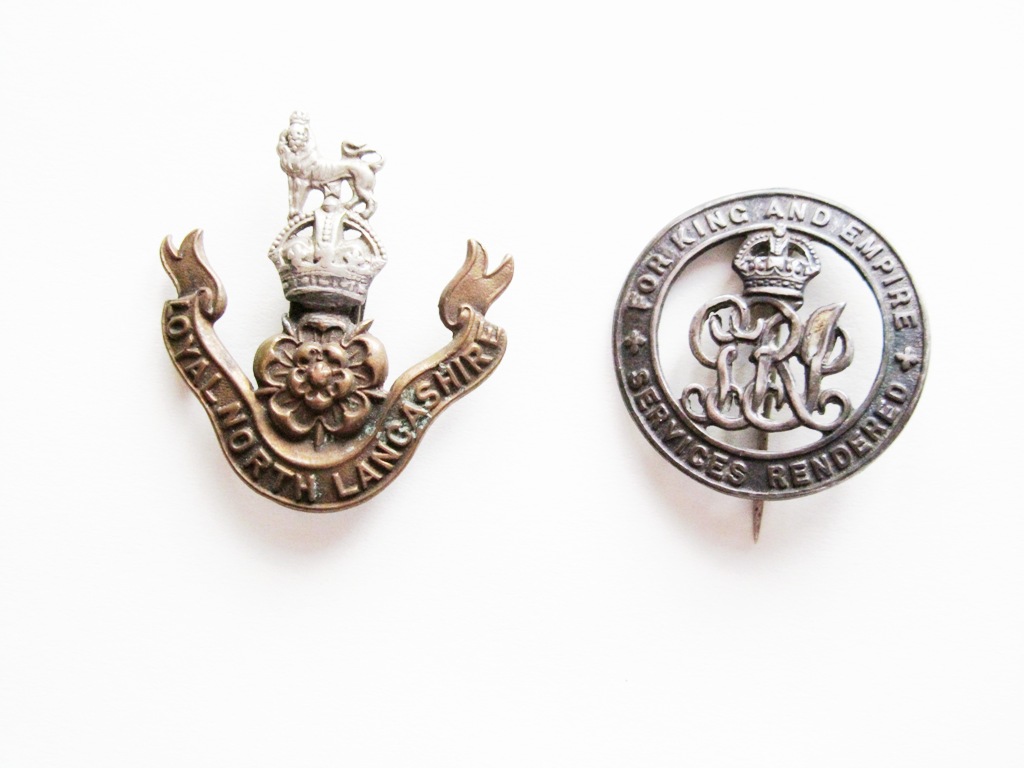
My grandfather  was lucky, he survived the conflict and did die in bed – but the Great War lived with him all his life. While the officer class, the  wealthy, the politicians and the monarchy came back to England  paraded their medals and glorified the valiant youth who had been sent to their death – and then toddled safely off to bed -  the reality was a life time of pain or poverty  for ordinary men. While the rich lived the life of the glitzy society  of the roaring 20s my grandfather and millions like him were trying to make ends meet on a meagre pension, being the 'humble' servants” of the War Commissioners in Chelsea. The letter was a physical manifestation of Sitwell’s damning poem – and Cameron’s actions in a terrible way, this week “square the circle”.  “Let’s sell some guns and bombs, keep business booming (literally and metaphorically!), fill the pockets of business and politicians, don’t worry about the dying and the maimed” The despicable, morally and intellectually bankrupt US  Defence Secretary and friend of Tony Blair, Donald Rumsfeld, gave us the benefit of his wisdom, morals and insight us a few years ago when he told us that all military excesses and war, death and casualties  can be justified with the never to be forgotten moral philosophy based upon the “stuff happens” imperative. Cameron is clearly keen to emulate him. You may think that things have improved; maybe they are better than when my Granddad wrote his begging letter but the National Charity "Help for Heroes" still has to raise millions because the government and the arms businesses who have profited from war do not ultimately pick up the real cost of the injured and the maimed. As I put my Grandfather's tissue thin, almost a century old letters away this morning there fell out of the box in which I keep them his two cap badges - cheap tin badges  displaying the legend "For King and Empire - Services Rendered"  - a cheap tin "reward" from the great and good for a life ruined. Stuff happens!
King and Empire were really grateful gave him two cheap tin badges
to wear with pride.

As I read the pages and look at the creased  sepia photographs, I think, too, how my grandfather could never in his wildest dreams have imagined on that night in March 1919 as he sat down to write his begging letter that almost a hundred years later his grandson would take his scribbling which have somehow survived the years and the photos of him standing proudly in his uniform and scan them into a computer (what would he have made of that!). And then 'publish' his words on something called the internet so that they could be instantly read by everyone on the planet – should they choose to look.  What a very long way we have come with our technology – aren’t we so very clever!  But at the same time we still glorify war, our Royal family still dress up in military costumes and wear  medals that they have not won, our Prime Ministers still send young men off to war and then wring their hands when a young soldier is killed.  And our  current PM goes to foreign countries and, in this week of remembrance, sports a poppy and drums up support for the selling of weapons of war and destruction. Does Mr Cameron not understand or even recognise the surreal and offensive nature of what he is doing?   We/he might be oh so very clever but  our morals and ethics lag far behind our technology.
Somewhere in northern France - with wounded comrades and
his lungs never to be the same again. This was an extra
"reward" from King and country. He (front row 2nd from right) and thousands like him
could treasure their disabilities with their tin medals and cap badges
 for the rest of their lives.

I only have small memories of my grandfather but from what I remember of him he was very quietly spoken and gentle and in that respect I often think of President  Eisenhower, a man prominent as a wartime general and  who later became President of the US. He confessed in his later life that he regretted his time as a soldier saying:  Every gun that is made, every warship launched, every rocket fired, signifies in the final sense a theft from those who hunger and are not fed, those who are cold and are not clothed’.   Or, another US President - John F Kennedy’s comment  'War will exist until that distant day when the conscientious objector enjoys the same reputation and prestige that the warrior does today.' I don’t think my grandfather ever became a conscientious objector but I know that he deeply regretted what the war had done to him and his family.  I'm sure that had he been alive my grandfather would have whole heartedly agreed with Harry Patch, the last serving British "Tommy" to survive. Patch died aged 110 in 2009 and famously said just before he died  "politicians who took us to war should have been given the guns and told to settle their differences themselves, instead of organising nothing better than legalised mass murder". For me, I have no hesitation in going along with Einstein who commented  'He who joyfully marches to music in rank and file and sends others to kill has already earned my contempt and sorrow. He has been given a large brain by mistake, since for him the spinal cord would suffice.'  I have absolutely no doubt that David Cameron fits that description exactly – even the most cursory consideration would have told a thinking person that drumming up arms sales – especially in a region already riven with war and conflict – is unacceptable. To do this and at the same time sport a poppy, the mark of sorrow and regret for all those who have died and suffered in war, is both grossly stupid and worse highly offensive.

04 November, 2012

Getting Undressed Under the Bedclothes!

As I get older I find myself often looking back with rose coloured glasses and momentarily, at least, longing for “the good old days”. I suppose most of us do this on occasions and maybe it’s a kind of release valve as you get older. The future seems daunting as we senior citizens battle with i-pads,  the attitudes of the young, text messaging and what seems the ever rapidly increasing speed of life, so in that context the past seems a safe haven. It was better then, all was  well with the world!

I mention this because two quite separate and unconnected things have occurred in the past few days.

Firstly, as I mentioned in  a previous blog, one of the ways that I fill my time nowadays is by sending out e-mails on behalf of the U3A (University of the Third Age.) It involves circulating about 500 local members with details of courses, group meetings and the like. Course leaders and others send items to me and I then collate them, put them in an e-mail and circulate to all the membership. It is not an onerous job and one which I thoroughly enjoy. But one aspect of it always makes me think. So many of the e-mails that I receive are so badly written, filled with errors (e.g. dates of events incorrect), filled with grammatical and spelling errors or quite simply rude and inconsiderate – often never a please or thank you. Bearing in mind that the vast majority of the membership are articulate, “well educated”, retired people – I find this strange and a little upsetting. It’s not what I expect!  I often comment  that these people “should know better” and  usually add “had the mails been from teenagers I would have said ‘Oh that’s teenagers for you – can’t spell, no manners’..........!”. I received one such e-mail from a member this week which was abrasive and ill thought out. In the end, having e-mailed him back twice about the content of his mail, I suggested, in frustration, that he might learn how to ask with a please or a thank you. I didn’t receive any response!
Could have been my classroom -
except we were all boys!

I, like I suspect many of the articulate retired people who send me  e-mails,  often comment that the world is deteriorating, manners, spelling, behaviour etc. is on the way down .........and that it was much better “when I were a lad”. But then I wonder if it was and  are the oldies, like myself, quite as virtuous as we think?   Is the world, today, such a terrible place, are the young  quite the dreadful people they are often painted and was it so much better in years past?

The second thing that occurred was this morning. As I put my shoes on to go for our early morning walk I heard Pat singing at the top of her voice as she had a shower – a hymn, the radio had the Sunday morning church service on.

For all the saints, who from their labours rest,
Who Thee by faith before the world confessed,
Thy Name, O Jesus, be forever blessed.
Alleluia, Alleluia!

When she came down stairs I jokingly commented to her, as she put on her shoes, about the warbling sounds from the bathroom. “Nothing like a good hymn to start the day” she grinned “it’s such a shame that kids don’t learnt these at school nowadays – they’re missing out aren’t they” I agree with Pat – but her comment again set me thinking – all these wonderful things that we did in the “olden days” – were they really so good?

My mother used to be very fond of telling me that life was so much better in days gone by. “You could go out and leave your front door open and no-one would steal anything” was one of her favourite “homilies”. She was talking about the time when she was growing up – in the 20s and 30s. And maybe she had a point. She would (when I was a teenager and still up until the day she died) frequently complain about “the youth of today” no manners, uneducated, lazy, long haired layabouts......” and so the list went on. Again, maybe she had a point – perhaps in the past there was indeed a golden age when everyone was honest, polite and well spoken and the young were dutiful towards their elders and betters. Perhaps the world was indeed a better place and   bathed in some sort of golden glow where everyone lived in perfect harmony.
I knew parts of Preston like this.

Except......and many might greatly disagree with me here.....I’m not sure the evidence supports this. I once suggested to my mother, in a brief moment of reckless bravery (I was about 45 at the time!), that maybe the reason why you could leave open your front door and no-one would steal anything was that for the vast majority of ordinary people there wasn’t much worth stealing in the house! Certainly in the street where I lived houses were furnished with second hand furniture and there were few, if any, objects of desire. Certainly little to attract any would be criminal. I never had any great urge to begin a life of crime by stealing Mrs Woodacre’s parrot who sat in his cage in her doorway on hot summer days or Tony Clarkson’s hand me down football or Mrs Graveson’s sheet music for “Come Into the Garden Maud” . My mother went ballistic when I said this – as was her fashion – and I still, thirty years later, occasionally massage the mental and physical scars left by the ensuing “discussion”!!!!!!
Me at 11 - bit of a
ragamuffin in my school
uniform!

Thinking back  I can vividly remember how my family struggled to make ends meet each week (it lead to frequent violent rows – even though we were “well off” compared with many) and I think of the long hours both my mother and dad worked to earn the meagre wages they did. Every penny was counted, no credit cards (some might say a blessing!), little opportunity for ordinary people to make savings by buying in bulk and putting stuff in the freezer, no cars to drive to a supermarket where prices might be less, no money for luxuries like holidays, card board in my shoes when I wore them out and mother couldn’t afford a new pair for a few weeks...........and so the list goes on. When I left school I began work in a drawing office as a trainee design draughtsman – a “plum job”, my family were delighted. I would be paid for holidays and I will always remember my auntie, quite overcome at my good fortune, saying to me “Oh Tony, if you save up you’ll be able to get a mortgage now you get paid for the holidays”! The excitement and the gilt, however, were rather tarnished for me. I needed a suit for work – I would no longer be able to wear my school blazer and I had few other smart clothes “Don’t worry” my auntie and mother said “we’ll go and see Charles”. We did........ ! Charles was an elderly man, smartly dressed and with military moustache and he had a gent’s used clothes shop in a Preston back street, mostly, as I remember it, filled with clothes that he bought from widows after their husbands had died. I came out with an old fashioned gentleman’s grey suit smelling of moth balls! Not what I had hoped for as the swinging sixties dawned. But, having said that, I was not exceptional – times were still hard for the majority – just don’t tell me it was better then. I often hoped that  some would be criminal would break into our house when mother went to the shops and left the front door wide open and steal the suit – but no such luck! It certainly did not have the appeal of an i-pad or stereo or mobile or Gucci outfit or Rolex – but it was, I suppose, the best we could do!
In my back yard - outdoor lavatory on the right!

In another arena, I often, in my years in the classroom, pondered on the sort of work the children I was teaching were doing and the fact that looking back at my old school books from when I was eleven or twelve the kids I was teaching and others in other schools were far in front of where I was – and in a greater range of subjects at - the same stage. My own school diet consisted of “reading, writing and ‘rithmetic” – it was all we did, adding up, chanting tables, writing spelling lists etc – it was no surprise that I was good at these things – it was my full school diet. But children in later years enjoy (if that is the right word) and are expected to develop skills and understandings over a much wider area. And despite the moans we might have, they generally do it very well and, I believe,certainly more successfully than I could ever do. I look back at my school years and remember the obvious poverty that many of my classmates suffered; I remember the cruel way in which Victor Bennett was treated by successive teachers because he didn’t know his tables or never had the answer. Today, Victor would be “special needs” and certainly have some kind of classroom support to enable him to make progress. I remember the violence with which Mr Roberts, the head teacher – known by us as “Cock Roberts” –  punished perceived offenders so that I, and many others, were terrified of stepping out of line in our class of 53 children. I remember the boys who languished at the bottom of the class and  suffered the venom of the teachers when they couldn’t remember the words of hymns like “For all the saints......” Yes, I find it very difficult to accept my mother’s premise that things were better then.

And as far the suggestion that everyone got on well together – both in the family and wider society, the evidence doesn’t seem to back that up. Both my mother and father came from large families – not unusual at the time – but both families had fragmented with internal strife where sisters didn’t speak to brothers, sons cut themselves off from fathers and the like. When my mother and father died I made efforts to contact long lost relatives and met people I never knew existed at the funerals. As I sat in a crematorium on the outskirts of Cambridge attending the funeral of my dad’s remaining a sister a few years ago. I was quite overcome that sitting by me where long lost and unknown relatives whom I had never known - so much for family life in that "golden age". Still on this this theme and returning to my earlier comments about Mrs Graveson’s sheet music for “Come into the Garden Maud”, Mrs Graveson was a  raven haired, bosomy woman who sang in local pubs and clubs. I once saw and heard her sing at a local church event – and yes, amongst other things, she did sing “Come into the Garden Maud” . She sang with a male “partner” and caused scandal in the street when she ran off with him – her “fancy man” my mother called him - not that I could see anything fancy about him!  She left her husband and son,  my friend, ten year old, Tommy.  No matter how hard I try I cannot believe that family life and commitment was as good as mother painted it in years gone by.  My experience does not support it. If it was any better it was not because of the intrinsic commitment or outlook of those concerned but simply that it was not so easy to break up.
Me and granddad just before he died -
he never left the tiny house where he lived
-except to go to France to fight in 1914

 And, of course, a look at the newspapers and newsreels of the time, a read through the history books  and they will tell you that world wars, murders and the like were far more frequent than they are today. Look at old photographs of the early years of the twentieth century and indeed up until the mid fifties and you will see scruffy kids, in hand me down clothes, dismal and bleak streets, houses (like mine) with no hot water or bath and an outside toilet where each week my mother hung a pile of torn up newspaper threaded on a string for toilet paper – we couldn’t afford the real stuff! Pat often tells of her childhood – of having to keep silent during the day because they lived in an upstairs flat and her parents were terrified that would be thrown out if she and her sister made too much noise and annoyed the downstairs owners. And as winter comes and we turn on the central heating she will often remark about how cold it used to be in houses – and how, as a girl, she would get undressed under the bed clothes to keep warm in the icy, unheated bedroom!

Whilst writing this I am reminded of George Orwell’s society changing book “The Road to Wigan Pier” which was published in 1937. The book was one of the formative documents that brought change to the British social scene in the immediate post war years. Orwell described the life, work, diet, expectations, living conditions of ordinary people in the north of England:
A powerful indictment of
"the good old days"

As you walk through the industrial towns you lose yourself in labyrinths of little brick houses blackened by smoke, festering in planless chaos round miry alleys and little cindered yards where there are stinking dust-bins and lines of grimy washing and half-ruinous w.c.s. The interiors of these houses are always very much the same, though the number of rooms varies between two or five. All have an almost exactly similar living-room, ten or fifteen feet square, with an open kitchen range; in the larger ones there is a scullery as well, in the smaller ones the sink and copper are in the living-room. At the back there is the yard, or part of a yard shared by a number of houses, just big enough for the dustbin and the w.c.s. Not a single one has hot water laid on. You might walk, I suppose, through literally hundreds of miles of streets inhabited by miners, every one of whom, when he is in work, gets black from head to foot every day, without ever passing a house in which one could have a bath. It would have been very simple to install a hot-water system working from the kitchen range,
but the builder saved perhaps ten pounds on each house by not doing so, and at the time  no one imagined that miners wanted baths.

Orwell goes on to describe in detail many of the houses he visited:

House in Mapplewell. Two up, one down. Living-room 14 ft by 13 ft. Sink in living-room. Plaster cracking and coming off walls. No shelves in oven. Gas leaking slightly. The upstairs rooms each 10 ft by 8 ft. Four beds (for six persons, all adult), but ’one bed does nowt’(for lack of bedclothes). Room nearest stairs has no door and stairs have no banister, so that when you step out of bed your foot hangs in vacancy and you may fall ten feet on to stones. Dry rot so bad that one can see through the floor into the room below. Bugs, but ’I keeps ’em down with sheep dip’. Earth road past these cottages is like a muck- heap and said to be almost impassable in winter. Stone lavatories at ends of gardens in semi-ruinous condition. Tenants have been twenty-two years in this house. Are in arrears with rent, and have been paying an extra 1s. a week to pay this off. Landlord now refuses this and has served orders to quit. Rent 5s., including rates.
Preston in 1949

Although we had moved on a little by the time I was born in 1945 I can still recognise in the street where I lived as a child what Orwell had seen in abundance only a few years before.

We often worry, quite rightly today, about things like global warming, traffic congestion and the like but I look back and remember the smoke filled atmosphere, the dense smogs and fogs of my childhood as factory and house chimneys belched forth their poisonous gases into our lungs. Only last week Pat was recalling to a friend the night of the Lewisham train disaster in December 1957 when her father was involved as a passenger. Trains had crashed in the dense London fog at rush hour and Pat’s family waited for hours, increasingly anxious not knowing if dad was injured. Eventually he walked in late at night having had to walk home – no mobile phones and in those days ordinary folk didn’t have a phone where he could ring to assure them of his safety.
A foggy night in Lewisham - and a
train crash which Pat still remembers

No, times are better! I often complain about my GP but in reality I’m so lucky. Each month when I go to the chemist to get my prescription for the many tablets that I take each day to keep my heart pumping I get a twinge of guilt – I get this all for free.  All I have to do is turn up the chemist once a month and collect it. In years gone by I would have almost certainly been long dead and would not have had the drugs available to help me – and certainly not for “free”. My grandfather, who died in his early sixties of heart failure, would never have believed such things are possible –  this, combined with my downstairs shower, two cars on the drive, the chance to travel up and down the country at will, to go on foreign holidays – and so the list goes open would have utterly amazed him. My wonderful mother in law, Winnie Green, lived to her mid nineties and increasingly, as she aged, she repeated how lucky she had been and how lucky she was to have grown up in a world that was getting better and better. She was right.

Of course, many of the things I have mentioned are very much “material things” and there is infinitely more to life. There are still huge problems in the world – maybe insurmountable issues. There are things that are totally unacceptable about the way we all behave and live our lives. Many in our society do not enjoy the privileges and opportunities that most of us enjoy but compared with the past we live in paradise.  No, I’m not convinced that there was a “golden age” when all was right with the world. Maybe people had a different outlook on life, maybe, because of the relative poverty and make up of society, people reacted differently and had different expectations, maybe life was simply just simpler. Maybe because of the poverty and hard times people had to “pull together”  but  I do not believe that ordinary folk were intrinsically any better or  more honest or more caring or better educated than today – in fact, if I’m honest, I think the opposite is true.

I’m not  defending the behaviour that we take as part of modern life. I’m not suggesting that all is well with the world. Read any newspaper any day of the week and one cannot escape all too often being horrified – politicians’ motives, celebrity behaviour, gang violence, drugs, an apparent breakdown in family life, a feeling that people might have lost their moral compass......the list is endless and unacceptable. I have absolutely no doubt that given the opportunities that most children have today we should expect them to do well in their school studies – compared with children of yesteryear they are enormously privileged. The widening gap between the haves and have nots is inexcusable but in the final analysis, with all these and other things,  I am certain that the world is on the whole a better place, by whatever measure you use, than it was half a century or more ago.

My final thought (you’ll be pleased!) on this has just occurred as I sit here at my PC. On the shelf behind me is my copy of the autobiography of the football player Tom Finney. For those not into football folklore Finney was arguably the greatest player to play for England. He played his whole career for Preston North End – my team. As a child I watched him many times and on numerous occasions stood outside the ground to ask for his autograph. It was and is often said about Finney that as well as being the greatest of footballers he had huge commitment – he only ever played for one club. Today big clubs would be offering many millions to buy him, he could have his pick of which great club he played  for and he would without doubt be a millionaire many times over. Players like David Beckham would  pale into insignificance besides the likes of Finney. In his autobiography Finney comments that the “one club man” praise is misplaced. He stayed at Preston, he says, because there simply were few other options available. There was not the money in the game that there is today. To make ends meet he was also a plumber (he is known as the Preston Plumber) as well as a footballer. Finney comments, he could not have gone to London or abroad to play, he simply could not have afforded to take the risk, to leave his little plumbing business. And in those days players did not have the contractual rights and opportunities they enjoy today – they were largely treated as pieces of meat by the clubs for which they played. In simple terms Finney never got the chance to play somewhere else even though any club in the land would have had him. In that context Finney argues, had he been playing today he would not have been a one club man – he would have seized the opportunities to go to Manchester United, or Real Madrid or one of the other great clubs.  Finney honestly admits – he would have reacted just as the top players of today react – Wayne Rooney, David Beckham and the rest – he would have “taken the money”. In short,  the temptation would be there and he would have been tempted.

 And that, I suppose, mirrors my argument with mother all those years ago – you could leave your front door open because there was no temptation, nothing inside to encourage any would be thief!

01 November, 2012

"Hiding in my room, safe within my womb......."

Simon & Garfunkel
It’s Thursday morning, I’m sitting in my office and rain is running down the window pain as I look out onto the street.  It’s a gloomy autumn day -  just the sort of day I like! Pat and I have already been out for a walk – before breakfast - picking up some shopping and the newspapers on the way back. So, now that the rain has set in I don’t feel any obligation to go out again. Pat may well decide to stretch her legs this afternoon – she’s just like her mother, always ready to go out!

I love days like this. I’m quite happy to keep busy in the house but feel no inclination or desire to go out, exercise, meet people or whatever. In the words of one of my favourite the Simon and Garfunkel songs “I am a Rock”: 
A winter's day
In a deep and dark December;
I am alone,
Gazing from my window to the streets below
On a freshly fallen silent shroud of snow.
I am a rock,
I am an island.

I've built walls,
A fortress deep and mighty,
That none may penetrate.
I have no need of friendship; friendship causes pain.
It's laughter and it's loving I disdain.
I am a rock,
I am an island.

Don't talk of love,
But I've heard the words before;
It's sleeping in my memory.
I won't disturb the slumber of feelings that have died.
If I never loved I never would have cried.
I am a rock,
I am an island.

I have my books
And my poetry to protect me;
I am shielded in my armour,
Hiding in my room, safe within my womb.
I touch no one and no one touches me.
I am a rock,
I am an island.

And a rock feels no pain;
And an island never cries.


“Hiding in my room, safe within my womb, I touch no one and no one touches me.” I’ve always been a bit of a loner – and always put it down to the fact that I was an only child. My parents were not terribly gregarious creatures, either, so I suppose that I grew up not really experiencing lots of social interaction. Certainly, I’ve always preferred my own company and never felt at ease in big gatherings. Parties and the like are a nightmare for me. Often in my life I have commented that I could exist very well on a desert island and Pat frequently tells me that I’m very independent – I don’t ask for help and am very independently minded. I think that’s a euphemism for awkward but I think she has a point! Without doubt I don’t need other people. My idea of heaven is to shut the front door and snuggle down with a good book or piece of music. If the door bell rings halfway through the evening I’m already grumpy by the time I get to the door! It has always been thus; as a child or teenager when mother and dad went off to work and it was the school holidays nothing gave me greater pleasure than to settle down with a book rather than being out with the lads.

I may be wrong, but as well as my own predisposition to a quiet life, I’ve often felt that having spent forty years in the classroom I was always glad of a bit of “space”. Being in a classroom all day surrounded by 30 or 40 demanding children meant that by the time I came home at night I was looking forward to a bit of peace and quiet. Other people maybe would have wanted a lot of adult company – I didn’t.
Card players at play

As I sit writing this, the house is not, however, silent. In the front room I can hear Pat and her three friends having a morning playing cards. They meet at each other’s houses every week or so and have an afternoon or morning enjoying a game of cards. For Pat, I think, it’s important – she enjoys playing cards (I’m an unwilling player) but she equally enjoys the chatting as they play. Pat is also a keen member of the local U3A (for those not familiar this is the University of the Third Age – a national network of groups who organise activities, lectures and the like for people over fifty). Although I’m a member I am very much a “sleeping partner” doing the publicity etc. for the local group rather than an active participant in some of the many groups and activities. This morning for example I’ve just sent out an e-mail to the four or five hundred local members to advise them of upcoming events: a music group, a movie group and a walking group. Pat takes part in lots of the activities – cards,  French conversation, movies, helping to run a computer group for older people learning computer skills etc. Again, she enjoys not only the event but the social aspect as well. But for me, I’m quite happy sending out newsletters, talking to people via e-mail and being, as it says on the song, “safe within my womb”.

Maybe I’m a bit odd but I’ve always preferred my own company. In years past I would occasionally pop out for a quiet beer at the local pub – my idea of heaven was a quiet beer, sitting in the corner with my Guardian newspaper. The prospect of standing round the bar with the crush of revellers filled me with horror! When I was at work I became increasingly irritated at the “assumptions” that were made. For example, when Christmas came along and a staff outing was discussed, the assumption was always that everyone wanted to be part of a big loud “bash”. One Christmas when the staff were discussing what to do and where to go on the Christmas staff outing I suggested (in all seriousness) that we go to a performance of Bach’s B Minor Mass which happened to be on in Nottingham. My idea got short shrift, indeed a couple of the staff laughed at it – which I felt proved my point about assumptions being made. It seemed to me that everyone assumed that everybody enjoys big groups, lots of social interaction and the like but my suspicion is that I'm not alone in my liking of the quieter things in life and my own company. I've got this secret theory that there are more around like me but they are just harangued by "the madding crowd" into grudgingly taking part!

Having said that, I am also very aware that, since I retired I have got worse. When I retired I had visions of my having the time, the opportunity and the inclination to get out and about, to be a bit more of a social animal. Not to be a party goer – that would have been one step too far - but at least to happily go off to concerts and the theatre; to have friends round for a drink or whatever. In the event it hasn't really happened – and I have to admit it’s down to me. I am very conscious that as I get older I could happily live in a more or less silent world – devoid of much conversation or social interaction. Only the music of Bach would enter my world!

I do have to work hard to make myself join in, book concert tickets, go out on  a social occasion.  I am very aware that I should not cut myself off. I am also very aware that I must not do this – Pat, although being a quiet person herself, loves the company of others and to occasionally go out. She does need other people and just as she puts up with my solitary outlook on life she too needs me to be a bit more outgoing. At one level I console myself by believing that to a degree this is a “man thing” – that men tend not to “do” the social interaction thing that women seem to do. This was brought home to me a few years ago when I was in hospital. There were five or six blokes in my cardiac ward and we would often never speak apart from a nod of acknowledgement or a word of thanks when we shared a newspaper. I well remember one day when a nurse entered the ward -  she had just left the parallel women’s cardiac ward – and when she got to my bed commented “what is it with men? – it’s always silent in here, nobody talks, in the women’s ward they are all sitting chatting, discussing their families their illness, their plans and laughing. The men’s wards are so quiet and miserable!”  I know that she was right. I read an article a year or two ago which suggested that men who are left as widowers often find it far more difficult than women left as widows since the men don’t get out and about to share their loneliness.  Women walk to the shops, they stop for a chat with someone they know, they talk to the shopkeeper. Men just go down to the shop, get what they want and come home – back to themselves. I don’t know if that is true but I suspect it is – it would certainly be true for me.

John Donne
The words of Simon and Garfunkel’s song not only reflect many of my feelings but also maybe point to some truths that I also feel. There is a huge safety mechanism involved I am sure. I feel secure in my own world “I touch no one and no one touches me”. I think even from childhood I felt that. But, of course, whatever my feelings  we are social animals and we do need each other. So in making my world secure when  “I touch no-one” and I am “safe within my womb” I also impinge on the world of others – in my case, most obviously, my wife Pat. I know as well that as I become older I will increasingly need the help of others. In short I cannot remain an “island”.  So, although I'm comfortable with my outlook on life it brings anxieties – I know that I must not become a recluse, inhabiting my own little world. – Other people, as Pat occasionally reminds me, in some small way need me. And, without any doubt, I am going to need others.

As the metaphysical poet and thinker John Donne reminded the world in 1624 ".......No man is an Iland, intire of it selfe; every man is a peece of the Continent, a part of the maine; if a Clod bee washed away by the Sea, Europe is the lesse, as well as if a Promontorie were, as well as if a Mannor of thy friends or of thine owne were; any mans death diminishes me, because I am involved in Mankinde; And therefore never send to know for whom the bell tolls; It tolls for thee....". If no lesser person than John Donne advises this then I suppose must follow his advice! I must keep trying to widen my horizons, be part of the "maine" and be involved with people – no matter how “painful” it is! Perhaps I should make this my New Year resolution! I’ll give it some thought as I sit here feeling snug, secure and cosy and gaze at the running rain puddles rather than the  “freshly fallen silent shroud of snow.” envisaged by Paul Simon and Art Garfunkel! Watch this space!