19 October, 2018

Peterloo, Preston & Potato Pies


On Wednesday night we went to the cinema, here in Nottingham, see a preview of the soon to be released film “Peterloo” which tells the story of the Peterloo Massacre in Manchester on August 16th 1819. The film is on general cinema release from next week. For those not familiar with the historical background and context of Peterloo (shame on you!) what became known as the Peterloo Massacre came some four years after the Duke of Wellington’s victory over Napoleon at Waterloo in 1815. The turmoil in Europe caused by the Napoleonic Wars had impacted upon trade and this was exacerbated by a series of bad harvests. One result of all this was that the British government introduced the notorious and hated Corn Laws to keep the price of grain high in the face of cheaper foreign imports. Consequently, while this made the great landowners – the aristocracy – wealthy it had a huge impact upon food prices – especially bread – driving many ordinary people close  to starvation. Added to this the Napoleonic Wars had impacted, too, upon wider industries and one of the worst effected was the Lancashire cotton industry; the industrial revolution had changed the industry forever – mechanisation had brought the building of the great Lancashire cotton mills but this in turn gave rise to cheap labour, starvation level wages, dreadful working conditions, unemployment and grinding poverty as machines increasingly took over the roles traditionally done by man and womankind. 

As I write these words I am reminded that maybe there are parallels with today - as stupidly, via Brexit, we seek to walk away from the opportunities, friendships and shared values that Europe provides. At the same time we are being constantly reminded that Artificial Intelligence and advanced technology is threatening the jobs of thousands, perhaps millions. History, it seems, is starting to repeat itself!

It was against this background that there grew up the desire to change things and one of the most important of these desires was to reform the voting system so that everyone (or at least every man) had a vote. Once ordinary people had a say in the government it was argued then things could be changed for the better. There was, however, a problem. Many areas of the country – especially in the industrial north where conditions were the worst - had no members of Parliament.  Manchester, for example, was one such place. Despite being one of the major urban and most densely populated areas of the country it had no representative in Parliament and the movement developed in Manchester and similarly affected places to change this state of affairs.
A contemporary depiction of Peterloo

In a sense this was closely linked to the American War of Independence that had occurred forty or so years previously when America broke off from British domination and became a country in its own right. At that time (1773) in the American port of Boston, for example, local Bostonians in an event that became known as the Boston Tea Party, poured chests of tea (which were taxable – the money going to far off London) into the harbour at the same time announcing that there would be “No taxation without representation” – in other words they would not pay the tax demanded by Britain unless they had some representatives in the British Parliament.
And another

Hard on the heels of the American War of Independence came the French Revolution which sent shock waves through the capitals, palaces and aristocratic salons of Europe and brought fear to the ruling classes of the continent that similar events might occur in their countries. In Britain, as soldiers returned home from the war against Napoleon and against a backdrop of unemployment, food shortages and famine there was a real fear that insurrection and revolution might break out as it had done in France in 1789. In this context the demand for political reform became louder.

The story of Peterloo that grew out of this is short and violent. Its effects, however, became long lasting and of crucial important to the freedoms and rights that we in the UK enjoy today. A few years ago a report suggested – rightly I think - that Peterloo is, together with the signing of the Maga Carta and the Putney Debates of 1647, one of the three most important events to influence political reform in our island’s history. Magna Carta, signed by King John in 1216, gave very basic rights to all freemen – the right to a fair trial etc. and was, perhaps the first step towards some kind of democratic government and relationship between the individual and the state. The Putney Debates  were set up during the Civil War by Oliver  Cromwell to discuss a constitution once the King had been removed. During those debates there were, for me, spoken some of the greatest, most important – if not the greatest and most important - words ever spoken in the English language and which defined the relationship between the individual and the state. They were spoken by Thomas Rainsborough, a Parliamentary soldier and a Leveller. He believed in universal suffrage, an end to the monarchy, religious tolerance, universal ownership of common land and equality of justice for all men. One of the greatest speakers of his day, Rainsborough  argued with Cromwell about the nature of democracy and the right to a vote. This is a transcript of some of the words spoken between the two men in the debate:

Oliver Cromwell: “If they that have no goods and chattels make the laws equally with them that hath, then they will make laws to take away the property of them that hath.”
Thomas Rainsborough: “If it be that all Englishmen cannot be free and some Englishmen have property and other have nought, then you have said it, my Lord General, not me...For really, I think that the poorest he that is in England hath a life to live as the greatest he and therefore truly, Sir, I think it clear, that every man that is to live under a Government ought first by his own consent put himself under that Government; but I do think that the poorest man in England is not bound to that Government if he hath not had a voice to put himself under.”
From the film "Peterloo"

Wonderful words, no matter how many times I read them I cannot help but get a lump in my throat; they say in a nutshell and in the most compelling and uplifting way, how we are all, no matter what our social or economic standing, entitled to certain basic rights: “.....I think that the poorest he that is in England hath a life to live as the greatest he.....” and “every man that is to live under a Government ought first by his own consent put himself under that Government; but I do think that the poorest man in England is not bound to that Government if he hath not had a voice to put himself under.” Those who met in St Peter's Fields in Manchester two centuries ago would have understood perfectly what Rainsborough was saying: we all have an obligation to support and live within the laws of our elected government - but equally we all have an equal right to a say, a vote, in choosing that government no matter how rich or poor we are; everyone has a vote and everyone's vote is equal. But, if we do not have a vote, a say in who shall govern us, then we have no obligation to that government. Rainsborough’s words go straight to the very heart of all the rights and privileges that we all enjoy today; they should, in my view be learned by heart by every child, man and woman in the country, be displayed on every classroom and public building wall, and be printed upon all government letterheads and documents so important are they in defining what our democracy is about and what our country should be about - and why we should protect it at whatever cost.

But the third of these three great events, Peterloo, left a different, but none the less important heritage. Against the background described above on August 16th 1819 about 70,000 ordinary people from the area gathered on St Peter’s Field in Manchester to listen to one of the great political orators of the day, Henry Hunt, talk about reforming the electoral system and extending some form of democracy. Hunt, in later years, became the MP for my home town - Preston, so I had long known that the story of Peterloo had a local connection to my own life. There were men women and children in the crowd, it was a peaceful gathering but local magistrates and cotton mill owners, under pressure from the government in London, called on the Manchester and Salford Yeomanry to arrest Hunt and several others. The Yeomanry charged into the crowd, knocking down a woman and killing a child, and finally apprehending Hunt. However in the midst of the throng they became fragmented and lost control, acting with violence on unarmed people. The 15th Hussars were then summoned by the magistrates to disperse the crowd. They charged with sabres drawn, and in the ensuing confusion, 15 people were killed and nearly 700 injured. There were reporters there from several newspapers and in the days that followed the event was widely reported together with illustrations of what took place. One of the most famous reports was that of the London Times which gave the event the name the Peterloo Massacre, an ironic comparison to the Battle of Waterloo, which had taken place just four years earlier.
Maxine Peake as she appears in the film

Peterloo's immediate effect was to cause the government to crack down on political reform but in the longer term it created the atmosphere for change – it caused the first cracks in the dam. As newspapers became more common, as literacy slowly improved and with the coming of the railways communications improved so the demand for political reform grew and became more organised. In 1832 the Great Reform Act was passed outlawing parliamentary seats being “bought” and towns such as Manchester were given the right to elect MPs. Importantly, men were given the right to vote. However, it was only men who owned property worth at least £10 could vote, which cut out most of the working classes, and only men who could afford to pay to stand for election could be MPs. This 1832 Reform Act did not go far enough to silence all protest and another 30 or so years until the passing of the Reform Act of 1867 would pass before more change came and all men would be enfranchised. As we all know, it was not until 1918 that some women (property owners older than 30) could vote. At that election, the first woman MP was elected but women would have to wait until 1928 to receive the same voting rights as men. It had been a long struggle – some may say it is still not complete – but the events two centuries ago at St Peter’s Field in Manchester was a crucial staging point in that struggle and the event that perhaps eventually opened up the flood gates to reform as the dam burst.
Film Director Mike Leigh at Wednesday's Premier of his film

The film “Peterloo” directed by Mike Leigh is magnificent and tells the tale of the events of that far off day. The acting is superb and as I sat in the cinema I was suddenly back in my home town of Preston (which is about 30 miles north of Manchester) where I was born, grew up and lived until I was about twenty. As I mentioned above, I had already felt a connection with the events on that far off day because Henry Hunt, the great west country orator subsequently became MP for my home town, Preston and his is a name still revered there, but there were other, more personal "connections".  Many of the cast were, I knew, Lancashire born and bred and their soft Lancashire accents suddenly made me feel at home. I was back in my childhood and youth, too, when I heard some of the Lancastrian sayings and colloquialisms that I grew up with and haven’t heard for years – for example when actress Maxine Peake chides one of her family and tells him to “think on”; how many thousand times did my mother say those two words to me as a child when I had misbehaved......”Don’t do that again” she would say “Think on”! Or when one of the characters goes off in a huff and his angry wife says “Oh, he’s got a cob on” – pure Lancashire from my childhood! So, too, the man who declared that he was going home to enjoy the potato pie his wife had promised to bake for him that night -  I could almost taste the delicious Lancashire potato  pies from Billy Southworth’s pie bakery on the corner of Rigby Street and Maitland Street in 1950s Preston that I enjoyed so much as a child. The taste and smell of them now are overwhelming me as I write this and making my mouth water! And then, crashing into my consciousness as I sat in the dark cinema a scene where the inside of a cotton mill is portrayed took me back in time. Line after line of looms, with the women weavers tending them. The noise excruciatingly loud and I was suddenly back in Emerson Road Mill or Horrockses where my mother and auntie worked as weavers. I can still hear that noise today, I can still feel the vibration of the pavement in New Hall Lane as you walked passed Horrockses on a working day – like some mechanical earthquake.  I can also remember vividly how different it was during Preston Holiday Weeks at the end of July each year when the mills closed for their annual holiday and the streets seemed strangely silent. My mother was not deaf but could lip read almost perfectly, the result of years spent in the unremitting noise of the mill. As this mill scene filled the screen my wife turned and smiled at me – she knew exactly what was going through my mind.

As always, director Mike Leigh gets it just right, capturing the very essence of people, places and situations but there was one other thing that took me back – not about the film but about the story of Peterloo – something else that is very much part of me and has been for the past sixty odd years.
Henry Hunt addresses the gathering in Leigh's film

One of the most important “spin offs” from Peterloo came three years after the event. At the time of the massacre a local Manchester newspaper, the Manchester Observer had been instrumental in the organising of the reform movement in Manchester. In the aftermath of the event this newspaper was closed down by the magistrates as it was alleged to be seditious.  As a result, and to take the Observer's place, in 1821 the Manchester Guardian was founded by a reformist cotton merchant John Edward Taylor with backing from the “Little Circle”, a group of like minded, non-conformist businessmen. It was from these humble beginnings that my newspaper of the past 60 plus years grew – first as the Manchester Guardian and now today as the Guardian one of the great crusading newspapers of the world. The Guardian, a left of centre, liberal, reforming newspaper is often at the forefront of campaigns to improve the lot of individuals and groups within  British society and further afield. I can’t begin to contemplate beginning  a day without my Guardian, it has been my lifelong companion, mentor, and looking glass on the world for nearly the whole of my life. Without Peterloo it is a matter of conjecture as to whether this internationally acclaimed newspaper would be here today. The Guardian was born out of the events at St Peter’s Field.

When I was about twelve years old, in the mid 1950s, I began to work as a newspaper delivery boy walking round the narrow Preston streets reading the papers as I delivered them. The majority of papers I delivered to the rows of tiny two up two down terraced houses were everyday tabloids – the Mirror, Express, Herald, Pictorial, Mail etc. I even delivered the Daily Mirror to my own house!  My mother always read the paper and I suppose that from an early age, I got used to the fact that reading a daily paper was what people did. My mother, a cotton weaver, always read the Mirror editorial and the daily item by William Connor a man who wrote for the Mirror for many years under the pen name Cassandra. She always had some disparaging comment about what she read – usually about politicians - and so again, I suppose that a healthy criticism and cynicism about what was in the papers was part of my inheritance.
Panic sets in as the soldiers charge into the crowd

Each morning before school I would tread the streets delivering my round. I can still remember the newsagent Joe Unsworth’s scrawling pencil addressing the edge of each paper: 156 New Hall Lane, 18 Caroline St, 72 Wilbraham Street, 16 Owtram Street......... . I knew what everybody read and what to expect as I pulled each newspaper or magazine from my bag. I knew where those who enjoyed a flutter on the horses lived because they took the Racing Post, I knew where the Catholic or Jewish people lived because there was always a healthy number of Catholic Times or Jewish Chronicle  to deliver and I knew where the elderly ladies sat with their knitting needles whenever I popped a My Weekly or Woman’s Weekly through their letter box.

One house, however, was special – the house that was at the furthest point of my round  - 220  Brockholes View. It was this house that largely and unbeknown to me at the time, would change my life and largely make me what I am today.  All those years ago as I delivered its newspapers I never saw the house itself - it had a high wall in front of it - and so I posted the daily newspaper (and each Thursday the Radio Times) through a letter box in a small door in the wall. The only time I saw the owner was each Christmas, when the wall door would open as I pushed the newspaper through, and an elderly gentleman would press a small Christmas tip into my hand. This elderly man took the Manchester Guardian (as the Guardian then was) each day; it was the only Guardian I delivered on my round. As a young teenager I quickly learned that this was the only paper worth reading. By 13 or 14 I was an avid reader.

As I walked the streets all those years ago, reading the closely printed paper – I read sports’ reports first. But then, as I became a little older, political and news reports which seemed, so far as my young mind could judge, to be far more factual and unbiased than those I read in other papers in my bag. Political parties and people of all persuasions seemed to be praised or chastised in equal measure - but always with an argument based on fact rather than prejudice, inference or emotive language.  There seemed no sensationalist headlines, no obvious bias, and, something I loved, a rich, challenging vocabulary and ideas – words that I had never read and in all honesty didn’t know how to say or which spoke of ideas that I little understood but about which I wanted to find out. I instinctively knew that this was the real thing rather than the shallow, easy to read tub thumping of Cassandra in the Daily Mirror.
The very first edition in 1821 of the Manchester Guardian

Much of the stuff I read was, at that stage, beyond me, but I soaked it up. Often at the end of the round and before making my way to school I would go home and look in my mother’s old battered dictionary for words that I didn’t understand. I leafed through my second hand set of Arthur Mee’s Encyclopaedias to find out about places, events and names that were mentioned in the Guardian. The Guardian headlines seemed to my young eyes and mind to be calm factual and not emotive clarion calls of the other papers that I delivered and as I walked the streets, with my bag of newspapers around my neck, I knew it was quite different from every other paper and it increasingly satisfied my inner desire for clarity and detail with news that had some worth, not sensationalist tabloid dross or scurrilous tittle-tattle.  Each day, as I left Joe Unsworth’s paper shop with my bag full, I took the Guardian out and read it all the way round the streets.  It was usually very crumpled and often wet by the time I delivered it to 220  Brockholes View! I devoured it and dragged my feet as I approached the doorway in the wall and knew that I would have to push it through the letter box. I recently Googled 220 Brockholes View and was pleased to see that the door in the wall is still there; the door has changed and the wall has been painted, but it's still the place where, each morning, I would post a rather crumpled and often damp Manchester Guardian through the letter box!

The rest as they say is history! Once I began to buy my own newspaper there was only one for me! When I left Fishwick Secondary Modern in 1961 and took a job as a trainee draughtsman at Thermic Engineering in Salmon Street, just off London Road in Preston, each morning as I walked to work I would pick up my Manchester Guardian. It would sit on the edge of my drawing board until lunchtime when it would be devoured with my sandwiches! When, a few years later I enrolled on an A Level course at Blackpool Technical College with a view to becoming a teacher I would sit on the Ribble bus from Preston to engrossed in my Guardian oblivious to the passing Fylde countryside. And finally, when I left home and found myself at teacher training college here in Nottingham my Guardian was still my daily companion. My wife, a fellow student, always said that she first noticed me because I was always the person sitting in the empty lecture theatre prior the lecture engrossed in his Guardian! It  has started my day ever since those far off times!  

So, as we sat in the darkened cinema on Tuesday evening enjoying Mike Leigh’s retelling of this terrible yet great and important event in Lancashire and wider British history it brought me, on a variety of levels, back to my on Lancashire roots. As we left the cinema to take the tram back home the Nottingham streets, the wine bars and the clubs were, as always, full of youngsters enjoying the night. I wondered to myself how many of them know (or even care) that the rights and the privileges that they now take so much for granted were hard won by the ghosts of the past – in this case in my home county, on St Peter’s Field almost two centuries ago. 

Like all things, familiarity breeds contempt and it is a sad paradox of modern civic life that we have all had it so good for so many years – a largely peaceful world, a steadily improving quality of life, better health, better diet, greater opportunities to fulfil our ambitions and dreams, and all the other things that we just accept now and take for granted as the everyday expectations of life – that we sadly often no longer appreciate why these hard won “rights" and opportunities were so important and needed in the first place. Institutions like the EU, the Human Rights Act, the United Nations, our legal and electoral systems, the NHS, our free education system, our various welfare policies and departments......and so many other institutions, rights and privileges that are necessary to ensure our present way of life were all brought about because life was so uncertain, precarious or fraught with danger before they existed. The 17th century philosopher Thomas Hobbes commented about life in his times, saying that it was "poor, nasty, brutish and short" - and I'm sure that those who found themselves at St Peter's Field in  August 1819 would have agreed with Hobbes; but what they, and others, indirectly won that was the security, care, full stomachs, generally good health, and a peaceful world that we today enjoy. As I look at today's world - Brexit, populist extremists taking control across the world (even in what we all think of as a citadel of democracy,  America)  and a disaffection and uncaring attitude towards democracy, civic pride and involvement by many I fear for the future;  we are forgetting our past and just how terrible life was in days gone by. As the ex- Lord Chief Justice Lord Bingham famously said upon his retirement as the most senior judge in the land a few years ago: “ Which of these rights, privileges, institutions and laws would you discard? Would you prefer to live in a country where they did not exist? There are, indeed, countries in the world where these rights,  privileges, institutions and the rule of law are not available to their populations, but they are probably not  places where any of us would wish to live”.  Amen to that.

So it is right that we remember that fateful day two centuries ago when a few thousand humble Lancashire folk went for a day out to listen to a public speaker in the hope that their difficult and dreadfully hard lives, and the futures of their children, might be improved. In the event, a happy day in the August sunshine became a massacre but in being so it also created in the longer term the chain reaction of circumstances, people and events that made today’s world, and indeed my own world, what it now is.

If you haven’t seen “Peterloo” then go and see it – I promise that you’ll not only enjoy it as a good film, but you will learn about one of the great events in British history.  Perhaps, too, it will make you proud of the precious gifts that our ancestors gave to us and it just might  encourage you to take an active part in using, cherishing and defending the rights and privileges  that are now so much taken for granted in our democracy and that our forefathers and mothers won.  In this day and age it has never been more important stand up for democracy as we face threats of extremism of all kinds: globalisation, fake news, tyranny, populism and attempts by people and organisations who would, if given the chance, control us and take away those hard won freedoms and rights  which were gained at such a cost. Mike Leigh's "Peterloo" reminded me of the importance of all of that – but, as I walked back through Nottingham’s streets on Wednesday evening it also, in a small way, connected me, now in my eighth decade, with my home county of Lancashire and with my own long ago history and how it made me what and who I am.

01 September, 2018

Talent is Everywhere, Opportunity isn't.

Last Friday evening I lay in bed before putting the light out doing what I often do at that time of the week – trying to complete the New Statesman cryptic crossword. I receive my weekly copy of the magazine each Friday and reading it is my bedtime reading for the weekend.  Last week’s crossword was a little different – as well as solving the cryptic clues one had to use the answers to solve another problem – identify a famous book, its author and the place where the book’s action takes place. In fact, I was quite pleased with myself because I managed to identify the book before I had solved all the clues and as I knew the book very well immediately knew the author and the place where the action took place in the tale.

As I turned out the light feeling rather pleased with myself a few lines from the book came into my mind: ‘… What we call civilisation – the accumulation of knowledge which has come down to us from our forefathers – is the fruit of thousands of years of human thought and toil. It is not the result of the labour of the ancestors of any separate class of people who exist today, and therefore it is by right the common heritage of all. Every little child that is born into the world, no matter whether he is clever or dull, whether he is physically perfect or lame, or blind; no matter how much he may excel or fall short of his fellows in other respects, in one thing at least he is their equal – he is one of the heirs of all the ages that have gone before.  The book is Robert Tressell’s “The Ragged Trousered Philanthropists” and was written just over a century ago; it is one of the great socialist books and a great favourite of mine. It gently but so tellingly pulls apart the capitalist system. The words I quote are spoken by the “hero” of the story Frank Owen as he explains to his fellow workmen how they are being made fools of and being cheated by their employers and the capitalists of the world.

When I woke the following morning I read  that the BBC news presenter Mishal Husain had been interviewed about her career. Husain is one of my favourite news presenters – she is clear, concise and, importantly for me, always strives to present the news in an impartial, factual manner – not like the modern trend where one so often can work out what the presenter thinks about a particular story by the inflection in their voice and the expression  on their faces. In the interview she commented that given the present world “With a name like mine, my career would only have been possible in Britain.”  
Mishal Husain - an excellent news anchor - and fully deserving
of her position - but let's not go over the top
about how well she has done. She had a good deal of help.

I know what she means – given the climate of animosity against Muslims to have a Muslim,  and a woman as well – heading the UK’s premier news programmes like Today  is no mean achievement. And certainly, I suspect she would have found it impossible in many countries of the world. I have absolutely no doubts that Husain is the right person for the job  and fully deserves her position at the top of the tree.

But I wondered , is that all there is to it? Clearly, Mishal Husain has done very well for herself but if one digs a bit deeper she did start out from a pretty high level. A quick look at Wikipedia gives the basics; she is the daughter of a doctor who worked in the United Arab Emirates and Saudi Arabia, where foreign workers don’t pay income tax. Her grandfather was a general in the Pakistani army. She attended international schools in the Gulf states and then to £10,000  a term Cobham Hall School in Kent before, rightly,  going on to Cambridge University.  Given that privileged background I wonder to myself should we be surprised that she has been successful – indeed, would it not be reasonable to believe that given that start she ought to  be successful. From where I stand anything less than  complete success in one's life and career from those starting points would seem to be an abject failure. Husain has done well but so should. In the end fate dealt her a winning hand so we should not feel the need to applaud her in any special way; no more, no less.

She is excellent at her job – no question, and fully deserves to be where she is but imagine if she’d been born in Bradford or Halifax or an inner city area of any of our major cities, perhaps the daughter of a Pakistani shopkeeper or factory worker or hospital porter. What if she had  attended one of  the local comprehensive schools so much maligned by the Tory party in favour of grammar schools.  Suppose she had won a place at one of our lesser universities other than Oxbridge?  I wonder would this Bradford-born Husain, without status and wealth and with a broad Yorkshire or Lancashire or Geordie accent and vernacular conversational style, have been able to work her way up so smoothly through the corridors of power to the top of the tree? 

Well, maybe she would, but to be honest I’m a bit sceptical! If the young Muslim Mishal came from Bradford, Liverpool or Sunderland - and all places in between - had made her way from her father's corner shop via Bog Standard Street Comprehensive School and then Gas Works University to the top of the BBC and establishment tree than that indeed would be real cause for celebration.
Cobham Hall School - not your average neighbourhood
comprehensive. Pay your £10,000 each term and you buy
a future.

As I read the article over my cornflakes the words of  Robert Tressell’s “hero” in The Ragged Trousered Philanthropists came back to me from the previous evening:  “....Every little child that is born into the world, no matter whether he is clever or dull, whether he is physically perfect or lame, or blind; no matter how much he may excel or fall short of his fellows in other respects, in one thing at least he is their equal – he is one of the heirs of all the ages that have gone before....” . We live in a world that is becoming more unequal by the day and education is one of the few vehicles that can slow this trend. In the UK we have an increasingly unequal education system where social class, money, home tutoring by rich parents, the old boy network,  public schools (which for anyone reading this abroad are anything but “public” - they are highly  selective and fee paying), independent schools, grammar schools and not least the policies of the Tory Party buys success. Our educational "system"  - I use that word loosely since "system" implies something planned and organised to provide something of benefit - a description that in no way fits the ramshackle, vested interest  shambles that we actually have - seeks to give some already wealthy or fortuitously able and thus privileged  children an extra advantage,  an extra step up the ladder, at the expense of the majority, the ordinary rest. We owe it to all our children and future generations to ensure that they are all - bright, rich, poor, average, lucky, unlucky, disabled, black, white, boy, girl - equal heirs  and have equal access to the "accumulation of knowledge" that we call civilization - to do less is to diminish the notion of "civilization". As Orwell reminded us in Animal Farm "All animals are born equal but some are more equal than others". Mishal Husain is a wonderful professional who deserves every possible success and plaudit - but she was born "more equal", she was given a head start, a few steps up the ladder of success than many other young Muslim girls and that is the context upon which she must be judged - not to deny her success and position but to at least put it into context.

As I finished the article and finished my bowl of cereal a few of Hillary Clinton’s words which I wrote in my little book of quotations in 2013 came back to me: “Talent is everywhere opportunity isn’t.” Quite.

26 August, 2018

The lost age of elegance

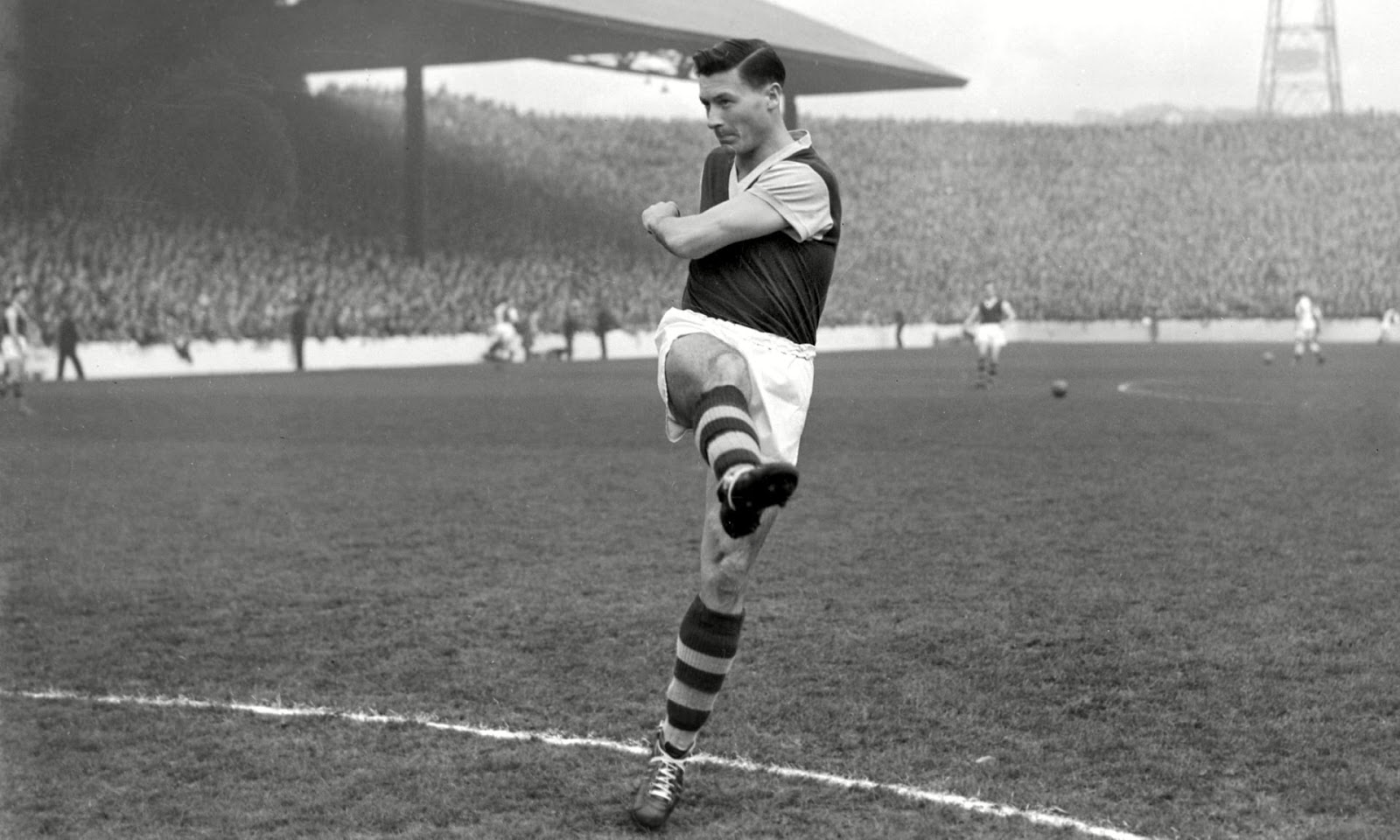
Jimmy McIlroy - an elegant footballer and an elegant man.
Earlier this week the footballer Jimmy McIlroy died aged 86. He was one of the great players of the 1950s. Unlike today’s sporting superstars he didn’t earn millions or live in gated mansion or own a fleet of high powered supercars. He didn’t sport a silly hairstyle or scream obscenities on the pitch when something went wrong nor did he get into drunken street brawls outside night clubs in the early hours of the morning. When he at last retired from the game he earned a living by taking up bricklaying and reporting on football for his local newspaper. McIlroy was appointed MBE in 2011 for his services to football, and Burnley’s Turf Moor ground, where he watched the team for many years after retiring, has a stand named after him.

 I saw McIlroy play on numerous occasions. He played for most of his career at Burnley, an “unfashionable” team but in those days one of the top teams of the land. He also represented his country - Northern Ireland – throughout his career. I have stood at Turf Moor or at Deepdale -  my team Preston North End’s ground - and watched McIlroy whenever Preston played Burnley and admired his skills. In those far off days to see two of the UK's greatest players and sportsmen – McIlroy and Preston’s Tom Finney -  on the same pitch was a rare privilege. It is unlikely I - or indeed anyone else - will ever have the opportunity again to see two such great talents but above all such great sportsmen and gentlemen on the same field of play. Times, in sport – as in life – have changed, and not always for the better.

In the Guardian’s obituary of McIlroy they described him as an “Elegant inside-forward who was a creative force in the remarkable Northern Ireland side of the 1950s........A perfectly balanced, highly intelligent inside-forward with masterly ball control and an ability to make the telling pass, McIlroy was quick enough on the field when he needed to be. But vulgar haste was anathema to him. He was capable of holding and shielding the ball until the right alternative showed itself, and he could beat his man with elegance and ease.....[He was] an elegant cornerstone of Burnley’s First Division title-winning side of the late 1950s and one of Northern Ireland’s greatest internationals”.
Bobby Moore "Captain extraordinary, Gentleman of all time"
receives the World Cup from the white gloved
 hands of the Queen - 

As I read the obituary, nodding in agreement with the analysis of and tribute to the man and his skills I pondered the use of the word “elegant”.......”an elegant inside forward”......”an elegant cornerstone” – and I reflected how that word seems now largely  defunct in our society, language, discourse and especially sport. According to my dictionary elegance  “is beauty that shows unusual effectiveness and simplicity. It is frequently used as a standard of tastefulness”. My dictionary gives a variety of synonyms: “stylish, graceful, tasteful, discerning, refined, sophisticated, dignified, cultivated, distinguished, classic, smart, aesthetic, lovely”. And, as I read these, I again nodded – yes, these well describe the qualities of McIlroy the footballer.  He was not (to use the described antonyms of elegance) in either his football life or his personal life “brash, coarse, crude, unrefined, vulgar, uncouth, unsophisticated, unpolished, uncultured, uncultivated, or graceless”. No, Jimmy McIlroy was a pleasure to watch, he made the game look so easy and strode the pitch like a gentleman at all times. He could glide past the lunging tackles of some lumbering centre half and seemed to do it all without breaking into sweat. In today’s terms, I suppose, he was the epitome of “cool”, always in control, never rushed. When his team scored there was no vulgar display of the affected tribal triumphalism complete with moronic celebrations that we witness at today's football matches. Nor was there the venom or display of anger, frustration, or shrieked obscenity to the opposition or the referee when something went wrong.  Jimmy McIlroy like my Preston hero Tom Finney, was a gentleman both on the pitch and off it.

I suppose the last sportsmen (and I choose my word carefully here to include all sports not only football whose brashness, vulgarity and crudity we see splashed weekly in our newspapers and on our TV sets) that I could describe as elegant and  gentlemanly were Bobby Charlton, Bobby Moore and Argentina & Tottenham Hotspur player Osvaldo Ardiles. No one else comes even close. When England last won the World Cup in 1966 it was at the end of that Final that one of the great and gracious moments of football and sporting history occurred - and which gave an insight into the persona of England’s captain Bobby Moore. And it didn’t occur on the pitch. In the heady excitement of the victory, with a hundred thousand people in the stadium and millions throughout the world shouting and cheering, Moore, like every other player in the pitch, was exhausted and on a high. He climbed the Wembley steps leading his team to receive the Cup – the greatest footballing trophy in the world and approached the Queen.  He held out his hands to receive the Cup but then stopped momentarily. He noticed that the Queen was wearing white gloves – immediately, he bent down and wiped his muddy hands on the table cloth so that he did not dirty her gloves. Such was the man – the perfect embodiment of Rudyard Kipling’s “If”: “If you can keep your head when all about you are losing theirs..........If you can walk with kings and not lose the common touch......” That in a nutshell is elegant: stylish, refined, tasteful! What a far cry from the obscenities, anger, scowling faces and mindlessness that occurs on Premiership pitches today. Moore’s action fits well with any definition of “elegance” both in the way he played and the way he behaved. On the plinth under the statue of Bobby Moore at Wembley stadium are inscribed the words: “Finest legend of West Ham United. National Treasure. Master of Wembley. Lord of the game. Captain extraordinary. Gentleman of all time."  I do not see any player today being described as “Gentleman of all time” - nor do I think I will ever. When, over twenty years ago  Moore died, struck down  so young by cancer, the Guardian sports writer Hugh McIlvanney said of him “Amid the coarsening of spirit that has been manifest in this country over the past couple of decades the wider world not just the world of football grieved, for everyone knew that we had lost more than just a footballer. We had lost a great human being, a gentleman - someone who had all the human qualities: integrity, elegance, endeavour  that  we would all like our own sons and daughters to have”. Amen to that.
Basil D'Oliveira - graceful, gracious and a cricketer
who displayed "gentlemanly elegance"

How we have changed both on the sporting fields and off it. Today, we live – as Hugh McIlvanney said in his memoir of Moore -  in an age of increasing coarseness. I would find it impossible to describe any sportsman today as being “elegant” – modern sportsmen might be supreme athletes, hugely talented, strong, competitive and satisfy many other adjectives – but I fear elegance is not one. Today the Wimbledon tennis courts echo to the grunts, power, aggression and win at all costs competitiveness of muscle rippling men and women – not the elegance and court craft of someone like the supreme Rod Laver of a bygone age. Our cricket fields are populated by the big hitters, the obscene and unsportsmanlike sledging in the slips designed to put the batsman off his concentration so that the intimidating bowling can have maximum effect - its purpose to destroy the wicket and, if not, the batsman. Last week England cricket “star” Ben Stokes narrowly escaped punishment in the court following a drunken brawl outside a night club in the early hours where, it was agreed, he had “lost control” having been drinking heavily. A far cry this from fifty years ago this week in August 1968 when Basil D’Oliveira scored 158 at the Oval against Australia and became a national hero beloved, for his graceful  batting, his golden-armed seam bowling, his geniality, his bearing and, as the Guardian described him at the time, “his gentlemanly elegance”.

Sport is, and always has been, a metaphor for life and a reflection of the society that it inhabits. Look at old films of the vast crowds that went to football matches half a century and more ago and two things strike you. Firstly, everyone is dressed in ordinary clothes – suits, ties, hats. There are no immature, alcohol fuelled “men-children” that we see in the country’s stadia today, each, child like, wearing the shirt of their team and sporting the name of their favourite player. And secondly, the crowd are disciplined not today’s often alcohol fuelled and unpredictable mobs –- needing to be constantly monitored by police video cameras because of the undercurrent of violence and potentially volatile behaviour. Yes, in former days the crowd cheered and enjoyed the spectacle but in a mature manner not as you see today where these “men-children” lose control at the least thing, working themselves up into  a frenzy when a player scores or when an opposition player is guilty of some misdemeanour. And of course the players play to the baying mob who are watching them by developing their own on pitch celebrations and behaviour. And the crowd, so besotted by the occasion and so immature in character do not realise how they are being manipulated by their “heroes”.  Watch the crowd at a big cricket game now and we see what is called “the Barmy Army” – “supporters” wearing fancy dress costumes (why?) to attend what used to be the most graceful of all games. We live in an inelegant and increasingly vulgar world.
Street art in Oviedo, Spain celebrating the
town's proud history

Today’s  penchant for grossness, gracelessness and inelegance, sadly, however, goes far beyond the sports field. Nowhere is this lack of elegance and gracelessness more prevalent than in the media and especially so in social media. Read the posts on things like Facebook or other media platforms and one soon realises that expletives, vulgarity and tastelessness are endemic in modern everyday life and the contemporary mindset. Spend a few minutes flicking through the threads on any newspaper’s chat sites - even those of the "quality" broadsheets such as the Times, Telegraph or (for me) sadly the Guardian - and I guarantee that you will soon be disillusioned. Here people can, and do, show off their true persona in expletive and hate filled posts. People might, on the surface, appear to be respectable, decent and gracious but sadly, I believe, there is too often a darker side displayed within the anonymity of social media. It is often said that a "driver" for social media is that the contributor can "be anyone they want", they can be a different, more exciting person than they are in real life. I don't doubt this analysis but must also conclude that too often that manufactured persona is in fact the real embodiment of that contributor; social media  simply allows their darker side to show through. Before I retired I acted as admissions officer for young graduates applying for a place on a teacher training course. When a new application arrived in my inbox I usually scanned the internet and especially social media sites to see what I could find out about the applicant and if it fitted in with the application form in front of me. Often it did – too often it didn’t. All too often I discovered a side to the applicant's personality and lifestyle that forced me to question what I had read on their application form. The sad and worrying thing I felt was that these people clearly had no qualms about displaying to the world the seemier side of their life - their casual use of expletives, sexual innuendo or worse, aggressive/hateful comments made to anyone who angered them or disputed their posts. It didn’t necessarily stop them getting an interview but it did raise questions about their personal judgement and indeed their suitability for the teaching profession; in the end, issues of taste, graciousness, elegance are all about the personal decisions that we make in regard to both ourselves and others.
Pamplona, Spain - celebrating the town's famous
annual bull run.

The other day we went to Bath for the day. We had a wonderful day in a beautiful city that was once the most fashionable place in England – a place where the great and good of the nation (and further afield) came to take the spa waters and to see and be seen. It is a place of some of the finest architecture in the whole of the United Kingdom and a World Heritage Site – its magnificent Abbey, the Roman Baths, the Assembly and Pump Rooms and superb Georgian residences are quite unforgettable. As I sat watching the world go by in this elegant and graceful place I imagined the people who must have walked the streets before me and pondered their modern equivalents – overweight people displaying huge amounts of tattooed flesh, a man pushing a stolen supermarket trolley filled with toilet rolls each sheet decorated with the face of Donald Trump. And as he walked up and down he called out “When you need a dump s—t on Trump”.  What have we become? Is common decency like elegance also becoming in short supply in the modern world?

It seems to me that people like Jimmy McIlroy, Basil D’Oliveira, Bobby Moore, Bobby Charlton had another quality that fed into their elegance at their respective sports – and that quality was a personal pride – pride in what they did, how they did it and pride in themselves. I see this in short supply today. A walk around any of our major cities (and towns and villages) will soon confirm that people no longer take a pride either in themselves or their environment. We might talk a lot about being “green” and protecting the environment – the everyday reality is different. Being environmentally friendly is not only about not using polythene bags – it’s about taking a pride in one’s environment and part of that is a pride in ourselves. Last month Pat and I spent three weeks touring northern Spain and France. Throughout that time we were again both struck by the obvious sense of personal and civic pride and respect shown by the inhabitants  for their towns and villages. Towns and cities were clean and largely litter free; walk down the street and people talked in subdued tones not the cacophony of noise that fills our own streets and public transport. Walk down any street in contemporary Britain and one can witness at first hand the lack of personal pride that people have in their appearance – anything goes, as long as it  is “comfortable” – the fact that it might be inappropriate, scruffy, lacking in taste or whatever is it seems irrelevant. I read  a few months ago that head teachers were having to send letters to parents asking them not to turn up at school in their pyjamas when bringing their children to school in the morning. Sadly,  social media was awash with posters decrying the schools for trying to insist on some measure of appropriate parental dress. 
A garish plastic robin inelegantly "celebrates" Nottingham's
proud history of Robin Hood

This is not an issue about being “posh” or wearing a tie – it’s about taste, grace and personal pride. My dad was a humble man; a long distance lorry driver all his life. He never passed an exam of any kind but my memories of him from my childhood till the day he died spoke volumes. He wasn’t posh, learnĂ©d and he certainly wouldn’t have considered himself to be elegant. He felt very uncomfortable in situations such as going into restaurant where a knowledge of which knife and fork to use was required. But he did take a huge pride in his world and himself. Each Sunday his two pairs of overalls would be washed and he would stand and iron them ready for the week ahead. Each night his work boots would be polished to a gleaming shine. In my childhood we had no bathroom or running hot water – it all had to be boiled in a  kettle so the last thing he did before going to bed each and every night was to have a good wash and a shave – ready for the morning when the one sink and one tap in the house would be needed for others to wash in before going off to work and school. In the morning he would have a quick wash in cold water and put on his neatly knotted tie before pulling on his bright green overalls and he would be off just after 6 a.m. looking smart and ready for the day. It maybe didn’t make him a better lorry driver, but I think it did make him feel better about himself in his humble job – and still today I can hear him telling me as he did so often “You can tell what sort of a person is by looking at the shine on their shoes”. He was not wrong.  To the day he died, whenever I went to visit him and no matter how ill he was, he would always be washed, shaved, a smart crease in his trousers, tie on and polished shoes on his feet - it was a personal dignity and I suspect how he wanted me to perceive him. In short, it was a form of elegance.  We have become a very inelegant people.
Dreadful cheap plastic owls in Bath rub shoulders with 
some of the world's finest buildings

Here in Nottingham we have “brightened up” our ancient city by erecting tasteless brightly coloured plastic birds as a kind of populist street art. In Spain and other places we see wonderful, elegant works of art reflecting the city’s heritage and civic pride. Even in Bath – a place filled with some of the world’s greatest architecture the local council have seen fit to fill their streets, like Nottingham, with brightly coloured plastic owls to remind the populace of the Roman Goddess Minerva, the Goddess of wisdom and the Goddess associated with the Roman Baths in the town. But in contemporary Bath and wider Britain cheap, garish, graceless plastic birds are the memorial of choice  not something in keeping with the ancient architecture of the place. As I looked at these monstrosities against the back drop of the other elegant buildings of Bath I wondered if they comply with the “World Heritage Site” award that the city is rightly so proud of? Our modern propensity in what Shakespeare called “this sceptered isle” is to plumb the depths of tastelessness and is both spectacular and worrying.

Gracelessness and lack of elegance manifests itself in so many areas of contemporary life. I read this week a report in the New Statesman magazine in which the Washington correspondent of that magazine complained bitterly that it is virtually impossible in Washington or New York to find a restaurant in which one can eat without being bombarded by unacceptable levels of noise so loudly do people talk. I could relate to that; on Friday my wife and visited one of our local restaurants - The Dorset Arms - for a meal. We like the restaurant and love the menu but all too often the meal is ruined (as it was this week) by the loud conversation from the adjacent bar area – people with no awareness of the noise that they are making. Still on the restaurant front can I be the only person in the world who finds the huge cups of coffee served at places like Starbucks and Costa vulgar? What a pleasure it is to enjoy a coffee on the continent where it is served quietly and politely in small cups. Today’s world it seems works on the maxim “never mind the quality feel the width!” Today it is the size that matters not the tastefulness or graciousness - whether it is on the sports field or in our everyday discourse.
1952 - Preston Guild. My dad as he looked every day when he went to work. He stands proudly 2nd from the left in his green overalls, his tie and brightly shining work boots. His lorry in the picture carried part of the Canberra bomber which his company, English Electric, manufactured. He drove the lorry in the Guild procession celebrating the town's industry. 

A few weeks ago I read one of the saddest and unpleasantest reports of the decline in our graciousness as a society. It not only saddened me but angered me – both at what was reported and the fact that no-one seemed to raise an eyebrow at it – it was simply accepted unchallenged and not commented upon. It concerned not a humble lorry driver, footballer or the ordinary man or woman in the street but a person at the very top of the nation's social tree – the UK's Foreign Secretary or to give him the correct title “Her Brittanic Majesty’s  Principal Secretary of State for Foreign and Commonwealth Affairs” . The holder of this illustrious position – the second most important great office of state after the Prime Minister - was at the time Boris Johnson. The Foreign Secretary is charged with dealing with our relations with other nations it is a position requiring delicacy, decorum and diplomacy to ensure that the nation and its interests are regarded highly in the capital cities of the world. Johnson comes from a wealthy family and attended one of the nation’s great schools – Eton – and from there to Oxford where, we understand, he did well. He is allegedly a clever man – although I think one might distinguish between the cleverness to pass exams and cleverness as a human being. In many ways he might tick all the right boxes as a Foreign Secretary -  a skill with languages, a facility with the art of discussion and all the rest. I suspect he could walk with kings and feel comfortable. Except, except.......that whenever he opens his mouth he displays his crudity and total lack of graciousness.

About a month ago he resigned his position at Foreign Secretary following a disagreement with the Prime Minister about the UK’s current negotiations on Brexit. In his resignation speech explaining his reasons for  resigning he described the various plans that the Prime Minister had to reach agreement over the UK’s exit from Europe as “Like polishing a turd”.
"Her Britannic Majesty's Principal Secretary of State for Foreign
 and Commonwealth Affairs the Right Honourable Boris Johnson"
 Sadly he is not "honourable" and now he  is, thankfully no longer 
Foreign Secretary. But the manner of his departure said much
 about this man's lack of decency and his gracelessness.

Now, maybe Johnson thought this was clever or funny. Presumably it is part of his ordinary vocabulary and acceptable within the circles in which he moves. If it is then I for one am ashamed to be British. Does the man have no decency? How can he possibly think it right that someone holding the post that he did as the nation’s representative to the world to use such a crudity? How can he possibly think that it is appropriate that he should utter these words in the nation’s Parliament? And, as  I said above – no one took him to task for this – the newspaper’s printed it on their front pages, social media posts laughed at it, but no one raised an eye brow for such things are now part of the common discourse. I do not believe that if and when Boris Johnson passes away any obituary writer will say of him, what was said about Bobby Moore: "We had lost a great human being, a gentleman - someone who had all the human qualities: integrity, elegance, endeavour that we would all like our own sons and daughters to have".

Such is our world today, when even those born to greatness and having all the advantages of life, as Johnson has had,  and who are awarded the great offices of the land cannot act in a seemly manner and are comfortable in displaying their crass vulgarity and gracelessness to all. Like the man in Bath selling Donald Trump toilet rolls anything, today, goes and neither he nor wider society felt ashamed of it. As a society we in the UK have increasingly lost the capacity to take a pride in ourselves and in what we do, what we say and in how we conduct ourselves. We have lost the capacity to know what is decent and gracious and right. We no longer ask is a thing good or just, or worthy or of good report – we ask only what’s it worth, can I benefit from it, will I enjoy it, is it comfortable, or does it make me look a good bloke down at the pub. Boris Johnson proves the truth of this.

I have absolutely no doubts that my dad, Bobby Charlton, Bobby Moore, Basil D’Oliveira, Osvaldo Ardiles and Jimmy McIlroy would have been mortified to utter Johnson’s words in public and to the world’s media. But that, sadly, is the vulgarity and gracelessness of the age in which we now live - an age where we feel that we can say anything and offend anyone by our words and actions, and where personal pride is at an all time low, immaterial in “the coarsening sprit of the age”. We have lost the capacity to recognise the qualities of elegance as desirable or to think of a sportsman (or, indeed, anyone) as elegant or “a gentleman” for whom “vulgar haste was anathema”.  We are without doubt living in an age of lost elegance.

21 August, 2018

A Gentle Day in Genteel Bath!

Bath Abbey
I haven't blogged for many weeks - the long hot English summer has taken its toll and three weeks spent in France and northern Spain brought its own distractions. But now, although it is still far too hot for me, we are at last seeing the tiny first stages of summer's close - darkness is falling a little earlier, the flowers in the garden are perhaps past their best - and my thoughts are perhaps returning to "literary" pursuits!

Yesterday, Pat and I went on a coach outing to the city of Bath in Somerset. Bath lies about 120 miles away from us so it was a lengthy journey but a wonderful day. It was organised by our local U3A (University of the 3rd Age) group of which Pat and I are both members and specifically by the History Group in the U3A. Each year they have day out to some place of historical significance - this year it was Bath. It was everything that we hoped for. Superbly organised, as always, by the History Group's leader, Carol Williams we all saw enough of this delightful place to whet our appetites for a further visit of our own – perhaps a long weekend or an Autumn break - to take in more of all that Bath offers.

Bath is an ancient city. It is one of the smallest cities in the UK and nestles in the rolling, beautiful countryside of Somerset. From anywhere in the city you can see the trees of the surrounding country so it is a very pleasant place to live and to visit. Although a settlement has been there since prehistoric times it was with the arrival of the Romans 2 millennia ago that Bath really "took off". The Romans discovered the many qualities of the thermal springs that came to the surface in the area and the baths that they established there gave birth to the town's Roman name: "Aqua Sulis" . Aqua Sulis was one of the important garrison towns in Roman Britain and part of the network of Roman roads that crisscrossed the country at that time joining Roman garrisons and occupied towns. The Fosse Way, one of those roads went north east straight across the English countryside to another great Roman garrison at Lincoln - or as the Romans called it "Lindum". Today, that ancient road is one of our main routes - the A46 - and it runs within a few miles of my house here in Nottingham.
Part of the Roman Baths
Since Roman times Bath has blossomed from a garrison town and Roman settlement with some rather splendid baths - reputably with great healing qualities - to being, in Georgian England, almost the cultural capital of the kingdom where the great and the good came to "take the waters" and to see and be seen. It was the chic, "in place",  to be in 18th century England and its architecture and layout today reflects this. It is a town of fine buildings, grand streets and crescents, but at the same time it manages to retain a human feel; it seemed to me to be a very "livable in" place where the buildings and streets complemented the  inhabitants and the business of the town.

To walk the streets of Bath is to walk though the full pageant of English history and to rub shoulders with the movers and shakers of days gone by. The ancient honey coloured limestone makes Bath’s architecture so instantly recognisable and the world famous Roman Baths, the mediaeval Abbey, the Pump and Assembly Rooms, the famous Pulteney Bridge (modelled on the Ponte Vecchio in Florence) and the magnificence of residential architecture of the Royal Crescent and Circus are just a very few of the things that have made this Somerset town a World Heritage Site. Bath has, by far, more Grade 1 listed buildings (50+) per head of population than anywhere else in the country.  
Baths and Abbey together

Add to that the great and the good who have lived here and came to “take the waters” of this spa town and one has a real historical treasure house: Lord Nelson, Prime Ministers William Pitt &  William Pitt the Younger, the artist Thomas Gainsborough, architect Robert Adam,  politician William Wilberforce famous for his campaign to outlaw slavery, the Ethiopian Emperor Haile Selassie, Charles Dickens (he wrote much of The Pickwick Papers here), Jane Austen, the satirical author Richard Brinsley Sheridan, William Herschel (discoverer of the planet Uranus and court astronomer to George III), Beau Nash, Louise XVIII of France...........and countless others;  an endless list of the great and good of English and international history.

As we sat watching the world go by in the afternoon sun a Jane Austen Walking Tour  passed led by a delightful lady in full 18th century attire complete with lace parasol – this was straight out of Pride and Prejudice! And, indeed, a few doors away from the Jane Austen Centre one could enjoy a cup of tea at Mr Darcy’s Tea Room! Who would be next, I mused? – perhaps the outrageous Mrs Malaprop from Sheridan’s play The Rivals, loudly proclaiming one of her awful malapropisms! It was not to be; but behind us, as we sat, the magnificent Abbey – dating back as far as the 7th century - reminded us of our nation’s great religious and cultural heritage whilst at the same time the Roman Baths confirmed that these Mediterranean invaders and immigrants to our island brought with them a culture, ideas and technology that far predate our own cleverness and culture.
The Circus - one of the great rounded Georgian Streets
that have become synonymous with the name Bath

Today, the streets are not busy with the sedan chairs of 18th century when it was the second most important city in the kingdom, after London, and the place to both see and be seen by the great and good of these islands. Nor do the streets echo to the sound of Roman markets and centurions  as they must have done two millennia ago. Now it is the big High Street names, that ply their trade within the Doric columns buildings and Palladian style architecture. But despite today’s modernity – the tourists on the open topped buses, the ubiquitous Costa and Starbuck’s coffee shops, or the  street traders who pass - one, sadly jarring the senses, with his second hand Sainsbury’s shopping trolley filled with toilet rolls each sheet emblazoned with Donald Trump’s face! - Bath still retains its ancient feel and wears its age both well and gracefully. Wherever one looks there is something of interest and taste to see – in short, a gentle, genteel and gracious town – and I couldn’t help feeling that had one of the residents from the past found themselves transported to today’s Bath, they would have seen much they recognised and approved of.