21 May, 2017

"Music To Hear" - Indeed It Was!

The title of the concert performed by the Ruddington & District Choral Society last night (Saturday May 20th) at St Peter’s Church in Ruddington was well chosen – Music to Hear. It was indeed, music to hear - and to enjoy, to reflect upon and to be quietly moved and inspired by. The programme notes were clear: “A selection of light choral music for a Spring Evening” – well, it was certainly a selection, it was definitely choral, and it was indeed very suitable for a Spring evening. But, although it might be rightly described as “light” this was in no way popular or easy listening music. This was music to listen to and to think about; music to keep singers, players and audience on their toes throughout the performance: an eclectic selection of works each in its own way taxing for both performers and listeners.

Neither was this a “pick and mix” concert of thrown together “bits and bobs”: there was a common theme that shone through and added to the success of the performance. It was a concert of very English music – both in terms of composers and of musical style: Vaughan Williams, John Rutter, Charles Hubert Parry, Charles Villiers Stanford – and, surprisingly but wonderfully, George Shearing the jazz pianist and composer. The church was full with an eager and attentive audience and had every member of that audience closed their eyes for the whole of the performance, and at the same time been unknowing of the content of the concert, the music would have told them exactly where they were – in an English church on an English Spring evening; it could not have been otherwise.  Musical Director Paul Hayward had chosen his programme well – not only was it a successful and very appropriate programme for the time and place but, importantly, one which widened the repertoires of both singers and audience.  With Hayward’s sympathetic, skilled and confident conducting ably supported by the exquisite accompaniment of Michel Overbury’s organ and piano the Choir rose to the occasion magnificently, gaining in stature as the concert progressed. It all ensured that as the last triumphal notes of Vaughan Williams’  Let All the World in Every Corner Sing – the final movement of his Five Mystical Songs – rang out everyone in the church knew that they had much enjoyed and been very much inspired by what they heard. In the months that Paul Hayward has been in charge and that Michael Overbury’s undoubted musical input has been there the Choir has been transformed. It was already good, indeed, a leading light in the local musical scene, but there is now something else – a new dimension. There is a joyousness and depth to the singing and the sound; to watch the faces of the Choir as they face their conductor or their response to Overbury’s accompaniment is to see a choir at one with itself. The widening repertoire has brought a new confidence and musicality; both Musical Director and Accompanist have much to be proud of – I suspect the Choir know it and the audience can certainly see and hear it. 
  

The programme allowed the Choir – and the solo tenor, Geoffrey Hicking – to show off their musicality to the full. Opening with a subdued but reverential  singing of Parry’s much loved  I Was Glad  the Choir then gave an exquisite rendering of his My Soul There is a Country  from his song cycle  Songs of Farewell. Written after the carnage of World War 1 when Parry was at an emotional low having witnessed the destruction of a generation the Choir gave a haunting and elegiac performance of a difficult work, and in doing so set the tone for what was to come. And what was to come was a serene and beautifully crafted short piece by Stanford – The Bluebird based on the poem by Mary Coleridge, grand-niece of the great Samuel Taylor Coleridge. Michael Overbury’s flowing accompaniment and the gently soaring voices of the sopranos painted a haunting, delicate and memorable musical canvas.
St Peter's, Ruddington

The evening also provided superb musical interludes in the form of piano duets from young pianists Chris Ebbern and Matt Henderson. This was a marked contrast to the choral works and in being so enhanced both. A quiet and beautifully articulated playing of the popular Canon in D by Pachelbel was followed by a bright and majestic performance of Handel’s Arrival of the Queen of Sheba – as I sat in my seat I saw that wasn’t alone in quietly drumming my finger or nodding my head in time with the breezy and confident playing of this glorious piece of Handel. And, in the second half of the concert these two talented musicians really tugged at the emotions with a splendidly performed medley of works from the hit musical Les Misérables; from the great revolutionary marching anthem Do you hear the people sing?  to the plaintive Castle in the Clouds  to the emotional roller coaster of Bring Him Home -  these two young pianists captured the audience. At the end of the concert they seemed reluctant to take a final bow – they should not have been so, they had provided a very much appreciated and wonderful interlude between the choral works and not only that, I suspect that many in the audience went away humming and remembering their fine playing as a very real highlight of the evening.

John Rutter is almost a mainstay of 20th and 21st century choral events in this country and further afield so it is difficult to always do him justice such is the ubiquity of his work. But last night the Ruddington & District did just that; their singing of his I Will Sing with Spirit and This is the Day  were both quietly joyous and celebratory. These two works are typical Rutter, music not only to enjoy, but rather to think about, to feel good about but at the same time with an undeniable spirituality about them. Rutter’s music is what one might call “contemporary English” – distinctly subdued, simple, perhaps even homely it is music that is understated but powerful for all that and the Choir captured this completely and in doing so set the scene for the final work of the first half of the concert - George Shearing’s Music To Hear.
John Rutter
This little known work is an absolute gem and in a way quite unique. Born into humble circumstances in London Shearing was blind from birth but from an early age showed a phenomenal talent for the piano. Becoming captivated by some of the great American Jazz musicians of the inter war years Shearing, after working as a pub pianist in London, eventually found his natural home in the jazz scene of New York. He quickly rose to international fame, working with some of the greatest names of the era such as Sarah Vaughan and Ella Fitgerald. His compositions September in the Rain and Lullaby of Birdland are  recognised as two of the all time great songs and his jazz group the George Shearing Quintet acknowledged as one of the greatest jazz ensembles. He became a US citizen, played for US Presidents, received numerous awards including a CBE and later a Knighthood, and, as he aged, increasingly turned his attention to the classical world and especially to choral work. One of the results of that interest was his composition Music to Hear, a musical working of some of Shakespeare’s words: Music to Hear, Is it for Fear to Wet a Widow’s Eye, Shall I Compare Thee, Sigh No More Ladies and Blow, Blow Thou Winter Wind.

This work is and was last night an absolute delight. Taxing in the extreme for any choir it requires much unaccompanied singing; the layered voices and changing rhythms means that everyone has to be on top of their game. Sitting in the audience I watched and listened quite mesmerised; the Choir totally focused on their conductor as he led them through the musical intricacies and potential pitfalls this complex work where Elizabethan airs intertwine with jazz melody and where Elizabethan courtly dance rhythms vie with sophisticated jazz syncopations. It was a rich tapestry of gentle reflective almost elegiac music interwoven with beautifully articulated, bright jazz phrasing  that would have equally found favour at some great jazz venue like Ronnie Scott’s. It was not an audience of jazz aficionados that listened in that village church in the middle of England last night but we all knew that this was something special.  Michael Overbury’s subtle and often swinging accompaniment gave added brilliance – yes, that is not too extreme a word - and as the final notes died away and brought an end to the first half of the concert there was an almost audible intake of breath; the concert, and Shearing’s work as  performed by the Ruddington & District had in the very gentlest of ways a “wow factor”  and I suspect that many, like me, felt that we had been part of something that had cut to the very soul and to the very heart of Englishness – even though it had been composed and first performed across the Atlantic, far from middle England and a Nottinghamshire church!
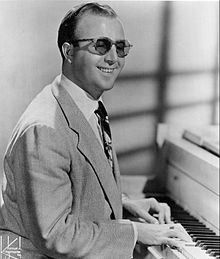
The multi-talented George Shearing

Refreshed with a glass of wine we all took our seats looking forward to the second half and we were not disappointed as the Choir began with conductor Paul Hayward’s own splendid arrangement of the old English song Soldier, Soldier Will You Marry Me. With the tenors and basses often providing a military marching beat this was another work that everyone needed to concentrate upon. And this they did – every word crisp and clear the ladies of the Choir carryied on a musical conversation with the men until, as the final bars approached, the wayward tenors and basses had to confess to those ladies of the Choir that that they could not marry for they had a wife and babe of their own at home!  Smiling at this bit of musical fun the audience burst into applause – it was English music and history to the core, a tale of an English Redcoat soldier and the young girl bedazzled by the his fine uniform and apparent bravery, and all brought to life with Hayward’s fine arrangement. He must have been well pleased with his Choir for  their enjoyable and much enjoyed rendering of his work.

And so to the final three works – all by Ralph Vaughan Williams. Williams, born of a well to do family with strong moral views and a progressive social and political outlook sought, throughout his life to be of service to his fellow citizens and believed in making music available to everybody. Declining many offered honours such as Master of the King’s Music he rose to the top of the English musical world of the early twentieth century and wrote music that touched and continues to touch and tap into the very essence of England and Englishness. It is not inappropriate that despite his lifetime rebuttal of fame and fortune he was buried in Westminster Abbey. For many, Vaughan Williams’ greatest legacy to his country and to music is his transcribing of English folk songs – in 1903 he “discovered” this interest when he heard a 70 year old labourer sing a folk song at a vicar’s tea party. This musical heritage was becoming extinct as country life changed, literacy became more widespread and printed music became more easily available.  So Vaughan Williams set himself the task of travelling the country and transcribing for posterity this great musical heritage. In all he set down over 800 such works which otherwise might have been lost and in doing so had a profound and lasting effect upon the music that he himself, and others, composed: The English Folk Song Suite, Fantasia on Theme by Thomas Tallis, Five Variants on Dives and Lazarus and various parts of his nine great symphonies are all witness to the impact of English folk music; in short he created an English sound.

The Choir’s beautiful singing of Vaughan Williams’ The Turtle Dove was a delicate and mellow rendering of the song first heard by Williams at The Plough Pub in Rusper, Sussex in 1903 when the landlord sang the old song to the composer. As I sat listening to this haunting song of love and loss I couldn’t help but feel that this the England of Thomas Hardy, of rosy cheeked, fresh faced girls, of strong young farm hands, of harvest time and of great rural skies. Tenor Geoffrey Hicking’s gentle solo voice was an admirable foil for the choir’s sublime singing as the last of the Spring sunset died through St Peters’ church windows. And as the sky turned dark, one of the great English songs – Vaughan Williams’ Linden Lea -  based on the poem by Dorsetshire poet William Barnes was sung. This was Williams’ first published song in 1912 and, so to speak, brought his name to public attention. We sat spellbound at the sheer musicality of this lovely melody and the Choir’s almost reverential singing. It spoke of a different time – of ladies in pastel flowing dresses and feathered hats, of men in waistcoats, of village greens and the sound of bat on willow. It spoke of the last sunset of Edwardian England before the grotesque carnage of the Great War and the much harsher and perhaps more cynical and mistrustful modern world that we now inhabit. Yes, maybe it spoke of a mythical world that never really existed, a rose coloured place that we like to believe in but that mattered not for the Choir transported us back to this better place and we loved them for it.

Ralph Vaughan Williams
The final work was also Vaughan Williams: his Five Mystical Songs  the musical  settings of George Herbert’s seventeenth century The Temple: Sacred Poems. Simple and yet deeply spiritual Vaughan Williams’ lingering, poignant and evocative composition weaves a complex fabric of sounds, melodies and words. The solo tenor part was exquisitely sung by Geoffrey Hicking and the choral accompaniment at different times mysterious, magical and then majestic. Sitting listening one couldn’t but recognise the influence of the English folk song tradition on Williams’ composition and at the same time feel the spirituality of the work as echoes of great liturgical music made their presence known. The lonely, almost bleak sound of the tenor contrasted with the subdued but rich devotional voices of the choir and produced a moving and mystical atmosphere. And as the song cycle moved into its final section, too, and the finale of the concert the magnificent and glorious words and sounds of the great hymn of praise Let All the World in Every Corner Sing rang through St Peters. In a trice the music and the atmosphere changed from the mystical and mysterious to the celebratory and triumphant; the Choir’s soaring voices, Michael Overbury’s majestic chords, the tenor’s glorious sound and Paul Hayward’s swooping baton brought it all to a sparkling and exultant yet reflective and meditative climax. A fitting work, indeed, to end such a concert in an English church on a Spring evening.

Yes, this was indeed Music to Hear – but it was more. I suspect that it wasn’t just me who walked out of St Peters’ into the dark night and knew that this was music to think about not just to hear. It was music to remember, music not just as entertainment but music to enrich the soul and perhaps remind us of our humanity and of our tiny place in the great scheme of things. Thank you Ruddington Choral Society, and thank you Paul Hayward, Michael Overbury, Geoffrey Hicking, Matt Henderson and Chris Ebbern  for such a wonderful evening that will stay in the mind for a long time.

As I flicked through my programme this morning - the day after the concert I noticed the programme for RDCS's next concert in December! What a treat - especially so for me as a Baroque music enthusiast. A huge change from last night's programme and a programme that will test the performers in so many different ways and to their musical limits: JS Bach's glorious Magnificat, his much loved Cantata No. 140 Sleepers Wake and ,from the Ruddington Chamber Ensemble, the exquisite Corelli Concerto grosso in G minor. Op 6. No. 8 - The Christmas Concerto. What better way could there be to start Christmas! Come and join us at St Peter's on Saturday Dec 9th to enjoy the choral glories of the world's greatest composer, Johann Sebastian Bach and the stunning beauty and brilliant musicality of Arcangelo Corelli's timeless and Concerto - you won't be disappointed!


You can find out more about the Choir at http://www.ruddingtonchoral.com/

15 May, 2017

Sipping Red Wine By the Sea

Red wine in the verandah
We have just returned from a few days at our favourite hotel – the Langstone Cliff Hotel in Dawlish, Devon (see blog: In praise of the Langstone Cliff: March 26 2011). We have been visiting this place regularly for many years and love it as much now as when we first visited. Dawlish itself is a quiet place with no pretensions; if you want designer restaurants, chic shopping malls or beaches  rivalling those of the Caribbean then Dawlish is not for you. But if you want a quiet, homely, relaxing and “honest” seaside place then you will not be disappointed. The hotel is only a few hundred yards from the sea and you can sit, as we did last week, on the verandah or at one of the tables on the lawn and enjoy one of the finest views in England over Lyme Bay as you sip your beer or wine, or enjoy an al fresco lunch. The Langstone Cliff Hotel is not only  a wonderful and much loved hotel in a much loved place but it is also our "bolt hole", our place to recharge the batteries, our place to get back our bearings. We are not alone in that - each time we go we see other guests who are also regulars and have been so for many years. It is quite simply home from home.

As always when we visit the Langstone for a few days we take a book or two to read – part of the relaxation and recharging of the batteries – and this time I was reading a book written about twenty years ago by  Richard Hoggart: The Way We Live Now. Hoggart, who died in 2014 was an academic and  Professor of English who had leapt to international fame in 1957 with his seminal work The Uses of Literacy – a review of British working class culture and the impact of mass and popular culture on late 1950s Britain. The book was without a doubt a game changer. In it Hoggart sought the answers to two basic questions: when a society becomes more affluent – as Britain did in the 1950s – what impact is there on that society’s values and, secondly, how is a society which is increasingly affluent and more able to access non-essential items such as cars, TVs or washing machines, better provided for in terms of health and social care, and increasingly well educated and literate impacted upon by the growth mass and popular culture. It is an understatement to say that The Uses of Literacy was a ground breaking work; it has often been called the most important and influential book of the twentieth century such was its profound effect upon the thinking, the politics  and the society of the second half of the twentieth century both in Britain and across the western world. Even today it is still essential reading for those involved in social, cultural or academic provision. 
Richard Hoggart

I first read The Uses of Literacy in the summer of 1963. I  had just qualified as a draughtsman but had decided to change career and was about to embark on an A level course at Blackpool Technical College with a view to going to teacher training college. Prior to the A level course beginning I had been given a reading list by the Head of the A level Department, Mr Parkin – a man who, because of his military bearing and military  moustache, we teenagers always called “The Colonel”. The book wasn’t specifically related to any of the subjects that I was studying (History, Geography & Economics) but, said Mr Parkin, it was a book (together with others such as Plato’s Republic , The Ragged Trousered Philanthropist, The Rise of the Meritocracy, Family and Kinship in East London) that I should read to widen my understanding of the world. I can so well remember that summer sitting in the local park or at home devouring these books in addition to those recommended for my A level subjects. But more than any I can remember reading Hoggart’s book, my mouth often agape at what I read. It was hard going and at that stage I didn’t understand all of it – but I can still vividly remember thinking and feeling that as I read it the book was speaking to me. It didn’t only make sense to me but much of it was about me and my life. It was what I could see going on around me – a boy from very much a working class background, suddenly exposed to education and a world unknown to my working class parents. The quotes, comments and prophesies that Hoggart made – based upon his own upbringing as a working class boy - were exactly, almost word for word, what I experienced and both heard and saw every day. The feelings and ambitions that he described were my feelings and ambitions. The subtle changes that he noted as increasing affluence impacted upon ordinary people were what I witnessed and experienced each day.  And as both mass and popular culture took off, the Beatles, the teenage world, American films, pop stars, TV, advertising, the media and the rest were all slowly starting to influence both the life and times of the nation and my own life. I knew that Hoggart was on to something.

Over the years I have often returned to Hoggart’s book and recalled or reread bits of it but a few weeks ago I bought what one might term its sequel,The Way We Live Now. Written in 1995 Hoggart did what it says on the title - looked again at society but, now, as it was in 1995. It is, like The Uses of Literacy  a controversial, hard hitting and compelling book as Hoggart conducts an examination of late 20th century society. The result is almost a melancholia for a lost past rooted in real human experience and unmediated by commercial mass culture. If anything it is even more pessimistic than The Uses of Literacy as Hoggart reflects upon the twin evils of intellectual relativism and rampant consumerism. He suggests the latter years of the twentieth century saw a growth in morally vacuous and intellectually vapid ideas most notably witnessed in the ideology of Margaret Thatcher,  her ideological successors, and the rise of the global consumerist society.
Looking out over Lyme Bay from our room at the
Langstone Cliff Hotel

I had completely re-read The Uses of Literacy prior to going off to Devon for our stay at the Langstone Cliff and as we enjoyed the delights of the hotel and the few days by the sea I read Hoggart’s 1995 sequel. Each evening, I sat on the verandah of the hotel looking out over the lawn and the sea and sipping my glass of red wine and pondered Hoggart’s observations. My overwhelming reaction was that this book was written about twenty years ago so it was very easy to assess how unerringly accurate, powerful, articulate and prophetic Hoggart's  arguments were and, worryingly ,how much more so would they be today in 2017. When he wrote this book social media was largely unknown, the financial and consumerist excesses of the latter years of the twentieth and early twenty first centuries was still to come, the internet was very much in its infancy, mobile phones, i-pads and the like were dreams in the minds of people like Steve Jobs, and things like digital broadcasting bringing a host of TV opportunities and race to the bottom programming were still largely waiting to be manipulated by global companies like SKY and Fox News. Globalisation  was in its infancy; looking back to those days we could never have imagined how much the world would change within twenty years. Hoggart’s criticisms and fears for the “health” of society in the face of the growth of mass culture and populism made him both anxious and angry – how much more so would he feel that today if he was still alive.

I could write a whole series of blogs on the issues thrown up by Hoggart’s books but as this blog starts and ends with our visit to the seaside I will concentrate upon just one - those relating to what Hoggart saw as the decline in literary taste and standards.

In The Way we Live Now  Hoggart expresses concern and regret that although as we are better educated and have greater opportunities than ever before there has been a tendency for what I will call “dumbing down”. In particular he reflects upon the paradox of the written word; today, more people can read, more books are published and more widely available than ever before - yet increasingly “good" literature is being side lined in favour of popular/mass works. Look at the best seller lists and they are largely filled with literary dross. True, there are various awards for "quality literature" but the sales of these books are totally dwarfed by the sales of popular, light weight novels. Hoggart also cogently argued that the quality of even these lightweight works is dismally poor, reflecting the lack of aspiration in wider society. Libraries are closing at a rapid rate and those that remain are increasingly focusing upon popular works or even non-book (such as CD/video/internet) use rather than literary works of merit. Hoggart is not alone in his comments: linguist, philosopher and cognitive scientist Noam Chomsky makes much the same point in his book How the World Works. Chomsky writes: "I travel a lot and often visit the airport book store to buy a classic or maybe one of the current recommended quality texts. Now it's almost impossible anywhere in the world....I think it is just plain market pressures. Bestsellers move fast and it costs money to keep books around that don't sell quickly. Add to this that the big book chains which pretty much dominate the market don't want non-sellers on their shelves so the books are not displayed or increasingly not published". The result of this is, of course, that since the books are not on display or promoted the public know less and less of their existence so are unaware of what they offer. The whole thing becomes a self fulfilling prophesy. In short, dumbed down sells; mass and popular culture have increasingly taken hold of the intellect, the desires, and the literary tastes and abilities of the public. The literature of modern western society is increasingly becoming lowest common denominator stuff. Proof of that can be seen easily by walking along the shelves at any chain bookshop, by looking at the best seller lists or by taking a brief look at Facebook or other social media sites with their banal “posts”; they prove poet W H Auden’s commentary of half a century ago “Be interesting and weak like us, and we will love you as we love ourselves”. Auden wrote that in 1944 of what he saw then of popular and mass culture – what would he say today if he reviewed Facebook, the tabloid press, the contents of our book shops, the content of our TV programmes, or the superficial trash that Hollywood produces so thin in story line, characterisation and use of language that it has to be "sexed up" with digital technology and a steady stream of faux violence. But the public have, sheep like, learned to love it for increasingly they know no other.  As a committed and passionate social democrat I am wedded to the notion of equality and bitterly against the increasingly divided societies that global capitalism is creating in the western world. But, it is increasingly my view that equality should not mean "ordinary" - too often today there is a tendency to reject great art, music or literature as "elitist" and instead value the ordinary; Mr & Ms Joe Public increasingly want to be one of the crowd, liked, loved, not pushy, not "toffs". It is a worrying trend.   
"I must go down to the seas again, to the lonely sea and sky"

One important area of literature, poetry, has suffered especially and Hoggart is damning in his criticism of society's increasing lack of enthusiasm for poetry. Children no longer, it seems, learn or recite great poetry at school; too often poetry and poems are perceived as old fashioned and elitist, perhaps only to be used for special occasions. And yet, poetry is one of the mankind's great forms of communication; the words of some of the great poems cross the ages, generations and cultures and if used at some particular occasion - a funeral, a wedding or some important state occasion - are often the thing that symbolises and helps to make sense of that occasion in the hearts and minds of those present. 

Hoggart is not alone in his concern for the health of poetry in society and of praising of poetry and its importance to humanity as these few comments show:

·         “When power leads man toward arrogance, poetry reminds him of his limitations. When power narrows the area of man's concern, poetry reminds him of the richness and diversity of existence. When power corrupts, poetry cleanses.” (John F. Kennedy: President of the USA)

·         “A poet is, before anything else, a person who is passionately in love with language”. (W. H. Auden: Poet and author)
·         “Poetry is finer and more philosophical than history; for poetry expresses the universal, and history only the particular.” (Aristotle: Philosopher)

·         “Teach your children poetry; it opens the mind, lends grace to wisdom and makes the heroic virtues hereditary.”  (Sir Walter Scott: Author)

·         “Poetry is the universal language which the heart holds with nature and itself. He who has a contempt for poetry, cannot have much respect for himself, or for anything else.”  (William Hazlitt: Author and philosopher)
From my evening table on the hotel verandah.
Can there be a finer view than this?

I couldn’t agree more. I am not a poet, nor do I profess to have any great poetical skills or understanding. But to read some of the great poems – or even just extracts from some of these poems is not only rewarding but invariably takes one to another place; in just a few words, a poet can create a universe.  Poetry, above all, is the very essence and highest form of communication for it not only communicates words and ideas but also feelings, emotions, morals, aesthetics and every other facet of the human condition. Its business is the very sprit and soul of mankind and its words continue to be true and have meaning and validity long after the poet is dead and gone. A piece of poetry, like great music and great art, is not limited by years or even generations, it is eternal.

To read lines and feel enriched by wonderful words such as those from Shakespeare’s A Midsummer Night’s Dream:

I know a bank where the wild thyme blows,
Where oxlips and the nodding violet grows,
Quite over-canopied with luscious woodbine,
With sweet musk-roses and with eglantine:
There sleeps Titania sometime of the night,
Lulled in these flowers with dances and delight.

or to envisage the silent calm of evening sunset described by Thomas Gray in the opening lines of what many regard as the greatest of poems Elegy written in a country church yard:

The curfew tolls the knell of parting day,
The lowing herd wind slowly o'er the lea,
The plowman homeward plods his weary way,
And leaves the world to darkness and to me.

Now fades the glimm'ring landscape on the sight,
And all the air a solemn stillness holds,
Save where the beetle wheels his droning flight,
And drowsy tinklings lull the distant folds.....

or to be moved by words such as these from A E Housman’s A Shropshire Lad:

How clear, how lovely bright,
How beautiful to sight
    Those beams of morning play;
How heaven laughs out with glee
Where, like a bird set free,
Up from the eastern sea
    Soars the delightful day.

To-day I shall be strong,
No more shall yield to wrong,
    Shall squander life no more;
Days lost, I know not how,
I shall retrieve them now;
Now I shall keep the vow
    I never kept before


Ensanguining the skies
How heavily it dies
    Into the west away;
Past touch and sight and sound
Not further to be found,
How hopeless under ground
    Falls the remorseful day.

or to have one’s to emotions shredded and one’s core beliefs and innermost senses questioned by reading one of the Great War poems by Siegfried Sassoon or Wilfred Owen’s damning and at the same time profound and elegiac:  Anthem for Doomed Youth:

What passing-bells for these who die as cattle?
Only the monstrous anger of the guns.
Only the stuttering rifles' rapid rattle
Can patter out their hasty orisons.
No mockeries now for them; no prayers nor bells;
Nor any voice of mourning save the choirs,—
The shrill, demented choirs of wailing shells;
And bugles calling for them from sad shires.

What candles may be held to speed them all?
Not in the hands of boys, but in their eyes
Shall shine the holy glimmers of goodbyes.
The pallor of girls' brows shall be their pall;
Their flowers the tenderness of patient minds,
And each slow dusk a drawing-down of blinds.
"....And the flung spray and the blown spume
and the sea gulls crying...."

is to be reminded of the human condition and one’s place in the world and beyond. Philosopher, economist and to many the father of capitalism, John Stuart Mill’s words on poetry  are unquestionably apposite: “....poems are a medicine for my state of mind; they express not mere outward beauty, but states of feeling, and of thought coloured by feeling.......they seem to be the very culture of the feelings, which I am in quest of...”   Mill was not wrong.

And as I sat on the hotel verandah, sipping my red wine and looking out over Lyme Bay and reading Hoggart’s words, or as I sat on the bench on the sea front watching the waves crash onto the sandy beach below, I was reminded of two poems by John Masefield which, at some point, I always find myself silently quoting whenever I am near the sea:

Cargoes
Quinquireme of Nineveh from distant Ophir,
Rowing home to haven in sunny Palestine,
With a cargo of ivory,
And apes and peacocks,
Sandalwood, cedarwood, and sweet white wine.

Stately Spanish galleon coming from the Isthmus,
Dipping through the Tropics by the palm-green shores,
With a cargo of diamonds,
Emeralds, amethysts,
Topazes, and cinnamon, and gold moidores.

Dirty British coaster with a salt-caked smoke stack,
Butting through the Channel in the mad March days,
With a cargo of Tyne coal,
Road-rails, pig-lead,
Firewood, iron-ware, and cheap tin trays.

Sea Fever
I must go down to the seas again, to the lonely sea and the sky,
And all I ask is a tall ship and a star to steer her by;
And the wheel’s kick and the wind’s song and the white sail’s shaking,
And a grey mist on the sea’s face, and a grey dawn breaking.

I must go down to the seas again, for the call of the running tide
Is a wild call and a clear call that may not be denied;
And all I ask is a windy day with the white clouds flying,
And the flung spray and the blown spume, and the sea-gulls crying.

I must go down to the seas again, to the vagrant gypsy life,
To the gull’s way and the whale’s way where the wind’s like a whetted knife;
And all I ask is a merry yarn from a laughing fellow-rover,
And quiet sleep and a sweet dream when the long trick’s over.
"....For the call of the running tide is a wild call
and a clear call that may not be denied..."

I am no great judge of poetry nor am I, unlike my wife, especially besotted by the sea but to sit near the shore and reflect on the words of these two great works - which I learned by heart at school - is both satisfying the quite magical. The sound and “feel” of Masefield’s great works confirm in my mind the truth of Matthew Arnold the great poet and educator's words: “Good poetry undoubtedly tends to form the character and the soul; it begets a love of beauty and of truth in alliance together; it suggests noble principles of action, and it inspires the emotions – hence its extreme importance to all of us”. 

25 April, 2017

"Bread & Circuses"

The sub heading to my blog has been, since I set it up several years ago: “Personal perspectives on people, places, politics, passions and preoccupations of a seventy something”.  Anyone, however, who has been unwise enough to read my ramblings will know that it has been politics that have, by far, taken up the lion’s share of my mad cap scribblings. When I retired over ten years ago, having for many years promised myself that I would spend my retirement writing  “grumpy old man” letters to The Guardian or The Times,  the setting up of a blog was just another vehicle to further my long held ambition to fly the flag for social democracy and at the same time comment upon and hold to some account, the  politics and politicians of the Tory or right wing persuasion. I never expected, believed or even desired that my various ramblings would change the course of the life of the nation or bring about the revolution – nor have they. But I did hope that in writing them and, however badly, arguing my case I might clarify my thoughts and maybe those of others – for good or ill. I was also firmly of the view that in the world of the late 20th century and now the early decades of the 21st century where globalisation, rampant capitalism,  the consumer society and, latterly, austerity was, and is, taking an increasing stranglehold on the hearts and minds of politicians, and wider society, it was important for those of more social democratic beliefs to press our case, to keep the flag flying, and to try to repudiate Margaret Thatcher, George Osborne and now Theresa May’s mantra that “there is no alternative”.

But no more. Sadly, in recent months I have increasingly concluded that enough is enough. The political battle appears, at least to me, lost. Populism and extremism have become the mainstream substitute for reasoned ethical debate and action. The rise of  Donald Trump and of the far right in countries like France and the Netherlands,  Brexit, UKIP, and the increasingly right wing Tory party with, at its head a number of politicians who one would not wish to share the air of the planet with let alone a lift, plus a Prime Minister who, despite reminding us at every opportunity of her Christian background and heritage, seems incapable of acting in any vaguely ethical or Christian way, all suggest to me that my social democratic vision or values are now a lost cause. I am not by nature a quitter – indeed, without being boastful I know that many who know me see my staying power and ability to pursue something to the end as being a defining characteristic. But such is my despondency at what, especially in the UK, politics and society has morphed into in recent years, that I do not have it within me, nor do I have the desire, to beat the drum any longer. I well remember the last assembly if each school year when I was a teenager and at secondary school. We always sang the same hymn year after year, Heavenly Father may thy blessing rest upon Thy children now...."   I can still remember its words well. Verse two reminded the assembly of the importance of knowing when to speak and when to say nothing, ending with the line: "When to speak and when be silent, When to do and when forbear". Well, I have reached that point, it is the time to be silent and forebear!

From where I sit the political narrative is increasingly driven and scripted by big business, nationalism, populism and the right wing media; extremism, in various guises, has gained the ascendancy but this has been brought about by a number of factors – not just evil politicians and rapacious business men. Western societies – and especially our English political and social scene - have got the politics and politicians and leaders they and we deserve; the electorate has allowed them to come to power and influence. Almost two millennia ago Juvenal, the Roman poet and satirist, on watching the decline of the once great Roman Empire commented ”The people that once bestowed commands, consulships, legions, and all else, now concerns itself no more, and longs eagerly for just two things - bread and circuses”. So, too, it is in our society – we care only for “bread and circuses”; gone are the great visions and the high ideals. The populace has forgotten why they called for and increasingly demanded some measure of social democracy a hundred years ago when abject poverty, insecurity, ill health and illiteracy were the norm for most. They have forgotten the wars which for centuries had ravaged the world and Europe in particular. They have forgotten that the years of social democracy through the late 1940s, 50s, 60s and 70s delivered standards of living, opportunity and social justice quite unimaginable to those born before these years. Instead, in the society of today, working and dreaming for a better tomorrow is passé; the “I’m alright Jack” mentality infests the hearts and minds of the many. “Having a laugh” appears to be the raison d’etre of the majority. Visit any social media site and you will positively wade through banal “quotes” promoted as pearls of wisdom and their common message is “Enjoy yourself – you’re worth it.” Gone are any thoughts of endeavour or thinking on higher things; Juvenal’s other damning comment on decaying Rome has a huge resonance today in contemporary England: “All wish to possess knowledge, but few are willing to pay the price”. We have become a land obsessed and delighted by the mediocre and the shallow, preferring the celebrity culture to the intellectual or learning culture and this not only infects our minds but determines our actions and our politics. In short, in England – as in the USA and increasingly other western societies - ignorance has become a shame free condition and its repercussions can be seen everywhere:

·         The inability or maybe unwillingness of left wing parties and politicians to articulate alternative agendas and policies to those espoused by parties of the right is now almost complete. In the UK especially, the inability of the Labour Party, its politicians and its members, to not only inhabit the real world and to learn from past experience but, more importantly, to offer its followers and the electorate something to which to aspire is unutterably depressing.  Many suggest that Labour was in a similar position in the mid 80’s when the Party of Michael Foot was at an all time low. The position is not the same. Whilst it is true that Foot’s Party was soundly beaten and in the political wilderness they had coherent policies argued by one of England’s great politicians and debaters of the age – Michael Foot. The Party’s manifesto was not what the electors wanted and this was shown in the polls, but it was a policy, clear and unequivocal. Today, however, the Labour Party is just a mess -  a rag bag outfit of third rate chancers lead by Jeremy Corbyn -  a man who might have the best of motives but is, on a daily basis, shown to be totally inadequate, and worse doesn’t realise it. The problems faced by the left are visible in all countries but nowhere has a party of the  left shown itself to be so inept and lacking in vision and competence that Corbyn’s Labour. I need only to think of Ed Balls following the general Election defeat of 2015 to verify my beliefs. Here was a man, shadow Chancellor of the Exchequer, tipped as a possible leader of the Party and maybe one day Prime Minister. He lost his parliamentary seat in the election and by some kind of warped reasoning decided to make a name for himself by becoming a “national treasure” on the banal and hugely popular  mass entertainment programme Strictly Come Dancing. His reason, when asked, was that it was "something he had always  wanted to do" and that it would help him “re-connect” with ordinary people. Can there be a sadder verdict on a senior politician and potential leader or indeed on the values and interests of England’s 21st century electorate. Juvenal would have recognised this – he saw it daily as mighty Rome declined.

·        The greatly worrying, but well documented trend in western societies - but especially so in the UK & USA - where ignorance is increasingly a shame free condition which in turn results in reasoned debate and thoughtful solutions being in increasingly short supply. In a world where issues about political, social, economic and every other policy are, by their very nature, increasingly complex the electorate is too often unable to grasp the issues, unwilling to research them, and keen to take the easy quick fix solutions offered by the unscrupulous popular media and its spokesmen.

·         From this there is, too, a wider malaise. In a world where the “race to the bottom” TV and wider media schedules and offerings are seen by the majority as good and worthy we have, as Ed Balls’ actions confirmed,  largely lost the ability to discriminate and judge what is of worth. The pluralist society  that we all now inhabit has moved on from simply being a society where diversity is recognised to a society where anything goes; Strictly Come Dancing  considered as worthy as The Royal Ballet  or the latest gratuitously violent Hollywood offering the equal of Hamlet;  as an Oxford  don caustically commented, and in doing so incurred the wrath of the popular press in 1993, “[in the contemporary world] lavatorial graffiti are not to be distinguished in any qualitative way from the drawings of Rembrandt”.

·         In this world of Homer Simpsons the fool is king and the king might vote with his wallet or his heart but never his head.  Against this backdrop a largely ignorant electorate is easily influenced.   Populists paint the world black and white and turn fears into political capital. Mantras like “Take back control” or “Brexit means Brexit” are slogans that we hear everywhere – simple, easy to repeat, easy to not think about – all that the unthinking and increasingly intellectually challenged electorate is able or desires to take on board. We have an American President (and many of our own politicians, too) who pass on their thoughts and what laughingly pass for policies in 140 character Tweets – they know that these are the most that the contemporary mass electorate can or wish to intellectually grapple with. So, we have the paradoxical situation that in a world becoming more complex the answers offered by politicians are becoming simpler, less nuanced, less detailed, black and white; banal and trivial catch phrases for an increasingly banal, trivial and uncritical, unthinking, unquestioning electorate.

·       This inability to discriminate or think carefully, has, now almost daily consequences. No longer do we ask questions about whether or not an action is right or just or fair – but simply does it work, how much does it cost. Increasingly in the UK and the USA our politics, politicians, business leaders and the wider society have become arch pragmatists – justifying their policies and actions on its results not its rightness, worth or justness. Over a hundred years ago American philosopher William James commented: “Pragmatism asks its usual question. ‘Grant an idea or belief to be true,’ it says, ‘what concrete difference will its being true make in anyone's actual life? How will the truth be realized? What experiences will be different from those which would obtain if the belief were false? What, in short, is the truth's cash-value in experiential terms?”  Quite – the growth in pragmatism as an underpinning to politics and society has  reduced all to cash value rather than its intrinsic worthiness or decency.

I could go on but will not – I have written it all before; enough is enough. In my eyes the battle for the social democratic hearts and minds of the electorate is long lost. I will maintain my blog - but without the “politics” element: “Personal perspectives on people, places, passions and preoccupations of a seventy something” will now be its subject matterThe UK, but more specifically England is what it is; it is time for me to move on. Einstein once reminded the world that “Insanity is doing the same thing over and over and expecting different results.”  That is how I feel and I do not wish to continue to bang my head against the wall somehow hoping for a pain free result.

Last week two things caught my eye which I have thought much on in recent days. Firstly, I read an article at the top of which was the headline: “Nobody likes us and we don’t care”. For those who do not live in the UK and may be unfamiliar with this rather unpleasant message it originated many years ago (and is still in weekly use) at the south London football club Millwall. The club has long had a reputation for disreputable fans and its often uncompromising brand of football. The club’s stadium – known as “The Den” and its team are known as “The Lions” – can be a daunting and threatening place for visiting teams and their fans. Similarly, when Millwall fans travel away to fixtures there is always the potential for threatening behaviour. The fans, however, take a pride in this; they are the Lions, their home is the Den, “Enter here with fear”  is their message. And, as their chant implies, “We don’t care that we are disliked or perceived as unpleasant people – in fact we are proud of it; nobody likes us and we don’t care!”  The article went on to draw an analogy between the chant and the Millwall fans’ perception of themselves and the UK’s record over many years in relation to Europe in general and the EU in particular. It was correct. For as long as I can remember we Brits have disparaged foreigners and have found every opportunity to promote ourselves as something superior to the poor, well meaning but deficient rabble across the Channel, who have not had the good fortune to be born English – or, worse still, been foolish enough to born further afield in Africa, Asia or elsewhere. We have been willing participants when it came down to disparaging those of a different race, colour or creed and once we became unwilling members of the EU have pleaded consistently for some kind of special treatment. The ignominy of being “ruled” from Brussels, Berlin or Paris was too much; “We don’t deserve this” has been the cry, “to be treated  so unfairly by these jumped up foreigners”. Like the Millwall fans we proudly, but confrontationally, say to our neighbours, who we perceive as opponents rather than colleagues, "We are Brits, lion hearted, fearless when roused - don't mess with us or it will be the worse for you."  As with the football fans it seems quite right and natural to us to hold this position for rooted deep in our national psyche is the notion that anyone who is not English is the opposition and therefore is a threat, not to be trusted, to be overcome. And in being so we have made ourselves thoroughly unpleasant. As the Brexit campaign showed, and still shows in 2017, we Brits worry not who we upset or treat badly, for we are, in our own minds, superior, the only nation fit to “rule the waves”. Just as the Millwall supporters chant, so we in England, too, revel in the notion that “Nobody likes us and we don’t care” .

The second item that came my way was more personal and, for me, more concerning – an email (or rather emails) from a friend of many years who is married to an Austrian and lives, as she has done, for twenty or more years in Austria. Stephanie is a Brit and also an Austrian and her emails, asking various pertinent and searching questions, have winged their way through cyberspace since Brexit. With Theresa May’s opportunistic calling of a General Election with its declared intention of quashing all opposition to her and her policies  Stephanie’s questions have, in their different ways, asked the same things: “Why is the British government behaving as it is?”  Why have the British voted for Brexit when the EU gives you so much? Why is Mrs May so intent upon a hard Brexit? My Austrian friends have a lot of good will towards Britain but they don’t understand the country’s actions, can you explain them”.  As I read and tried to respond to Stephanie’s questions I was, for once, lost for words. I could repeat the sort of comments that I have written here or in my blogs, but I genuinely could not answer her with anything meaningful as to why, as a nation, we are behaving in such a way. The only thing that came to my mind as I pondered this is the newspaper article that I had read a few days before; we are doing it because we have, as a nation, lost the capacity to act thoughtfully, responsibly, decently, or fairly. Like the Millwall supporter – we are doing it because we can and we don’t care what anyone thinks. We see only ourselves and, both individually and collectively, feel free to display our child like egocentricity as regards Europe at will. We have, as I have suggested, lost the capacity to think about things such as worthiness, virtue, decency ideas, ethics, or ideals. If  we did still retain these capacities then we would not be behaving as we are. At its root the English national psyche is now governed by the principle “What’s in it for us?” – all is reduced to that great rationale of the pragmatist. Gone are the great visions and high ideals and sadly, those who should guide us and lead us – the politicians, the pundits and opinion formers, those with power - have lost the ability to articulate a different narrative about what it means to be a worthy English citizen or nation in the twenty first century. We have lost the ability or desire to think of issues of the greater good, the innate goodness of humanity and the consequent moral imperative to work for the mutual good of mankind. The Labour Party, once a beacon for social democracy and, even when  not in power the conscience of the nation, is seemingly  now incapable of even thinking about these things in any meaningful way. Instead, they navel gaze and come up with bizarre electioneering tricks like offering extra Bank Holidays because they know that in the “me, me, me” world of 2017 this is where the hearts and tiny minds of the electorate lies not in thinking about coherent policies or considerations of the rightness or justness of an action. As the Labour Party offers in its election manifesto extra Bank Holidays to capture the imagination of a society bent upon having a good time Emmanuel Macron, front runner in the French Presidential race, talks of giving all French 18 year olds €500 cultural passports so that they might enjoy and develop their understanding of French and wider culture and of cultural pursuits. The cynic might argue that this means nothing and these passports might be “spent” upon trivial pop music and the like. That may well be true – but try telling the English electorate that they will get cultural passports and  Joe Public will look at you askance. The very idea would be ridiculed in the popular press and dismissed by much of the electorate as 'upper class posh tosh'. The author of any such idea would be branded "out of touch" such is our aversion to terms like culture, learning, high ideals, great vision, the common human decencies, worthiness and the rest.

At the top of this blog I mentioned the hymn that I remember singing at the end of each school year as the oldest children left to go out into the big wide world and in which they were reminded of how they should conduct themselves. I am not overly religious and the words now, in the brash, cynical and coarse society that is the UK, seem out of place and irrelevant; quaint ideas from a bygone age. But  now, in my eighth decade, I am firmly of the view that as a society people today need forcibly reminding of these common decencies and of what constitutes good and honourable action towards our fellow humans:


Heavenly Father, may your blessing
Rest upon your children now,
When in praise your name we hallow,
When in prayer to you we bow;
In the wondrous story reading
Of the Lord of truth and grace,
May we see your love reflected
In the light of his dear face.

May we learn from this great story
All the arts of friendliness;
Truthful speech and honest action,
Courage, patience, steadfastness;
How to master self and temper,
How to make our conduct fair;
When to speak and when be silent,
When to do and when forbear.

May your Spirit wise and holy
With his gifts our spirits bless,
Make us loving, joyous, peaceful,
Rich in goodness, gentleness,
Strong in self-control, and faithful,
Kind in thought and deed; for he
Teaches, ‘What you do for others
You are doing unto me.’


I fear, however, that in the society of Trump and Brexit, of globalisation and rampant capitalism, of the Daily Mail  and social media the words and sentiments of the hymn would be quite alien to today's citizens. Sadly, I would also argue that, in a nutshell, that is why we, a once great society, are behaving as we are: we have lost many or most of the common decencies and aspects of humanity  such as goodness, gentleness, self control, truth, grace, kindness, steadfastness and the other qualities  listed in the hymn. We are unable and unwilling to pay the price to learn and apply these or to take the trouble to think great thoughts,  or to have high ideals. Instead we now want the easy options, the 140 character Tweet policy, the quick simple answer because in 2017 England all that we are interested and can take in is the easy answer, the easy life, easy food, easy entertainment, lowest common denominator thinking, untroubled by Johnny Foreigner and his ideas, his talk of culture, justice or fairness, of human rights or mutual cooperation. We have become the  junk society, eating junk food, satisfied with junk entertainment, reading junk tabloids, believing that junk is the new chic or high culture. We are, in  the Brexit/Theresa May  world of 2017, a "bargain basement country" where cheapness is the watchword of our economic, intellectual, social and moral life; we have become  the scavengers of Europe and the wider world, nothing is too low for us to sink to, gone are any principles because we no longer understand that concept. Everything, if it has a justification, is judged by its result not by its intrinsic worth; we are the land of "never mind the quality feel the width". We are the land where millions avidly read Facebook posts and Tweets believing them to be insightful commentaries upon the nature of  culture and of mankind itself; we are, indeed, the land of “bread and circuses” and so what if “Nobody likes us.....well, we don’t care”.