28 August, 2017

Walking with Giants (2): "Music to make you believe in God"

Amongst my classical CD collection there are a number of works which are performed by different orchestras, conductors or soloists. For example, I have three versions of Bach’s Goldberg Variation – two played by the great Bach pianist Glenn Gould (one in 1955 and one in 1983) and one by Angela Hewitt, several versions of Beethoven’s Ninth Symphony played by different orchestras under the direction of different conductors, and several versions of Handel’s Messiah. This duplication of discs is not an error, it is intentional – these (and others) are very great works all of which have been interpreted differently by different artist and at different times. One such work is Wolfgang Amadeus Mozart’s mighty Requiem. I have four different copies of the Requiem, each one special and “right” in its own way but there is one that I instinctively turn to when I want to listen to the work rather than just have it as background music. I thought about this recently as we continued our musical “pilgrimage” along the Danube and stood in St Stephen’s Cathedral in Vienna – one of the great cathedrals of the world.
St Stephen's Cathedral

From the outside St Stephen’s is magnificent – imposing, wonderful architecture, soaring spire, wonderfully and beautifully decorated roof – truly, a majestic and superlative building; a mighty place of worship  steeped in centuries of Christianity and history. It is a place that has witnessed a thousand years of  great events, royal weddings and funerals: the history of Austria and much of middle Europe is writ large in the fabric of this great building. Step inside and one is overwhelmed by an awareness of this great past but two weeks ago as I stood in the nave of this great place I felt something else; something more personal and searching, something to make one feel introspective, vulnerable and uncertain of one's place in the great scheme of things. Inside this magnificent church the glories of the outside structure become a vast brooding space, almost intimidating; soaring columns, a heavy sense not only of royal and political power and of history but also of godly power; it is a cloying atmosphere that seems to press down and remind one of the smallness of mankind in the mighty sweep of heaven and earth. This is a place to remind us mere mortals of the power of an omnipotent God; not a place, I thought, to sing modern “happy clappy” hymns, nor a place to reflect upon its architectural beauty, or upon the compassion of a benevolent God. It is a serious place, yes, a place of great majesty but at the same time a place to instil fear in the hearts of those who would stray from the path of righteousness. Standing there I got the feeling that it must be like this to stand condemned in the Old Bailey Courtroom and face the bewigged judge and the whole fearful panoply of the mighty legal profession as some terrible sentence is passed. It is a place to reflect upon and be forcefully reminded of one’s relationship with our maker and indeed, our ultimate judge.

And as I stood there, the music of Mozart’s mighty Requiem rang through my brain – it was the only music befitting of this place - and not just any version of the Requiem, but that made by Sir Georg Solti, the Vienna Philharmonic and the Vienna State Opera Choir. This is the version to which I turn when I want to listen to the Requiem and is one of the definitive recordings of the work.  Significantly, it was recorded in 1991 in St Stephen’s on the two hundredth anniversary of Mozart’s death. Solti’s rendering of the work is, like the Cathedral, imposing, intimidating, dramatic and seems to peer into the very soul of the listener exposing every fault line and mortal weakness of our inner selves. And as the Cathedral does, the Requiem forcibly reminds one of the smallness of mankind in the face of an omnipotent God - and, terrifyingly, of the eternity that awaits us all when the gossamer thread upon which we all hang finally snaps.
Inside the vast commanding space

But the Requiem  and St Stephen’s is more tangibly connected with Mozart. If you walk out of the Cathedral and take a few steps down the narrow street that runs along the side of the church then within a matter of seconds you will come to Mozart’s home – where he lived and composed for much of his life. Mozart was married to Constanze in the Cathedral and upon his death his funeral service took place there; powerful are the links between the Cathedral, the musician and his final great work, the Requiem.

Of all the stories about Wolfgang Amadeus Mozart the tale of the Requiem  is without doubt the most mysterious and arresting – and for me explains Solti’s powerful rendering of this supreme work in the Cathedral. Separating the myth, the mystery and the facts of the Requiem’s story has fascinated Mozart fans and musicologists since the composer’s death in 1791 at the age of 36. Any study of Mozart and his life is filled with superlatives and quite unimaginable tales – the story of the Requiem was the final twist in the story of this wonderful composer’s life.

Mozart composed over 600 works in his short life, virtually all of them acknowledged as pinnacles of musical achievement and his influence upon Western music is both immeasurable and profound; Beethoven composed his own early works in the shadow of Mozart, and Joseph Haydn, upon hearing of Mozart’s death  wrote  "posterity will not see such a talent again"  But for me, perhaps Sir Georg Solti’s comment expresses best what music lovers think of Mozart and his music when he said: “Mozart makes you believe in God – it cannot be by chance that such a phenomena arrives in the world and then passes after thirty six years, leaving behind such an unbounded number of unparalleled masterpieces.”

In simple terms Mozart was a musical genius, he did things that no-one else could do and from the earliest age. Johann Sebastian Bach once said that he (Bach)  “...was obliged to be industrious. Whoever is equally industrious will succeed equally well. There's nothing remarkable about it. All one has to do is hit the right keys at the right time and the instrument plays itself. As a good Lutheran Bach knew all about the Christian work ethic but he was doing himself a disservice when he suggests that it took only hard work to produce such glorious music as his. Mozart, too, worked prodigiously hard  – indeed it might be argued that he died of hard work – but in the end Mozart’s creative talent and musical genius are without a doubt the deciding factors in the mighty works that he produced.
Mozart in his home town of Salzburg

Mozart showed prodigious ability from early childhood. He composed from the age of five and by the time he was eight he was touring European courts with his father, Leopold and elder sister (Maria Anna). Mozart himself was baptised in his home town, Salzburg the day after his birth. Only a few days prior to our visit to St Stephen’s Cathedral Pat and I had stood in Salzburg gazing up at the house where Mozart was born and then later that same day in the mid day heat we had taken photographs of the statue that is erected to this son of Salzburg in the main square of the town. That night we had sat in the glorious baroque Mirabelle Palace listening to the Amadeus Concert playing Mozart – truly an evening that will stay with us for the rest of our lives – mostly because of the music but also because we were listening to music that had been penned by this musical giant two centuries before in the place where he lived – it was a powerful connection.

The end of a wonderful Mozart evening in the glorious Mirabelle Palace
Mozart’s early baptism was with good cause - he was not expected to live – and he remained sickly for most of his life. At 17, he was engaged as a court musician in Salzburg. Here he had many artistic successes but he grew restless and travelled in search of a better position. He was anxious to compose opera and there was little opportunity for this in Salzburg. He visited Paris but was forced to return home and resume his Salzburg employment when his mother died and, while visiting Vienna in 1781, he was finally dismissed from his Salzburg post. He chose to stay in Vienna, where at last he found fame as his operas began to be recognised - but this gave him little long term financial security.

In 1782, in St Stephen’s, he married Constanze and they spent much of their remaining years in the house near the Cathedral. They had six children but only two survived infancy. Despite their popular success and the fact that he gained steady employment with the Emperor Joseph II, storm clouds were gathering. Mozart’s debts were rising and money was tight and he had a family to feed. He worked incessantly, frequently travelling to far off places to conduct an opera, meet a possible client or seek extra work and in a sense this paid off. These years were a time of great productivity: concertos that are pinnacles of the genre, symphonies that set the pattern for symphonic composition from that day to this, operas that still fill theatres and their sublime arias bring tears to the eyes of the audience, great church music that has become integral to the Christian tradition – the list was and is endless and it all poured, seemingly effortlessly, from the pen of this brilliant young man. Other great composers tend to achieve their fame because of their great talent in single or limited areas: Bach, for example is the king of choral/religious music, Beethoven the master of the symphony, Puccini and Verdi are famed for their opera - and so on. Mozart, however, achieves perfection and world recognition on virtually every musical front - he could slip (as he did in the final weeks of his life) from composing one of the world's greatest operas - The Magic Flute - and in a trice turn out the Requiem; his like had not been seen before and has not been seen since.

Mozart and Constanze married here

But Mozart's skill and brilliance was not effortless – the work load and his sickly constitution took their toll. On September 6th 1791 while in Prague he fell ill. Despite continuing composing and conducting the premier of The Magic Flute he quickly deteriorated. He returned to Vienna and on November 20th, whilst composing the Requiem, he became bed ridden suffering from swelling, pain and vomiting.

The circumstances surrounding the composition of Mozart’s Requiem are remarkable, fascinating and dramatic; it is, in short, the stuff of legends. Composed on his death bed, it is a work that many regard as the finest piece of music ever written – that is an arguable claim, but it cannot be disputed that the Requiem is without doubt one of the greatest of musical works. Even today, no matter how many times I have heard it, it still has the capacity to make the hairs on my neck stand out and my heart race when the opening bars are played. I know that I am not alone in that. It is also one of the greatest paradoxes of music that this work, one of (if not the) greatest of Mozart's works is the one of which he actually composed the smallest percentage!

The story of the Requiem began a few weeks before Mozart’s death when he was approached by a gentleman – some say masked - acting on behalf of an anonymous patron who wished to commission from him a Requiem Mass. This patron was Count Franz von Walsegg-Stuppach, whose wife had died earlier that year. The Count, who was a keen amateur musician, wished to be regarded as a major composer and saw an opportunity to pass off the Requiem as his own.  He therefore conducted all business transactions with Mozart in secrecy to preserve his anonymity and sent an agent to act on his behalf. The Count’s offer was substantial, and Mozart, ever financially troubled, accepted 250 florins (half of what he got for an opera). There were to be no rehearsals or conducting of performances involved – it was a secret work. A substantial deposit was paid but before he could begin work on the Requiem, Mozart had to complete several other commissions, including The Magic Flute, and also had to travel to Prague to produce a season of Figaro. So he entered the Autumn of 1791 with a heavy workload and declining health.

Mozart set to work on the Requiem in October 1791, but had completed only a fraction of the work before taking to his bed in mid-November. He was terminally ill. Legend has it, too, that the secrecy surrounding the work perhaps played on Mozart’s ailing mind – he began to fear that this was not just any Requiem, it was to be his own Requiem. At the time of his death, only the opening Aeternam  was fully finished. Of the Kyrie and the Offertory, he had completed only the vocal parts, a bass line and occasional fragments of instrumental sketches. The remaining movements—Sanctus, Benedictus, Osanna, Agnus Dei, and Lux Aeterna – were only lightly sketched out. We know that in the last few days of his life, as Mozart faced death one of his students, Franz Süssmayr, assisted the composer in scribing Mozart’s ideas – he was by now too ill to hold a pen. We also know that local Viennese singers were brought to Mozart’s bedside to sing parts that he had sketched out in order that he could hear them before finally putting the notes on the manuscript. He died aged 35 on December 5th 1791, survived by his wife and two sons – the Requiem only sketched out and partially complete.
Mozart's house - in the shadow of St Stephen's

Desperate for funds, Mozart's wife, Constanze, was anxious to have the work completed and took it upon herself to find someone to complete the Requiem so that she could sell it as Mozart's. Eventually Constanze approached Franz Süssmayr who had been the composer’s closest musical confidante.  He undoubtedly knew what Mozart’s intentions were in respect of the complete Requiem. He had not been Constanze’s first choice – that had been  Joseph von Eybler but Eybler was unable to make satisfactory progress. When she eventually turned to Süssmayr, it was because there was a deadline to meet in order that she received the final payment; and only Süssmayr with his greater knowledge could meet that deadline!

Whatever the reason, thanks to his efforts, the Requiem was completed by February 1792 and  the final score dispatched to Count Walsegg complete with a counterfeited signature of Mozart. Shortly afterwards Constanze was paid the full amount owed. The Count presented the music as his own at a memorial service to his wife in 1793 and a little over a year later it was played - attributed to Mozart - in Vienna, at a concert about which Walsegg knew nothing.  
One of the rooms in the house

Süssmayr's work has often been harshly criticized - the Requiem is full of errors in harmony, and his musical ideas were no match for Mozart's. However, despite its detractors, the Süssmayer completion of the Requiem has remained the standard version. Despite any shortfalls the Requiem scholars are united that it remains purely Mozartean and one of, if not the greatest setting of the Requiem text in history.

In the years following, the Requiem gained its place in musical history and folklore and began to develop  a life of its own. In 1809 it was performed at the memorial service for Joseph Haydn and, adding to the many myths about the piece, in 1833 Joseph von Eybler suffered a stroke while conducting the Requiem. He never conducted again. In December 1840 it was performed at the reburial of Napoleon and in 1849 at Chopin's funeral. And so it continued to establish itself as one of the very great Masses and choral works. In modern times the Requiem was performed in 1964 as the Memorial Mass for President Kennedy. In 1994 Zubin Mehta conducted Sarajevo Philharmonic in the ruins of Sarajevo to mark the end of the Siege of Sarajevo and the ending of the Bosnian/Serb conflict. In 1999 Claudio Abbado conducted the Requiem with the Berlin Philharmonic in Salzburg on the 10th anniversary of the death of Herbert von Karajan and, in churches and concert halls throughout Austria (and many other places), it is common for the Requiem to be performed each December to commemorate Mozart’s untimely death on December 5th.
Some of the original score of the Requiem. The bottom five staves are in the hand of Mozart himself. The top half is the work of Süssmayr. When the whole Requiem was finished Süssmayr made a copy all in his own hand, imitating Mozart's so that it would look a unified piece of work. Mozart's signature was the forged by Constanze. The rest is history so to speak!

Whatever its history, whatever its strange convoluted tale and mythology, whatever the involvement of Süssmayr, it cannot be denied that the work stands at the very epicentre of western music. It is filled with exquisite and achingly beautiful sections but at the same time its raw power, majesty, drama  and mystery can make both performer and listener sit back in awe and wonder. It is not only much loved and popular but is one of the world’s defining musical works and one which has not only has stood the test of time but becomes more loved, more wondered at and more performed as each year passes.

As I stood in the tourist crowds in St Stephen’s Cathedral the mighty music of the Requiem rang in my brain and a few minutes later, when Pat and I spent a wonderful hour in Mozart’s house in the shadow of St Stephen’s, we listened through headphones to it’s great and powerful message.  And as we walked through the rooms looking at the artefacts of his life in the place where Wolfgang Amadeus Mozart, had given the world some of its very greatest music, other works by this young but blighted genius flooded through the building: the magically haunting Queen of the Night’s Aria from The Magic Flute, the achingly beautiful Dove Sono  from The Marriage of Figaro,  Soave sia il Vento from Cosi fan Tutti and many others. We stopped at one stage – mesmerised by the wonders of modern technology. In front of us were an array of small screens, each showing an extract from one of the great Mozart operas. At first we were a little confused but then realised that each screen related to one of the world’s great opera houses: La Scala, Covent Garden, La Fenici, the Vienna Staatoper, the New York Met, the Bolshoi.....and others – and through the sound system came the singing, synched to the screens. So one could see different productions of the same opera, the same aria as performed at each of these great musical palaces all at the same time. Press the button and immediately a different opera and aria came up on all of the screens! What would Wolfgang Amadeus Mozart have thought of that? – in the end his quest for fame has succeeded. This creative musical genius would, I am sure, have loved it. As I watched the flickering screens - Mozart's great music coming from every part of the world I wondered what he would have thought of it and of my CD of Solti conducting the Requiem; a little silver disc that I can slip in my pocket (or even now put on a tiny memory stick) enabling me if I wish to carry around with me so much of his great music. As I sit writing this blog at the side of me Mozart is playing – my complete Mozart, Bach, Beethoven, Haydn,..............and many, many more great classical works – several days non-stop of the greatest music to pour from the minds of the greatest composers - all stored on a memory chip smaller than the nail on my finger. Yes, Mozart would, I think, have been in awe to think that his scribblings, his genius and his hard work over those few short years have become such a worldwide phenomena. Fame indeed - at last.
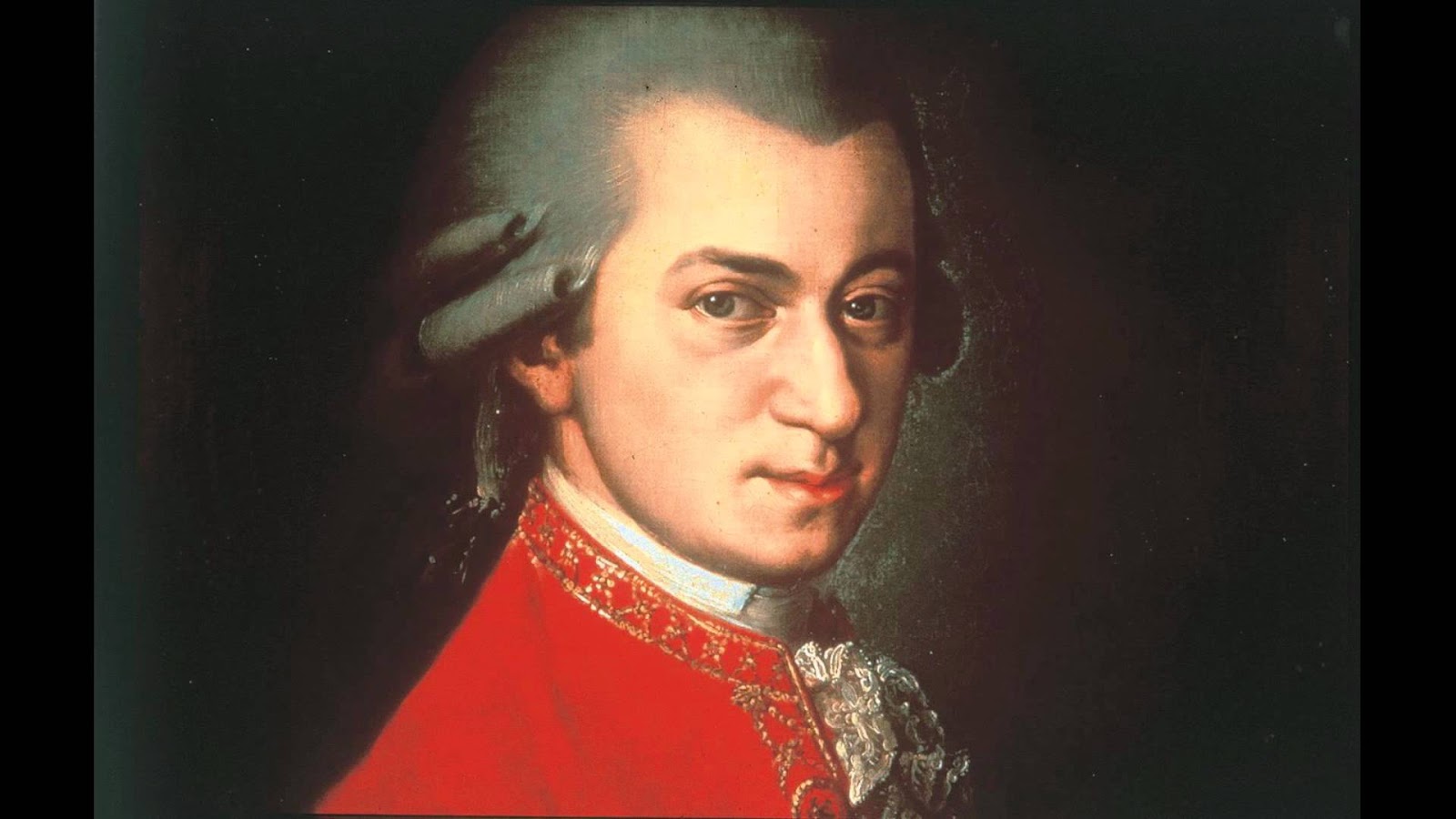
A contemporary likeness (so we are told) - and a sight one sees 
replicated throughout Salzburg & Vienna.

And yet, the ultimate irony is that when this supreme musician died his body was, as was the custom of the time in Vienna for those not of aristocratic pedigree, not buried in some magnificent tomb with due honour and recognition but simply put in an unmarked common grave. Like his Requiem and like that mighty St Stephen's Cathedral Mozart’s end forcibly reminds us of the smallness, the insignificance and the transience of mankind in the great scheme of things - and of the eternity that awaits us all when the gossamer thread upon which we all hang finally snaps
                              
As we stood in St Stephen's brooding and awe inspiring vastness and the mighty and haunting music of the Requiem filled my mind I knew that we were almost touching the past as we trod in the footsteps of musical giants.

19 August, 2017

Walking with musical giants (1): A son of Salzburg.

The statue of von Karajan
By the side of the Salzach River that runs through the ancient town of Salzburg in Austria there stands a rather grand and well appointed – although not overly extravagant – house. It is adjacent to one of the town’s bridges which cross the Salzach, a tributary of one of the great rivers of the world, the Danube. The footbridge sparkles in the mid day sun, its glitter not the result of some ancient gilding – although gold leaf or silver would not look amiss in such a wealthy and splendid town as Saltzburg – but rather something far more modern and prosaic, namely metal locks – thousands of them. Like many towns across the world the modern penchant for lovers to fix metal locks to the railings of bridges has come to Saltzburg; lovers swear their everlasting love while fixing the lock to the bridge and then throw the key into the river and thus, hopefully, ensure their relationship for all time. 
The maestro in typical pose
We had come to Salzburg at the start of our trip to the area. Our itinerary to take a cruise down the Danube visiting new places – amongst them Salzburg, Bratislava and Vienna – and at the same time to undertake a kind of musical odyssey to seek out the musical heritage of this part of the world – especially the world of Mozart and Haydn, two of our favourite composers. Middle Europe – and especially Austria - has a rich musical pedigree; in by-gone   years a myriad of small kingdoms, dukedoms, and principalities formed the political, economic and social structure of the region. Consequently, each duke, prince or king had his own court musicians to provide entertainment, liturgical music, military pomp and, not unimportantly, to impress one’s fellow royal houses. The result was that a wealth of opportunities arose for musicians and composers to ply their trade and it is from this area of Germany and middle Europe that many of the world’s greatest composers and musical minds made their names: Mozart, Haydn, Bach, Handel, and where many of the world’s greatest musical venues are situated: the Vienna Opera House, the Esterhazy Palace, the Schönbrunn Palace, the Leipzig Gewandhaus, the Prague Opera House and many, many more. Once this musical base was established in the sixteenth and seventeenth centuries others built upon it: Beethoven, Strauss, Mendelssohn, Smetana, Wagner and the rest – middle Europe can rightly claim to be regarded as the cradle of the western classical music tradition. 
Von Karajan's birthplace in Salzburg
But back to the house, whose many windows look out onto the glittering bridge. The house is  quietly imposing – perhaps, one might think, the home of some well to do merchant or city grandee. There is no sign or obvious clue as to its ownership or heritage until one stops and looks through the perimeter railings –  then all becomes clear – or at least to me it did a couple of weeks ago as Pat and I began our wonderful holiday in the fine city of Salzburg. As I stood in the burning morning heat – temperatures already in the upper twenties and threatening to rise higher by mid day I saw in front of me, within the perimeter railings a statue - an instantly recognisable figure in instantly recognisable pose. I did not need to read the inscription at the base of the statue – this, I knew, was one of the world’s great musicians, one of the greatest conductors to grace the world’s greatest concert halls, the conductor who for half a life time led and was synonymous with what was (and maybe still is) the world’s greatest orchestra, the Berlin Philharmonic. This was Herbert von Karajan, arguably the greatest conductor of the 20th century – a man and a musician whose musical skills, conducting, lifestyle and indeed reputation made him one of the very great superstars of the musical world and indeed the modern world – and this was von Karajan’s family home, where he was born. Today the building houses the Von Karajan Institute where the great conductor’s musical legacy is preserved and where his archives are maintained for the use of musical scholars.

Von Karajan’s statue stands looking towards the river and to Salzburg, and as I peered through the railings whilst trying to get the perfect holiday photograph I was reminded of how petite he was – a fact that does not seem to “fit” with what the popular view of him is, for in musical terms and by reputation he was a giant - both as a musician and amongst his peers, who were the cream of the world's greatest musicians. He was, so the von Karajan myth would have us believe, autocratic - perhaps even aristocratic; dominating, some say dictatorial, a commanding presence, perhaps arrogant, petulant, brooding, totally professional and severely demanding of the world class musicians with whom he worked.

It might be wrong to say that he was feared but without doubt those who played under his baton knew that their conductor would accept nothing but the best – and the best was exactly whatever he decided it would be! Von Karajan brooked no criticism or opinion different from  his own! No shrinking violet was he! - there was only one maestro, the supreme von Karajan, and he expected people to know it and accept it! To von Karajan it was simply the natural order of things - and although his musical peers and fans were aware of his egotistical and petulant style, they totally respected, admired and looked up to him for in the end, they knew, he brought something to his music, his orchestra and his audiences that no other conductor of the time could even begin to do. He was simply "the maestro".
Two musical giants: von Karajan and the great cellist Rostropovich
Born in 1908 the charismatic von Karajan was by far the dominant conductor and musically commanding figure of the mid and late 20th century musical world until his death in 1989 - and this in an age of some of the greatest musicians ever: Callas, Rostropovich, Tortelier, Menuhin and many, many more. He was – and still is – the top selling classical music recording artist of all time having sold in excess of 200 million records; he could command fees that would make the most highly paid pop star's eyes water with envy. Judged to be a musical child prodigy at the age of 8 in 1916 he entered the world renowned Mozartarium in Salzburg to further his piano studies at that tender age.  He was an instant success, his teachers united in their praise and admiration for the youngster's talents. Whilst at the Mozartarium he was attracted to conducting and by the time he was 30 years old he had already made his conducting debut, not with a little known orchestra upon which he could "cut his musical and conducting teeth", but first with the world famous Vienna Philharmonic and then with the majestic and incomparable Berlin Philharmonic. His debut performances were hailed by both audiences and  Berlin critics who referred to the young von Karajan as Das Wunder Karajan (the Karajan miracle). One critic asserted that Karajan's "success with Wagner's demanding work "Tristan und Isolde" sets himself alongside Wilhelm Furtwangler - we are in a new age of a  new and true maestro” ; Furtwangler was at that time regarded as by far the greatest opera conductor in the world.
Von Karajan with his third wife Eliette, a
French model - they  married in 1958  and
stayed together until his death in 1989

As a result von Karajan's fame spread through the musical establishment like wild fire and he quickly received a contract with Deutsche Grammophon - a relationship which lasted virtually throughout his life – and which was mutually beneficial. It made von Karajan a multi-millionaire and at the same time put Deutsche Grammophon on the world map and the company at the peak of classical music recording industry. It has been said that in post war Germany when the country was struggling to get back on its economic feet Deutsche Grammophon's success based upon von Karajan's recordings was a critical factor in boosting the country's economic turn around.
A much loved recording: von Karajan,
Deutsche Grammophon and Karajan's great child prodigy
and, later, muse the then thirteen year old Anne-Sophie Mutter -
now a superstar in her own right


The rest, as they say, is history – von Karajan took by storm the classical music world of the mid 20th century and in addition to his musical achievements made news as a jet setting superstar. He flew his own private jet to take up concert commitments,  was often photographed sitting in a stylish sports car such as a Porche and wherever he went there seemed to be a chic, beautiful and often easily recognisable young woman on his arm. Von Karajan moved in the top circles of high European and international society, his photograph appearing regularly in glossy fashion magazines and high end journals.  No great concert hall was complete until the maestro had conducted there: La Scala, the New York Met, Bayreuth, Covent Garden; no great opera diva could consider herself at the apex of her career until she had sung under the maestro's baton.
With Maria Callas

A popular quip in those days was that when von Karajan  took a taxi and the taxi driver asked where the maestro wished to be taken von Karajan's reply was always "It doesn't matter - they want me everywhere!"  A quip, maybe, but in essence the truth. There were downsides. His membership of the Nazi Party in his youth was a feature that dogged him throughout his life but that apart his towering intellect, work ethic, musical talents, charisma, desire for musical perfection and the ability to make front page news ensured that he was unchallenged as the world’s greatest conductor and the Berlin Philharmonic indisputably the world's finest orchestra.
In 1950s jet setting style, at the  wheel of his Porche


Von Karajan’s reputation as a hard task master and as a man who did not suffer fools gladly ensured a wealth of stories – many of them apocryphal – but all adding to the myth that was and still is Herbert von Karajan.  One of my favourites is one told by the world famous flautist James Galway who was principle flute player at the Berlin Philharmonic under von Karajan. Galway told of a night when the orchestra were playing a concert and half way through there was an electricity failure and the hall was plunged into total darkness. “The orchestra” said Galway "never missed a beat despite gasps from the audience”. They carried on throughout the long piece, stopping, as usual, at the end of each movement and beginning the next in perfect time despite not being able to see their conductor's baton - the hall still being in complete darkness. Every member of the orchestra knew the work by heart so they just carried on although they could not see a thing. “Suddenly” said Galway “as the final few moments of the piece came the lights came back on and, to a man and woman, every orchestra member was on the same correct page of the score. In the dark they had all been turning the pages of the scores over even though they could not see them – and von Karajan was still conducting exactly in time and place with his orchestra!” Such was the discipline instilled and expected by von Karajan; no-one argued with him! In modern day terms one might suggest that when von Karajan said "jump" the answer was not "why" but "how high!"
Von Karajan Platz outside the great Opera House in Vienna

Other stories have poked a little gentle fun at the maestro. I like particularly the joke that tells of a musician who dies and finds himself sitting in an orchestra composed of all the greatest performers who have ever lived. Looking at the cello section he recognizes Casals, Rostropovich and Tortelier. And then at the violinists where he doesn't initially recognize the first violinist so he asks his seatmate.  "Oh, that’s Paganini” says his companion “and next to him Yehudi Menuhin and then David Oistrakh ". And so it goes on – wherever he looks he sees the greatest musicians the world has ever known sitting around him.  The man then notices there is a piano and sitting at the piano waiting to play is Glenn Gould whilst in the wings waiting their turn he can see the unmistakable figures of Maria Callas, Beniamino Gigli, Elisabeth Schwarzkopf, Enrico Caruso, Kathleen Ferrier and Luciano Pavarotti - the world's greatest operatic names. He's flabbergasted--there's never been a greater orchestra or assemblage of musical talent and, it seems, he's playing in it! Suddenly the truth dawns upon him - he has died and gone to HEAVEN! Just as he realises this  the door opens and the conductor, baton in hand, enters and strides purposefully up to the podium; his chiselled visage stern with command, his silver hair gleaming as shafts of heavenly light stream down upon him from the beautiful stained glass windows . The great orchestra, and above them the angels, and the cherubim and seraphim floating over the assembled musicians, fall silent in expectation and reverence.  The conductor mounts the podium, looks around and then lifts his baton dramatically in readiness for the downbeat, his eyes piercing into the very souls of each and everyone of his players........and the musician, who cannot now contain himself any longer, turns to his seatmate and, stumbling to get the words out, whispers "Is that... is that...is that....... "  His seatmate puts his finger to his lips and whispers "Shhh...... No, my friend, it's not the maestro von Karajan, it's only God........it’s a very sad case. God just THINKS he's von Karajan. It is all he desires - he dresses up to look like him and the angels cut his hair in the same style as the maestro. It's all God ever dreams of, he practises day and night to be like the maestro. All God wants is to be as famous, as all powerful and as loved as the maestro!" 

And so over the glittering bridge to Salzburg and Mozart

So, looking back at that small, easily missed statue of this very great musician, we turned and set off across the bridge, the sun beating down upon us, as we passed a million metal locks shimmering in the August brightness. As we crossed the bridge I wondered what the sophisticated and petulant von Karajan might have thought of the cheap locks outside his front door and fastened to the bridge in this most classical and urbane of cities? From what I know of this brilliant but autocratic man I don't think he would have been impressed by the triviality of it all. But then again, I reflected, the maestro had spent his whole life conducting the music of the great operas and bringing to his adoring audiences the inevitable operatic tales of the gods and of great love stories and lost love so maybe he would have understood lovers' trysts without perhaps approving! How could you bring the great love arias such as those from Madame Butterfly, Turandot, Carmen, Norma, The Pearl Fishers,  La Traviata and a thousand others and at the same time bring tears to the eyes of millions of von Karajan's fans without having some romantic streak in you? Surely, I reasoned as we walked across that bridge, von Karajan would have understood - indeed, maybe he would have found a suitable piece of music to accompany the lovers as they made their promises and turned the key in the lock before casting it into the current!  With this thought in mind we continued on our way across the bridge, in front of us Salzburg – home not only to the great Herbert von Karajan but to another Austrian musical giant, perhaps even greater than von Karajan and a reason for our being there at all, Wolfgang Amadeus Mozart – a composer of whom it was once famously said “It is his music that is listened to by the angels in heaven as they go about their daily duties”. Our musical odyssey  had begun.

14 July, 2017

Worth Every Penny!

New Hall Lane, Preston - Spring 1958: He had stood for several minutes in the late afternoon sun gazing intently into the shop window. Had any passer-by or keen observer of humanity taken note they would have known that it was not the first time that day that he had stood there. The money, saved from the few shillings earned each week from his seven days a week newspaper delivery rounds at Joe Unsworth’s newspaper shop in New Hall Lane, or coaxed  from his mother,  his dad, his auntie and his uncle was almost burning a hole in his pocket so keen was it to be spent.  And if any passing shopper had stopped to look and had followed the boy’s gaze they would have known at once the objects of his interest. The boy, however, was oblivious of passing shoppers, his eyes, heart and mind were solely concentrated upon the objects of his desire in the shop window.
Mr Seed's hardware shop - just as I remember it.

The side window of H. Seed’s Hardware shop in New Hall Lane, Preston was filled with fishing tackle – every item (and a few more besides) that one might ever associate with the gentle sport (some say “art”) of angling: rods, floats, reels, hooks, ledgers, line, nets; the boy’s eyes took in the cornucopia squashed behind the plate glass but his eyes kept returning to the green, red handled rod labelled “Special Offer”. The label informed the boy that the nine foot telescopic metal rod was made from the rust proof metal of an American Sherman tank aerial and that these telescopic rods were “all the rage” amongst the anglers of far off America. And the price? – a snip at £1/7/6. The boy had seen America on the black and white TV at home and at the cinema - a wondrous land of cowboys, gangsters and rock and roll; the place where the boy's pop heroes lived - Buddy Holly, Eddie Cochran, the Everley Brothers. "If this fishing rod is good enough for American anglers then it must be good enough for me", he thought!

The boy again did the calculation – rod £2/7/6, reel, 12/6, floats line hooks and lead shot about 7/0, bait tin 1/6, child’s river licence 7/6 and Lancaster Canal licence 5/-..............£4/1/0! He had plenty with the £5/0/0 that was positively straining to burst out of his pocket to be spent in Mr Seed’s small but magical emporium. At last, his decision made, he in stepped through the open door passing the step ladders for sale the stacked tins of paint and the brooms and mops, and twenty minutes later, his pocket almost empty of his savings, the boy left the shop clutching his purchases to make his way back to the little terraced house at 18 Caroline Street where he lived.

July  2017: That visit to Mr Seed’s – the first of many – I still recall with absolute clarity. I still remember him passing the rod to me and me trying to look knowledgeable as I weighed it in my hands. I can recall him advising me which types of float and what strength of line I would find best, what the most useful sizes of hooks were and how I should tie the line. As I stood in the tiny shop crammed with teapots, kitchen knives, packets of seeds, buckets, hammers and screws, my nose taking in the smell of paraffin, firelighters, candles and furniture polish I remember him asking if I intended to fish in the River Ribble?  As the Ribble was only a 20 minute walk up New Hall Lane and then down Brockholes Brow the answer was yes – so he suggested that I might need some ledgers as they were the best thing to use in that fast flowing and current filled river. Needless to say I spent another couple of bob and came out with a range of ledgers! And finally, I watched him completing the paperwork on the two juvenile's licenses that I needed – my full name, address, his signature, and an official stamp - his flowing hand seeming to my young eyes to be the very epitome of officialdom and importance. When all had been completed I stood in the shop holding my new rod and a large brown paper bag into which Mr Seed had put all the other items while he patiently wrote out a list of all my purchases into his receipt book. He took out his ink pad and stamped my receipt with his rubber stamp and wrote the date on it and signed it. Then he carefully tore out the page and handed it  to me, leaving the carbon copy in his book. I felt that I had joined an exclusive club!

It was the start of a love affair which lasted throughout my teenage years. Several of my friends were keen anglers and I was desperate to join them. As the months passed my knowledge, my fishing tackle and my trips to the waterside built up, and with my friends Mick Cunliffe, Bas Laycock and, my best friend, Tony Clarkson (who lived a few doors away from me and went under the nickname Nebber, because of the flat cap he always wore) I journeyed by bus far and wide in the search for that elusive giant of the deep. Despite all my efforts, my reading of the Angling Times and my slowly improving skills, however, the dreamed of submarine monster never took pity on my hook! It was rare that we returned home without having caught anything but in reality what we caught was rarely more than a few tiddlers. Size, however, didn’t matter! Something deep inside stirred my soul as I watched the float drift in the current or squeezed my eyes together to concentrate upon the end of the rod, waiting for the merest tremble to indicate that some bright finned leviathan was feasting upon my maggot, worm or bit of cheese sandwich! It was the same feeling that primeval hunters must have experienced as they tracked ancient beasts with their spears and stones – and throughout each school day or each week my mind was driven by that ancient hunting instinct; I couldn’t wait to be free to indulge my instincts and seek out the giant fish that was just waiting to surrender itself to my skills! Every time I walked down Brockholes Brow or caught the Ribble bus to Brock my optimism knew no bounds – I was bound to catch something that would put me on the front page of next week’s Angling Times. But hours later as I packed my gear away on the river or canal bank, my maggot tin empty and no silver finned monster in my keep net, only a few little perch or roach or minnows to return to the water I was never disappointed. It merely confirmed to me that the next expedition would be the one – the time when my undoubted angling skills would be proved! It was written in the stars, I knew, and only a matter of time before I would be struggling to land some huge fish, my rod bent double while other anglers watched on their eyes open in amazement as the fish and I fought to the death! I was nothing if not an optimist!
On the banks of the Lancaster canal near Lancaster - my rod rest in pride of place!

I spent innumerable hours sitting, rain or shine, on the banks of the Lancaster Canal or the River Ribble. I would catch the Ribble bus to Brock and sit all day in the rain on the bank of the  canal or in the school holidays I would travel further – to Garstang. A family relation was the village doctor in Garstang – Doctor Jackson – and he lived at the surgery there. His house backed onto the River Wyre, his land running down to the banks of the river and he had fishing rights so I would spend summer holiday days and Sunday afternoons there feeling very privileged to fish this well known trout stream. I rarely caught anything of note but have many happy memories of long summer days spent in the shade of the trees watching my float swim in the current waiting for that twitch of a bite and the surge through my body of that primeval hunting instinct!

And now, sixty years on as I look back and think of the few pounds that I spent that evening in Mr Seed’s shop it seems, as each year passes, to be more and more to be worth every penny.  I didn’t just buy a fishing rod and few bits of tackle that night. Nor did I buy a few years of pleasant activity. No, unknowingly that evening I bought something of infinitely more value - I bought a treasure trove of memories, a passage to adult hood and, ultimately, a bond with my father.

I well remember one day at secondary school (Fishwick Secondary Modern) a few months after that fateful afternoon when I had walked into Mr Seed’s shop to begin my angling career. It was a day when my school work and my hobby briefly became one! Each week we boys went off for either a woodwork or metalwork lesson while the girls did cookery or needlework. I had little skill in woodwork or metalwork despite my best efforts and I so envied other boys who seemed to take it all in their stride – especially one of my pals, Les Churchman. Les could, it seemed to me, at the drop of a hat, produce glorious pieces of woodwork or metal work like some mediaeval guild master craftsman. Les’ tenon joints fitted together perfectly, they could hold up the world if needed while mine wobbled and fell hopelessly apart no matter how much wood glue I stuffed in the joint. With a few deft flicks of the wood plane Les could produce a beautifully flat and smooth surface while my efforts simply produced a lump of wood that resembled a range of mountains covered in stubble! Mr Miller, the woodwork teacher would walk past my bench and shake his head in frustration and bewilderment at my efforts. He was not wrong, I was, truly, a lost cause; a budding carpenter I was not. I was a little better in metalwork, but still nowhere near the league of many of my peers - especially Les, who I was convinced could have turned out magnificent and intricate wrought iron gates for Buckingham Palace during just one metalwork lesson had he wished to do so! One day, however, the teacher, a kind, gentle, quietly spoken man named Mr Leach told us that we were going to learn how to bend metal and join pieces of metal using heat. We could choose what we wanted to make but he made a few suggestions – one of which was a fishing rod rest! My heart leapt at this! - I didn’t have a rod rest and I knew in an instant that I would make the finest rod rest that the world had ever seen; it would be the envy of the entire fishing fraternity! Well, I don’t suppose that it ever reached those heights but it was a perfectly respectable result and, boy, was I proud of it! When I took it home I couldn’t resist showing it off to Nebber and all my other fishing friends. My dad gave me some red oxide paint, from a tin that I think had fallen off the back of a lorry (like so many of the things that my dad possessed) to paint it with so that it wouldn’t rust.  And when I next sat on the river bank my rod rest was in pride of place, stuck firmly into the soil of the river bank leaning out over the water with my rod safely resting in its beautifully shaped end – all my own work! I almost felt like hanging a notice on it saying “I made this rod rest”! Had computers and mobile phones been around then I would have filled social media with pictures of my wonderful rod rest - it would have gone viral, the social media trend to end all trends!

My dad made me a tackle box so that I could carry my gear and had somewhere to sit, and in the months and years that followed Nebber and I would often go off with Ron, the local chip shop owner. Ron’s shop was on New Hall Lane near the end of my street and just a couple of blocks away from Mr Seed’s hardware shop. When I looked on Google maps recently I saw that it is now Harvey’s fish & chip shop, so the trade lives on half a century later! Ron was a keen salmon fisherman and after he closed the shop late on Saturday night or during the school holidays we would speed off in his car to arrive in the early hours at the River Lune near Lancaster or Tebay. Ron was an expert and it was rare not to come back with a salmon or a few trout that he had caught. Nebber and I might get lucky and bring a couple of trout home but it was the excitement of staying out all night and coming back in the early light of dawn, and doing this “man thing”, that was the draw! I still smile when I recall how once we all three hid in the moonlit bushes on the Lune riverbank when the inspector came along checking fishing permits – which we didn’t have! Ron had a large salmon hidden beneath his coat as we, poachers all three, crouched unmoving in the moonlight until the inspector passed! Then salmon quickly disappeared into the boot of Ron’s old Ford Consul.

Another fond memory of those years are the fishing trips that I went on with my dad and Uncle Joe. Neither my dad or Uncle Joe were really fishermen in the real sense although my dad, as I explain below did get into it later. These trips with my uncle were to take part in the twice a year fishing competitions organised by the men at Emerson Road Mill where my uncle (he was a tackler), and my mother and auntie (both weavers) worked. These fishing matches were not serious, few of the men were fishermen, in reality they were simply an excuse for all the blokes to go off in a coach for the day and sit by the canal bank after having spent 2 or 3 hours in a nearby pub and then, as darkness fell, going off into Morecambe or Blackpool to drink many more pints before falling off the coach when it arrived back in Preston and  staggering home in the early hours. And then of course, the match having taken place and winners declared it was necessary to have two more evenings of heavy drinking when prizes would be presented. An upstairs room in a local pub would be booked, sandwiches or chicken in a basket (remember that!) would be laid on, my mother and auntie would dress up in their finery and we would all enjoy a night out, cheering on those who had won the respective matches. Of course I had to wait until I was about 17 to take part in all this, but I still remember these ventures with huge affection - I was growing up.
Christmas at Emerson Road Mill in the early 60s. My Uncle Joe who was a tackler stands
in the middle of the men at the back with a beer in his hand. My Auntie Edna wearing a
"crown" sits just to the left of the man pouring his beer. My mother is just peeping out to the
left of my Auntie. The Emerson Road Mill Fishing Matches were highlights of the year -
at least for publicans of Lancaster, Morecambe, Blackpool and the surrounding areas!

In Preston the anglers’ shop in those days was Calderbank’s, tucked away in Moor Lane just outside the town centre. So, wanting a new rod more suited to my burgeoning skills, I decided, when I was about 15, to make the trip to this mythical anglers’ Mecca. One Saturday morning I stood outside gazing at the treasures, my eyes huge at the beautiful kit on display – this was a definite step up from Mr Seed’s general hardware shop! All the labels and price tags beautifully written in a copperplate hand and, to my amazement, all prices were in shillings – no pound signs used! I could see rods that my maths told me might cost £15/0/0 – a fortune to me - but the price would be marked as 300/-. Clearly, this was the Harrod’s of the angling world where only the angling elite ventured; just the place for me, I had no doubts!  Clutching my few pounds I opened the shop door – the name over the door told me that the proprietor was one Cyril Calderbank – and stepped into this Aladdin’s Cave. I stood, my fingers running along the beautifully varnished rods, my eyes admiring the delicately whipped and richly coloured trout and salmon flies – this was truly an angling wonderland! Then a movement behind the counter and a quiet “Can I help you?”.........and to my complete amazement, and no little horror, there stood my Technical Drawing teacher from Fishwick Secondary School, Mr Calderbank.
Me as a 17 year old in 1962 at an Emerson Mill fishing
trip presentation evening with my auntie (left) her next door
neighbour Mrs Keane and my mother (at the side of me!)

Highly embarrassed, I managed a stumbling “Oh, Hello Sir” and tried to explain what I wanted, the words tumbling over themselves as my tongue failed to keep pace with my spinning brain. It had never occurred to me that Mr Calderbank was the Cyril Calderbank.  Although I had long known that his name was Cyril I had never put two and two together and arrived at the requisite four! What a tale I would tell when I got to school on Monday morning! Mr Calderbank, however, soon put me at my ease and kindly showed me the rods that I might be able to afford and explained the benefits of each – and from that day on I became one of his regulars. From that point hardly a Tech Drawing lesson went by without a whispered aside from him as I left the room at the end of a lesson: “Off anywhere interesting this weekend Beale?” or “Have any luck at the weekend? Fortunately, I had a talent for technical drawing and when I left school applied for a job as a trainee draughtsman in a local drawing office: Mr Calderbank was one of my referees. I got the job and in the months that followed whenever I visited his shop, he would ask me about my work and the night school courses that I was attending to gain my ONC. One day when I was about two years into my new career he invited me back to school to talk to the boys who were about to leave to tell them about my work and what it might offer them. As I stood in front of that class of boys in Mr Calderbank’s room telling them of my life as a trainee draughtsman I really felt as if I was moving up in the world. Little did I know then that in a few years time I would change career and spend the rest of my working life like Mr Calderbank standing in front of classes of children as a teacher.

And still today, as then, I like to believe that it was my fishing hobby that somehow gave me that first little chance, and helped me to enlist the support of Mr Calderbank in getting my first job. But there was more, much more: the gentle art gave me something else – something very personal and very much in my thoughts in recent months.
Dinkley, just as I remember it

In my office and behind me as I write this, sits an urn containing my father’s ashes. Since they came into my possession I have pondered long and hard what to do with them. There are a number of options but one that keeps returning is Dinkley, a remote and beautiful area popular with local fisherman on the edge of the Trough of Bowland  between Preston and Blackburn.  The upper reaches of the Ribble flow there and as my teenage interest in fishing grew my dad, slowly became part of it. He bought a cheap rod and a few bits of tackle and on summer evenings when he was not on the road in his lorry we two, often with Nebber, would take the half hour drive to Dinkley. For me this became an increasingly important part of my life. I had had few opportunities to do things with my dad and in all honesty our home was often filled with arguments mostly inspired by my mother who, sadly, I knew, even then, was not the easiest of women. So these evenings with my dad were important and although we rarely caught anything of note it was, I think, hugely enjoyable for both of us. For dad it was an opportunity to have a quiet couple of hours and to have a few cigarettes while my mother was not present – she had been a smoker all her life but had given up and was pressuring (nagging!) dad to do the same, so a couple of hours on the river bank was an opportunity for him to catch up with his “fix”. I, of course, was sworn to secrecy and again, this was important – having a secret with my dad was, I suppose, another of those growing up things, a man thing. These trips were events for which I will be forever grateful. In a small way they made up for the many nights when, as a long distance lorry driver, dad had been away on the road and I had listened to my mother’s continual criticism of him.  In modern terms I suppose we might call it father and son bonding. Today, however, they are treasured memories, and for that reason alone I think my dad’s ashes will be scattered one day at Dinkley. 

When I left home as a twenty one year old to attend teacher training college in Nottingham my love affair with fishing gradually waned. The rods and tackle lay dormant until my own son and I went to try our luck for a few years but slowly life moved on. It was not, however, in vain. Still today, if we walk along a river bank or pass an angler sitting there with today’s hi-tec gear my heart beats a little faster. I cannot stop myself from peering into his keep net to see what he has caught, I cannot pass without again feeling that same primeval twinge of excitement as I see his float drift in the current and he waits, still, concentrating, looking for that little tremble or dip of the float. The old instincts are still there and in recent months the old memories have, with my possession of my father’s ashes, been stirred. I could never have imagined that the few pounds that I spent in Mr Seed’s hardware shop that spring tea time in 1958 would still be very much a part of me, six decades later, and be instrumental in making me what I am today. They were, undoubtedly, worth every penny - and more.......... and, that's not all! You see, whenever I go into the shed at the back of my garage here in Nottingham, amongst the cobwebs, the garden tools, the bits of old electric cabling and the off cuts of wood, amongst the sun loungers, the BBQ stuff, the step ladders and the half used pots of paint there, tucked in the corner, stands my proud piece of metalwork, my rod rest; still with its red oxide paint, albeit faded now, but still unquestionably the best rod rest the world has ever seen!